Cleaning a carpet properly takes more than a quick weekly vacuum. It starts with knowing your carpet’s fiber type and care instructions, since materials react differently to heat, moisture, and chemicals, followed by testing any solution on a hidden spot, treating stains individually, and choosing the right method, hand cleaning, a machine, or a professional service, based on how soiled the carpet is. Drying it fully and quickly afterward is just as important, to prevent mold, odor, and stains resurfacing.
A clean carpet does more than look tidy. It filters dust, pet dander, pollen, and everyday grime from the air, and since it’s one of the most expensive surfaces in a home to replace, cleaning it the right way matters. This guide by Best Carpet Dubai covers the full process: identifying what you’re dealing with, treating stains fresh or old, deep cleaning by hand or machine, and avoiding the mistakes that often do more damage than the mess itself.
What You Need to Clean a Carpet?
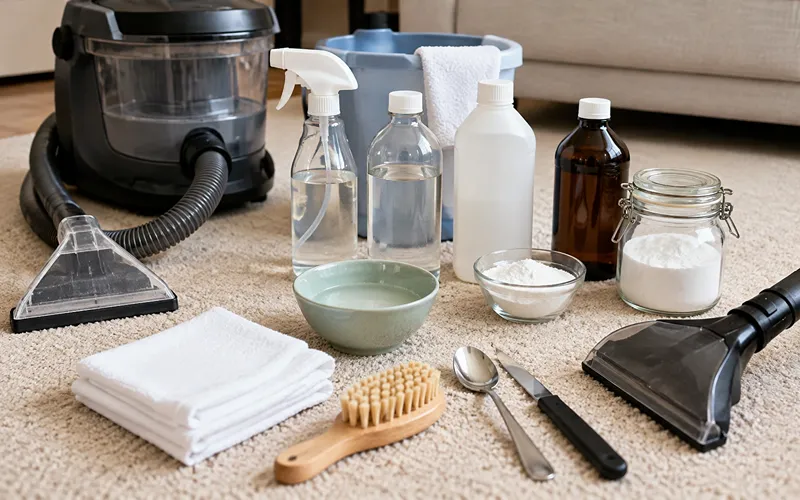
Gather these before you start so you’re not searching mid-clean:
- A vacuum with strong suction (a HEPA filter helps trap smaller allergens)
- White vinegar, baking soda, and a mild, carpet-safe dish soap
- Hydrogen peroxide (3%) for tougher organic stains, used carefully
- An enzymatic cleaner formulated for pet stains, if you have pets
- Clean white cloths or paper towels (colored fabric can transfer dye)
- A soft-bristle brush and a spoon or dull butter knife for scraping dried residue
- A spray bottle
- A carpet cleaning machine or wet/dry vacuum, if you’re deep cleaning a full room
Check Your Carpet Type and Care Instructions First
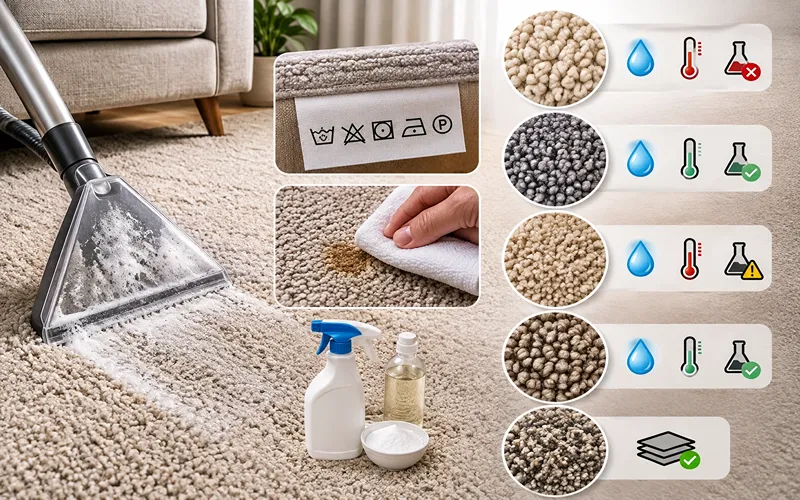
Carpets don’t all react to water, heat, and chemicals the same way. Using the wrong method is one of the most common causes of permanent damage, so check the manufacturer’s care tag or installation paperwork before you apply anything, an unapproved product can also void a warranty.
- Wool: Sensitive to alkaline cleaners, high heat, and excess moisture. Strong chemicals, including chlorine bleach, can dissolve or discolor it. Stick to low-moisture or dry-cleaning methods and mild, pH-neutral solutions, and always blot rather than scrub.
- Nylon: Durable and highly cleanable, which is why it’s common in high-traffic homes. It tolerates most cleaning methods well but still benefits from professional hot water extraction about once a year to keep the fibers from matting.
- Polyester: Soft, stain-resistant, and budget-friendly. The fibers can melt or lose shape under high heat, so keep water at or below the temperature your machine’s manual recommends. It can also be prone to oil-based stains.
- Olefin (polypropylene): Very resistant to stains and moisture, but the fibers are hydrophobic and can “wick”, a stain that seems gone can reappear at the surface as the wall to wall carpet dries. Low-moisture cleaning is usually safest, and oil-based cleaners should be avoided, since olefin attracts oil.
- Blends: Follow the care guidance for whichever fiber makes up the largest share of the blend.
Whatever the fiber, test any new product on a small hidden patch first, inside a closet or under furniture works well. Apply a little, blot with a white cloth after a few minutes, and check for color transfer or fading before using it on the whole carpet.
Step 1: Prepare the Room
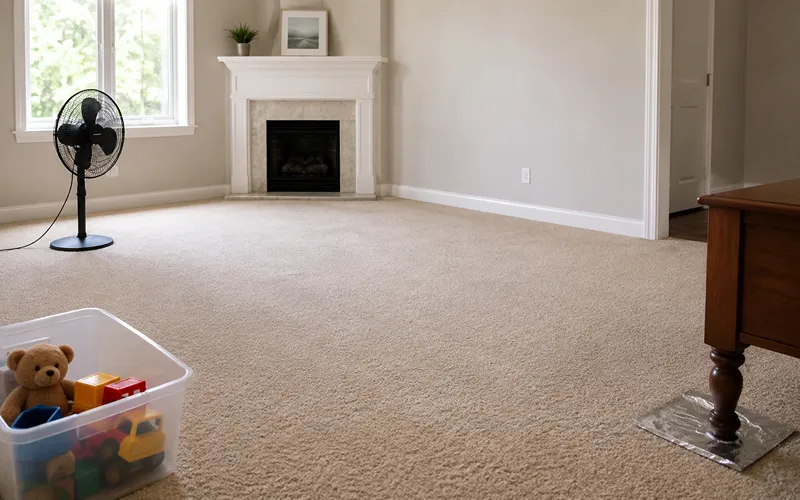
Move furniture, toys, and anything else off the carpet. If pieces must stay, slide small squares of foil or plastic under the legs so damp carpet doesn’t stain wood or leave rust marks. Open windows or turn on a fan before you begin, you’ll want airflow running through the whole process, not just at the end.
Step 2: Vacuum Thoroughly
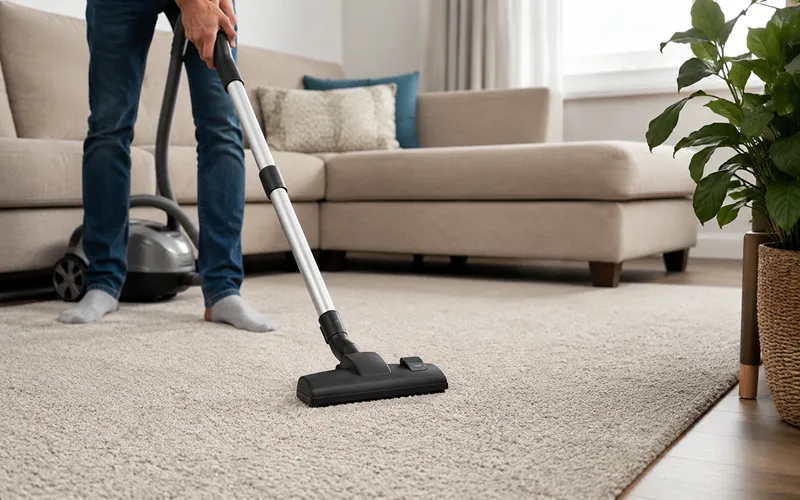
Loose dirt should always come off before any liquid touches the wool carpet. Cleaning over dry dirt just turns it to mud. Vacuum slowly and from multiple directions, going over the same section from two or three angles lifts noticeably more debris than a single quick pass. Pay extra attention to corners, edges, and furniture legs, where dust collects undisturbed.
Step 3: Treat Stains Before You Deep Clean
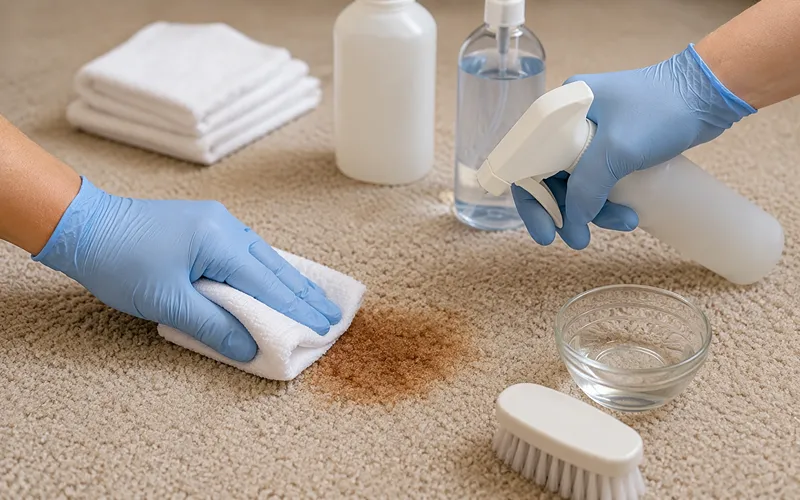
Always treat visible stains one by one before cleaning the whole room. A machine pass alone rarely lifts a stain that hasn’t been pre-treated. A few rules apply to nearly every stain:
- Blot, don’t scrub. Scrubbing spreads a stain, pushes it deeper into the fibers and backing, and can fray or mat the pile.
- Work from the outside in, so you don’t spread the stain onto clean sisal carpet.
- Don’t oversaturate. More liquid doesn’t mean a better clean, it means a longer drying time and a higher risk of mold and odor.
Fresh Stains: Wine, Coffee, and Juice
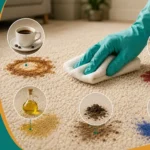
Blot immediately to absorb as much liquid as possible. Mix one tablespoon of dish soap, one tablespoon of white vinegar, and two cups of warm water, and apply from the outside in. Blot until the liquid stops transferring, then rinse with plain water and blot dry.
Ink, Blood, and Makeup
For ink, dab, don’t rub, rubbing alcohol on a cloth, working from the edges inward, then rinse with cold water. For blood, use cold water only, since hot water sets the stain, combined with a little dish soap. Blot repeatedly until it lifts. Makeup and lipstick usually respond to a small amount of rubbing alcohol or a grease-cutting dish soap.
Chocolate, Milk, and Food Stains
Scrape off any solid residue first with a spoon, then treat with dish soap and cool water. Use cool water for milk and other protein-based spills too, for the same reason as blood: heat sets the stain instead of lifting it.
Wax and Chewing Gum
Harden the wax or gum with an ice pack, then gently scrape it off with a dull knife or spoon. For leftover wax residue, place a clean cloth or brown paper bag over the spot and run a warm iron over it briefly, the wax transfers onto the cloth. Keep the iron on a low setting and never rest a hot iron directly on the carpet.
Rust
Use a stain remover made for rust, or a paste of lemon juice and salt left to sit briefly before blotting. Skip chlorine bleach, it can react with rust and set a permanent stain.
Mud and Dirt
Let mud dry completely before touching it; wet mud smears and sinks deeper into the fibers. Once dry, break it up with a soft brush and vacuum, then treat any remaining trace with baking soda and a gentle brush.
Grease and Oil
Sprinkle a mix of baking soda and salt over the area and let it sit 15–30 minutes to absorb the oil, then vacuum. A carpet-safe dish soap handles whatever residue is left, since it’s designed to cut grease.
Old or Already-Dried Stains
Dried stains take more patience, since the residue has had time to bond with the fibers. Rehydrate the spot first with a light misting of warm water so it can be worked loose again, then apply the solution for that stain type. Let it sit longer than you would on a fresh spill, often 20–30 minutes, sometimes repeated. Avoid heat on any stain you can’t identify, since heat permanently sets some residues, blood and other protein stains especially.
Pet Stains and Odors: Why This Needs Special Treatment
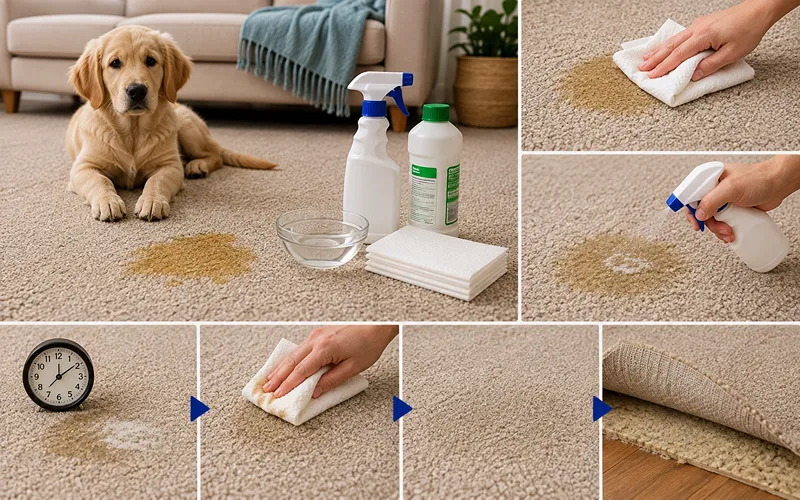
Pet accidents need their own approach, because the problem often isn’t just on the surface. Urine can soak through the carpet into the padding and even the subfloor, where it keeps producing odor long after the visible stain is gone. That’s why surface treatments alone often fail, especially on older accidents.
- For a fresh accident, blot up as much liquid as possible with paper towels, pressing down firmly. For an older, dried one, lightly moisten the spot first so the residue lifts more easily, then blot.
- Saturate the area with an enzymatic cleaner made for pet stains, covering slightly beyond the visible stain, since urine spreads underneath. Enzymatic formulas break down the compounds that cause the odor, something baking soda and vinegar can mask but not fully remove.
- Let it sit for the time the label recommends: commonly 10–15 minutes for a fresh accident, 20–30 minutes or longer for a dried one.
- Blot again, then let the area air-dry completely. Skip hot water and steam cleaners on urine stains, since heat can set both the stain and the odor permanently.
- If the odor persists, the padding underneath is likely affected. That usually means pulling back the carpet to treat the pad and subfloor directly, or calling a professional.
How to Deep Clean a Carpet at Home? (Full Process)
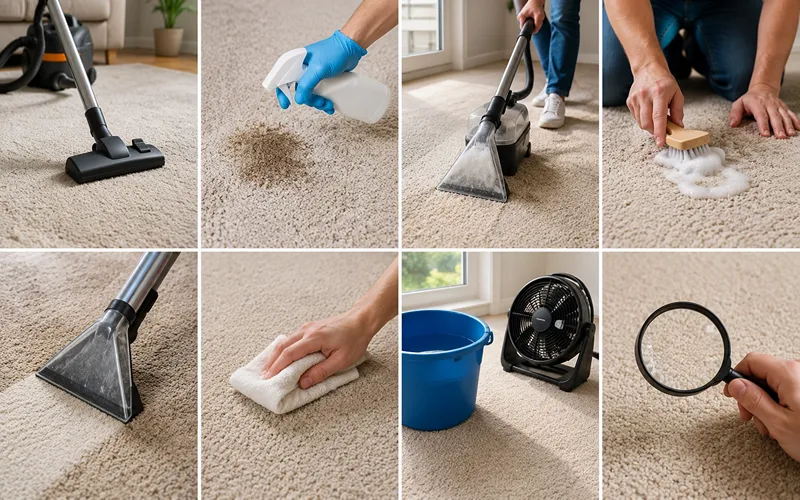
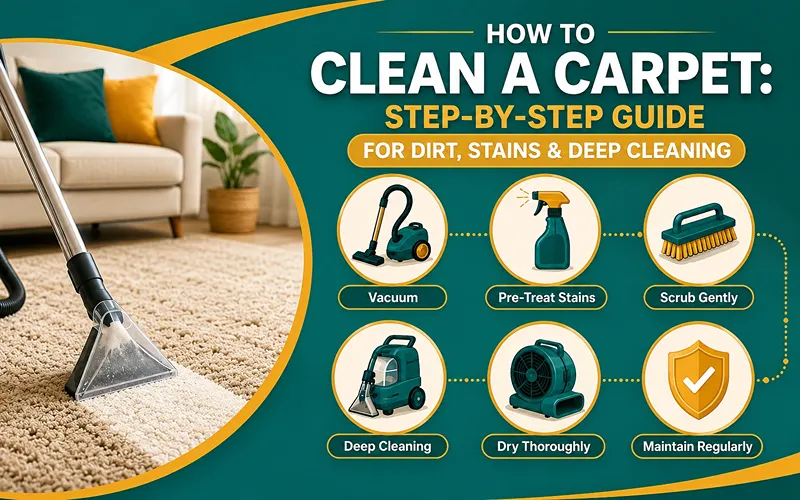
A deep clean reaches dirt embedded throughout the carpet, not just visible stains. Treat it as one continuous process:
- Prepare and vacuum the entire room, as described above.
- Pre-treat every visible stain individually before cleaning the whole carpet.
- Choose your method, hand cleaning or a machine, covered below, based on how soiled the carpet is and what the fiber can tolerate.
- Clean section by section, in manageable areas, so no part sits wet longer than necessary.
- Extract as much moisture as possible as you go, whether that’s a machine’s suction pass or thorough blotting by hand.
- Rinse if your method calls for it, using clean water to remove solution residue that could otherwise attract new dirt as it dries.
- Dry the carpet fully before walking on it or replacing furniture.
- Inspect once dry. A stain that reappears usually means moisture carried residue back to the surface, or the stain wasn’t fully lifted, either way, it needs a repeat treatment.
How to Clean Carpet Without a Machine
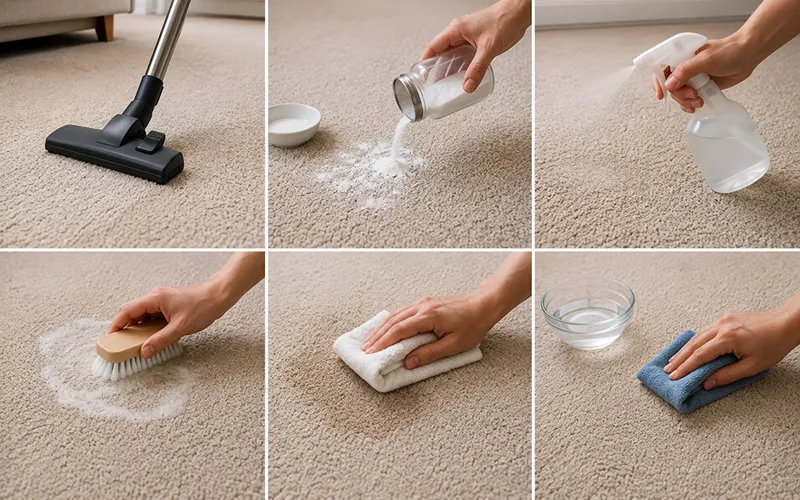
A rental carpet cleaner isn’t required for a genuinely deep clean, it just takes more manual effort:
- Vacuum thoroughly and pre-treat all visible stains.
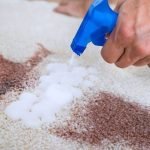
- Sprinkle baking soda across the carpet and let it sit 15–30 minutes to absorb odor and loosen surface grime, then vacuum it up completely.
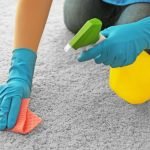
- Mix a small amount of mild dish soap with warm water and lightly dampen a section of carpet with a spray bottle. Skip vinegar and baking soda together here, the fizzing reaction cleans little beyond the surface.
- Work the solution gently with a soft brush, using small circular motions, then blot up the moisture and lift dirt with a clean cloth.
- Go over the same section with a cloth dampened in plain water to rinse out soap residue, then blot dry.
- Move to the next section and repeat until the room is done. Let everything air-dry fully before walking on it.
This won’t extract as much embedded dirt as a machine, but it’s a realistic option for renters, smaller rooms, or carpets that shouldn’t be over-wetted.
How to Use a Carpet Cleaning Machine Safely
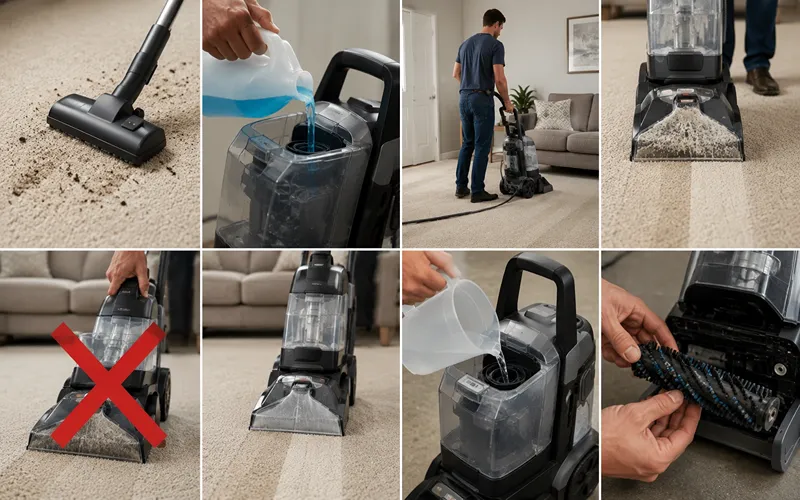
If you’re renting or own a carpet cleaner, the process matters as much as the machine:
- Vacuum and pre-treat stains first, a machine pass isn’t a substitute for spot treatment.
- Fill the tank with the solution at the concentration the manufacturer recommends. More than that just leaves extra residue that attracts dirt later.
- Start in the corner farthest from the door, so you can work your way out without walking back over cleaned carpet.
- Go over each section twice: once with the spray trigger engaged, then again without it, so the machine’s suction extracts the moisture you just applied.
- Don’t press the spray trigger repeatedly over the same spot. Oversaturating a section adds significant drying time and raises the risk of mold in the padding underneath.
- Finish with a pass using plain water in the tank to rinse out any remaining solution.
- Clean the machine afterward, empty and rinse the tanks, and clear hair or debris from the brush roll, before storing or returning a rental.
Cleaning Mistakes to Avoid
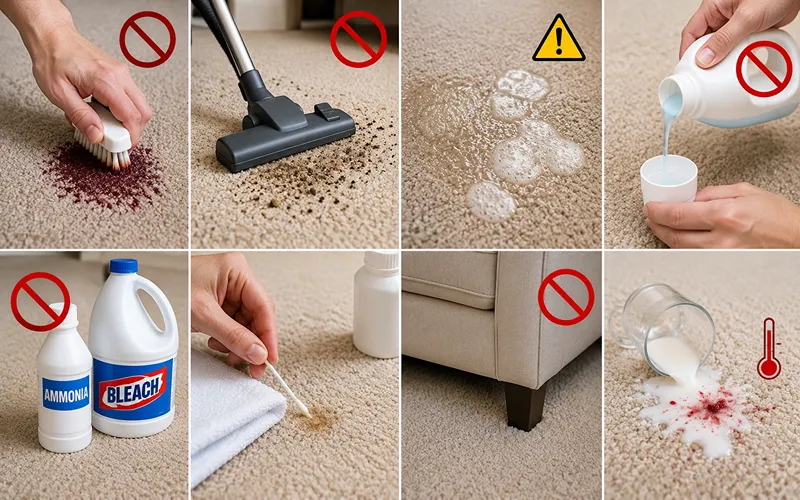
A few habits cause more damage than the stains they’re meant to fix:
- Scrubbing stains instead of blotting them.
- Skipping the vacuum step, which grinds loose dirt into mud and grit.
- Oversaturating the carpet, which extends drying time and invites mold.
- Using more product than the label recommends, leftover residue attracts dirt faster, which is why an “over-cleaned” carpet can look dirty again within days.
- Mixing cleaning chemicals, especially ammonia-based and bleach-based products together, the combination can produce hazardous fumes.
- Skipping the colorfastness test. A product safe on one carpet can discolor another, even from the same brand.
- Putting furniture back too soon, before the carpet is fully dry.
- Using hot water on protein-based stains like blood, urine, or dairy, which sets them instead of lifting them.
How to Dry Carpet After Cleaning?
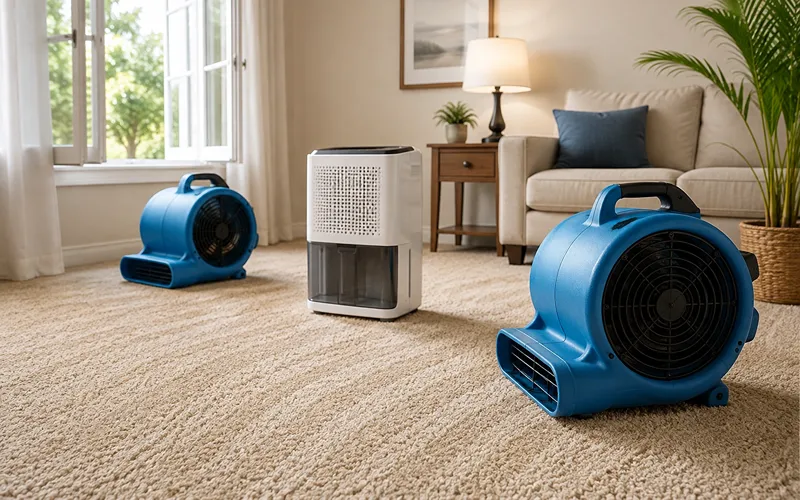
Carpet that doesn’t dry fully and quickly invites mold, mildew, and musty odors. Open windows, run fans, or point a dehumidifier at the area, and avoid closing the room off while it dries. Most carpets are safe to walk on after four to six hours, though full drying, especially after a wetter method like hot water extraction, can take up to 24 hours depending on humidity, airflow, and carpet thickness. Wait until it’s completely dry before putting furniture back, to avoid new stains or rust marks.
How Often Should You Clean Your Carpet?
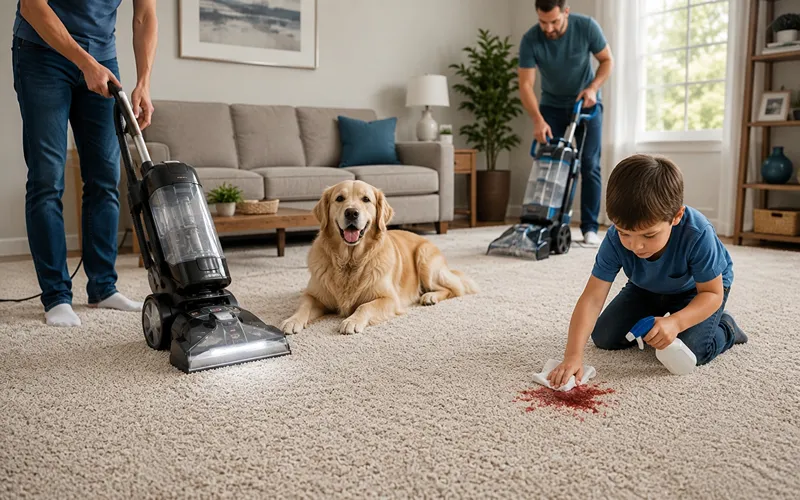
Routine vacuuming and periodic deep cleaning serve different purposes, and both matter:
- Vacuum high-traffic areas two to three times a week, and the rest of the carpet at least once a week.
- Deep clean the whole carpet every six to twelve months for most households.
- Increase frequency to every three to six months with pets, young children, allergies in the household, or heavy foot traffic.
- Spot clean the moment a spill happens, the longer a stain sits, the harder it is to remove.
How to Keep Your Carpet Cleaner Longer?
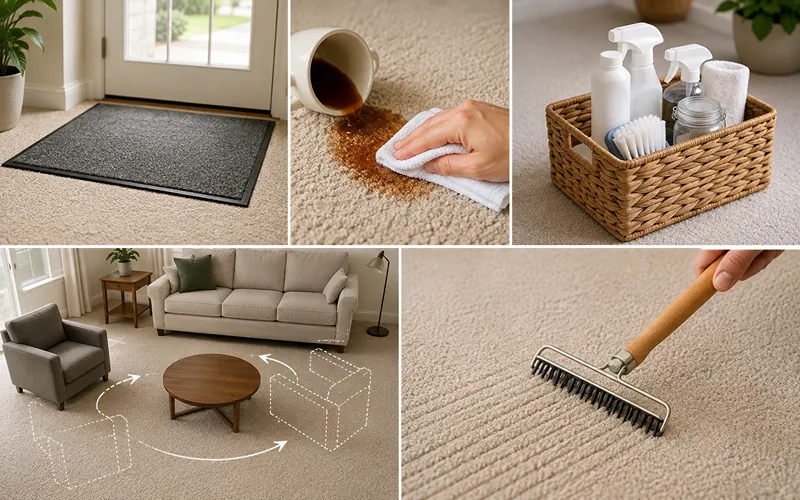
- Use doormats at every entrance and encourage a shoes-off policy indoors.
- Treat spills immediately rather than waiting until they set.
- Keep a small stain-removal kit, white cloths, baking soda, dish soap, and an enzymatic cleaner if you have pets, within easy reach.
- Rearrange furniture occasionally so foot traffic doesn’t wear down the same patches.
- Use a carpet rake or brush on high-traffic areas that start to look matted or flattened.
When to Call a Professional Carpet Cleaner?
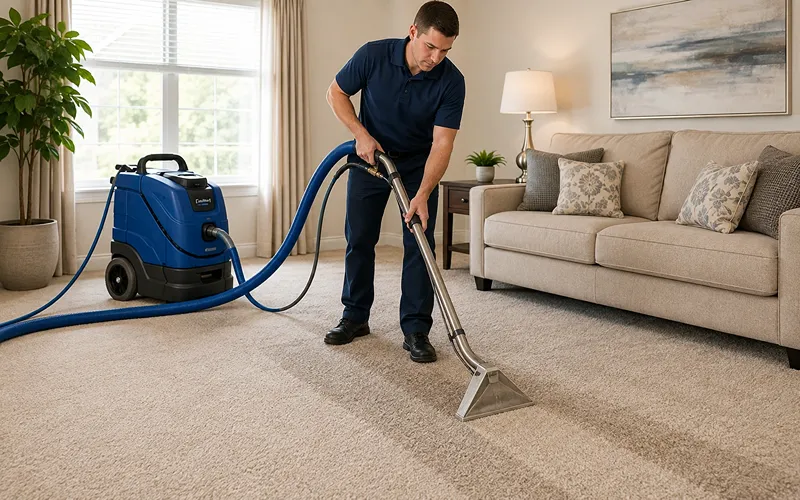
Some situations go beyond what DIY methods can safely handle: carpet that hasn’t been deep cleaned in over a year, large or widespread staining, water damage, delicate fibers like wool, or pet odor that persists after enzymatic treatment because it’s reached the padding or subfloor. Professionals use hot water extraction equipment that reaches deeper into the pile and padding than a rental machine typically can, usually the safer choice when a mistake would be costly to fix.
Final Thoughts
A carpet that stays looking and smelling fresh comes down to a few habits: know the fiber type before you clean it, vacuum regularly, treat every stain, fresh or old, before running a whole-room clean, and dry it completely afterward. Whether you’re lifting a fresh coffee spill or planning a full seasonal deep clean, matching the method to the mess is what protects the carpet long-term, not how much product you use.
Frequently Asked Questions
How often should I deep clean my carpet?
Every six to twelve months for most homes, or every three to six months with pets, kids, or heavy foot traffic.
What is the best way to clean a carpet at home?
Vacuum first, pre-treat any stains, then choose a method suited to your carpet’s fiber type, a rental machine for a thorough deep clean, or the hand-cleaning method above if you don’t have access to one.
Can I clean the carpet without a machine?
Yes. Vacuuming, spot treatment, and a hand-applied dish soap solution worked in with a brush can get a meaningful clean, though it won’t extract as much embedded dirt as a machine.
How do I remove old carpet stains?
Rehydrate the area with a light misting of water, apply the treatment suited to that stain type, and let it sit longer than you would for a fresh stain, often 20–30 minutes, sometimes repeated.
How long does carpet take to dry after cleaning?
Typically four to six hours before it’s safe to walk on, and up to 24 hours for full drying, depending on humidity, airflow, and how much moisture was used.
Can I use vinegar on the carpet?
Generally yes on synthetic fibers like nylon, polyester, and olefin, but its acidity can damage wool. Test on a hidden spot first, and skip it on wool carpets.
Can I use baking soda on the carpet?
Yes, on most carpet types, as long as it’s fully vacuumed up afterward. It’s better at absorbing odor than at treating an actual stain.
How do I remove pet urine odor from carpet?
An enzymatic cleaner made for pet stains is the most reliable option, since it breaks down the compounds causing the odor instead of just masking it. Persistent odor after treatment usually means the urine reached the padding.
Can I use a steam cleaner on every carpet?
No. Wool and some olefin carpets can be damaged by high heat and excess moisture. Check your carpet’s care instructions before using hot water extraction, and consider a low-moisture method instead.
Why does my carpet look dirty again after cleaning?
Usually leftover cleaning products attract new dirt, or moisture that carries a stain back up to the surface as the carpet dried. Both point to using too much solution or too much water.
When should I hire a professional carpet cleaner?
For carpet that hasn’t been deep cleaned in over a year, large stained areas, delicate fibers like wool, water damage, or pet odor that persists after DIY enzymatic treatment.
How do I prevent carpet stains?
Use doormats, keep a stain kit on hand, treat spills the moment they happen, and vacuum regularly so dirt doesn’t work its way into the fibers and backing.