Pets make a house feel like home. But when your dog or cat has an accident, the smell can stay in your carpet long after the stain is gone. You clean the spot, it seems fine, and then a humid day brings the odor right back.
The good news is that you can fix it. If you have been wondering how to get pet odor out of carpet for good, the answer is not stronger perfume or more scrubbing. You need to break down the source of the smell, not cover it up.
This guide explains why pet odors cling to carpets in Dubai, which household products actually work, a clear step-by-step cleaning method, and simple habits that stop the smell from returning.
Why Pet Odors Stick to Carpet
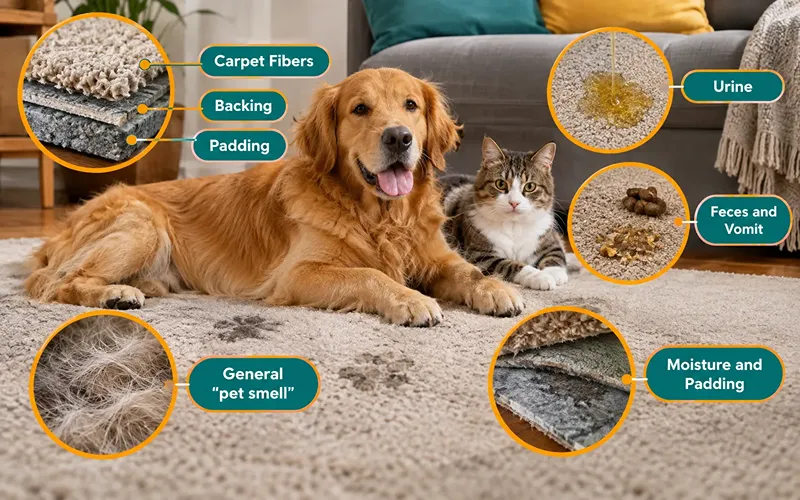
Pet odors last because carpet is built like a sponge. It has thick fibers on top, a backing underneath, and a soft pad below that. Liquid soaks down through all three layers, while you usually clean only the top.
Knowing what causes the smell helps you pick the right fix.
Urine: the most stubborn Odor
Urine is the main reason most homes smell like pets. Fresh urine has a mild smell. As it dries, bacteria break it down and release ammonia, which creates that sharp, sour odor.
Urine also leaves behind uric acid crystals. These crystals do not dissolve in plain water or regular soap. When the air gets humid or the spot gets damp, they reactivate and release the smell again. This is why an old accident can suddenly smell fresh on a rainy day.
Cat urine is often stronger than dog urine. It is more concentrated, and it contains compounds that turn especially pungent as they break down.
Feces and Vomit
Poop and vomit contain bacteria, food residue, and stomach acids. Even after you remove the solids, a thin layer of organic matter stays in the fibers. If it is not fully cleaned, bacteria keep feeding on it and the smell grows.
General “pet smell”
Not every odor comes from an accident. Pets shed hair and dander. Their skin produces natural oils, and they track in dirt and moisture from outside. Over time, all of this builds up in the wall to wall carpet, especially where your pet likes to nap.
Moisture and Padding
If urine reaches the carpet pad, the problem gets harder. The pad holds liquid like a sponge and dries slowly. This keeps bacteria active for a long time. In some cases, mold can grow there too.
Common Mistakes That Make Pet Odors Worse
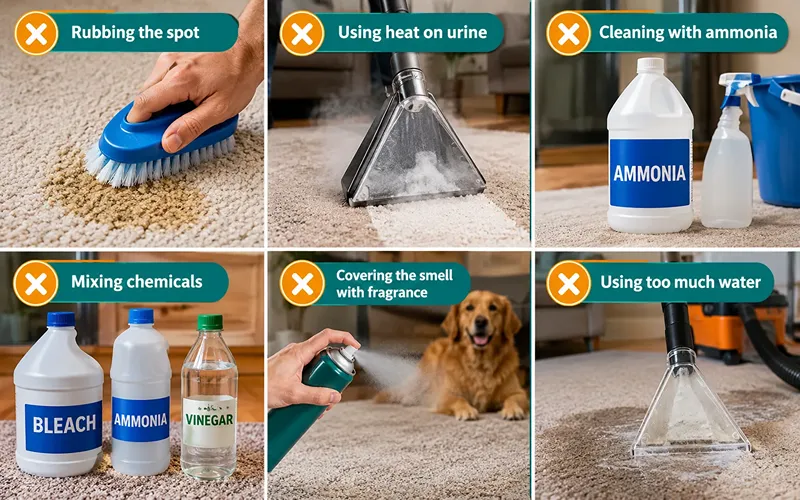 Before you start cleaning, avoid these mistakes. Many people make the smell worse without realizing it.
- Rubbing the spot. Scrubbing pushes urine deeper and spreads it wider. Always blot.
- Using heat on urine. Steam cleaners, hot water, and hair dryers can bond the proteins in urine to the carpet fibers. This can lock in both the stain and the smell.
- Cleaning with ammonia. Urine already smells like ammonia. An ammonia-based cleaner can make your pet think the spot is a toilet and use it again.
- Mixing chemicals. Never mix bleach with ammonia or vinegar. These combinations release toxic fumes.
- Covering the smell with fragrance. Air fresheners and scented powders only hide the odor for a while. Your pet can still smell the old spot.
- Using too much water. Soaking the sisal carpet without extracting the liquid pushes the mess into the pad and slows drying.
Household Products That Remove Pet Odors
You do not need a cupboard full of special products. A few basic items handle most pet odors. Each one has a specific job.
| Product | What it does | Best for |
| Enzyme cleaner | Breaks down urine, feces, and vomit at the source | Urine, old odors, repeat spots |
| Baking soda | Absorbs moisture and neutralizes acidic odors | Fresh spots, general pet smell |
| White vinegar | Cuts through residue and neutralizes ammonia | Light odors, rinsing |
| 3% hydrogen peroxide | Lifts stains and kills odor-causing bacteria | Tough stains on light carpet |
| Mild dish soap | Loosens grease and body oils | Vomit, feces, oily pet spots |
| Cornstarch | Absorbs light odors and moisture | Between deep cleans |
Enzyme cleaners
An enzyme cleaner is the most important product for pet urine. It contains enzymes, and sometimes helpful bacteria, that digest the uric acid crystals and proteins causing the smell. Once those are gone, the odor cannot come back.
Look for a cleaner labeled for pet urine and safe for carpet. Follow the label closely. Most need to stay wet on the spot for 10 to 15 minutes or longer to work.
Baking soda
Baking soda is cheap and safe to use around pets once it is vacuumed up. It soaks up moisture and neutralizes many odors. Use it after cleaning to pull out leftover smell, or sprinkle it over a whole rug to freshen it.
White vinegar
A mix of equal parts white vinegar and water helps neutralize ammonia and remove residue. The vinegar smell fades as it dries. Use it on light odors or to rinse an area. Do not use it right before an enzyme cleaner, because its acidity can weaken the enzymes. If you use both, rinse with plain water in between.
Hydrogen peroxide
Use only 3% hydrogen peroxide, the kind sold in pharmacies. Mixed with a little dish soap and baking soda, it can lift tough stains. It can also lighten some carpets, so always test it on a hidden area first. Do not store peroxide and vinegar mixed together in one bottle.
A note on essential oils
Some DIY recipes add essential oils for scent. Be careful. Oils such as tea tree, eucalyptus, and citrus can be toxic to cats and dogs, especially cats. If you want a pleasant smell, open a window instead.
How to Get Pet Odor Out of Carpet: Step-by-Step
This method works for most fresh and recent accidents. It focuses on removing the source of the smell, not just the stain.
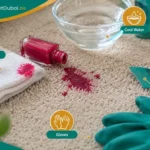
You will need: paper towels or old towels, gloves, a spray bottle, an enzyme cleaner, baking soda, white vinegar, cool water, and a vacuum.
Step 1: Remove solids and blot the liquid
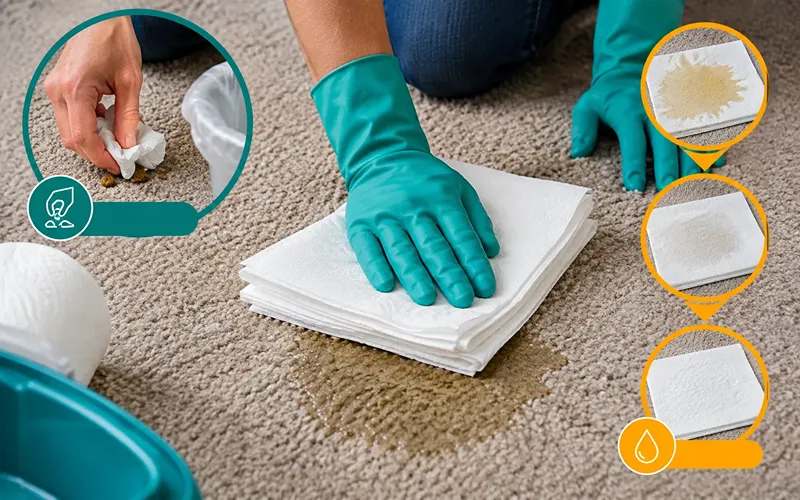 Pick up any solids with a paper towel or plastic bag. For urine, place a thick layer of paper towels over the spot. Press down firmly, or stand on it, for about a minute. Replace the towels and repeat until they come up almost dry.
Act fast. The less time urine has to soak in, the easier the job.
Step 2: Rinse with cool water
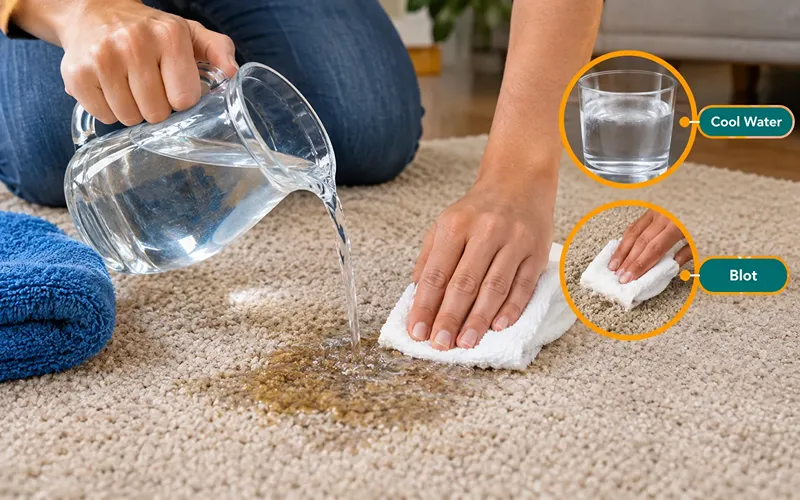 Pour a small amount of cool water over the spot and blot it up again. This dilutes what is left in the fibers. Use cool water only, never hot.
Step 3: Test your cleaner
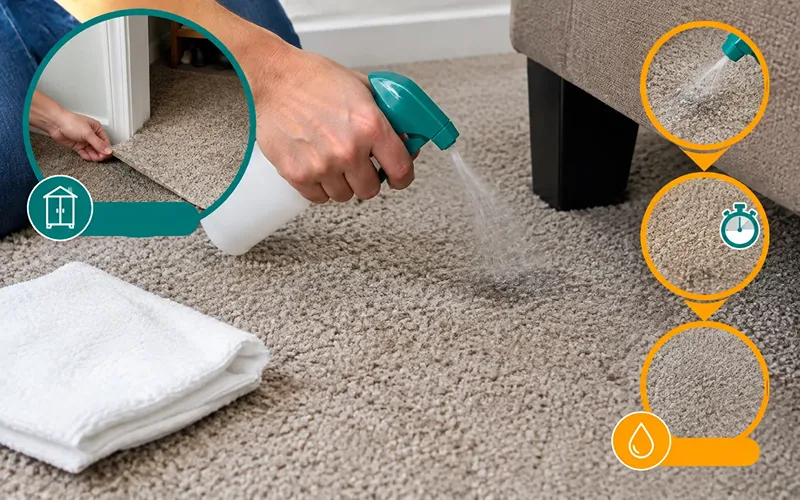 Apply a little cleaner to a hidden spot, such as inside a closet or under furniture. Wait a few minutes and check for color change. This step takes two minutes and can save your carpet.
Step 4: Soak the spot with enzyme cleaner
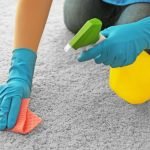
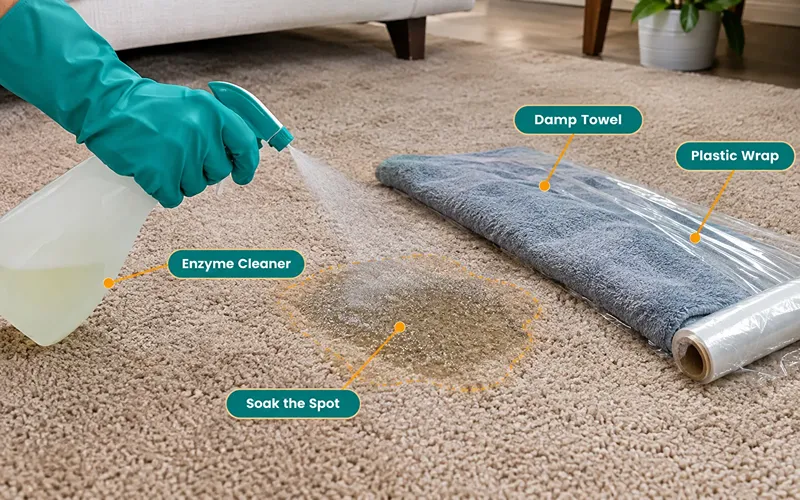 Spray or pour the enzyme cleaner so it reaches as deep as the urine did. A light mist will not reach the backing or pad. Treat an area slightly larger than the visible stain, since urine spreads as it sinks.
Leave it for the time on the label. Many products work best if you cover the spot loosely with a damp towel or plastic wrap so it stays wet longer.
Step 5: Blot and let it air dry
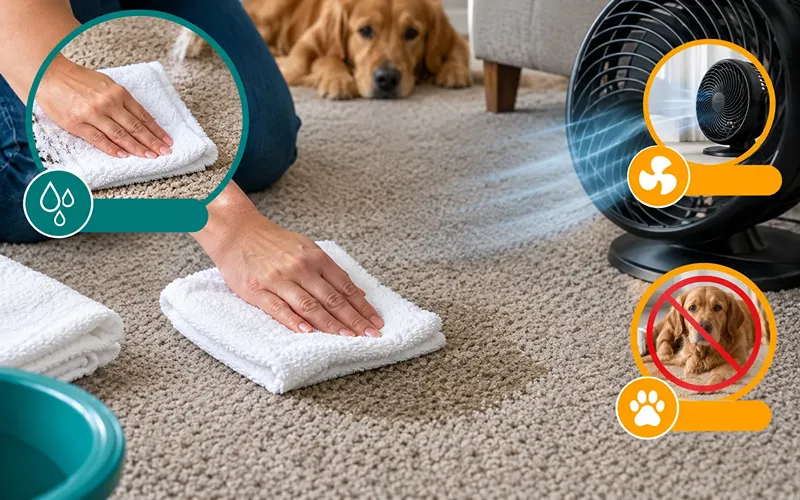 Blot up the extra liquid. Then let the area dry naturally. A fan helps, but do not use heat. Keep pets away from the spot while it dries.
Step 6: Deodorize with baking soda
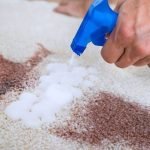
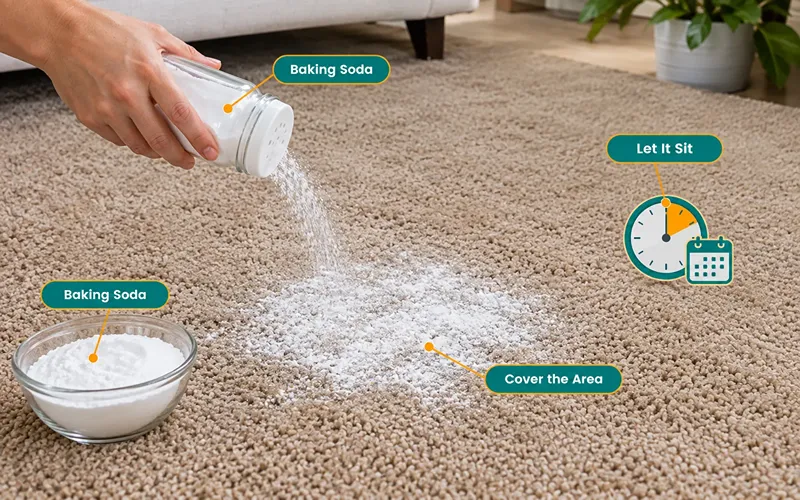 Once the carpet is dry, sprinkle baking soda over the area. Leave it for a few hours or overnight. It will absorb any odor that is left.
Step 7: Vacuum and check
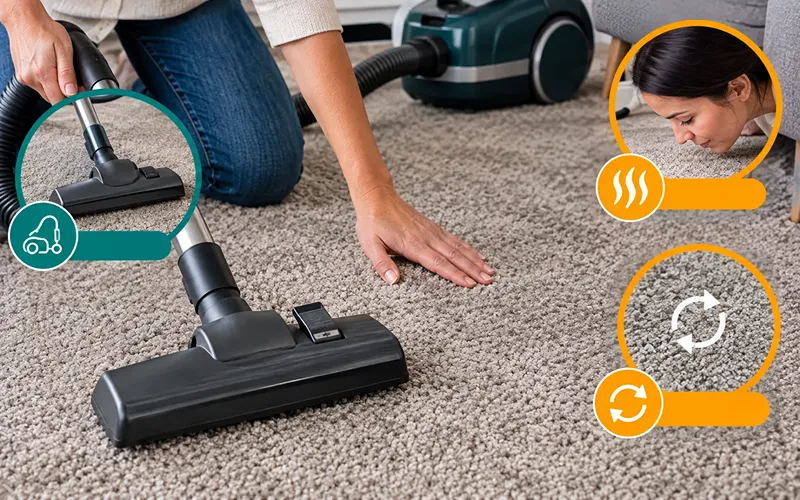 Vacuum up the baking soda thoroughly. Then kneel down and smell the spot. If you still notice an odor, repeat steps 4 to 7. Old or heavy accidents often need two or three rounds.
Quick DIY option without enzyme cleaner
If you have no enzyme cleaner, mix one part white vinegar with one part water. Spray the blotted area, let it sit for 5 to 10 minutes, and blot. Once dry, follow with baking soda and vacuum. This works well on fresh spots, but it may not fully break down set-in urine.
How to Remove Old or Set-In Pet Odors
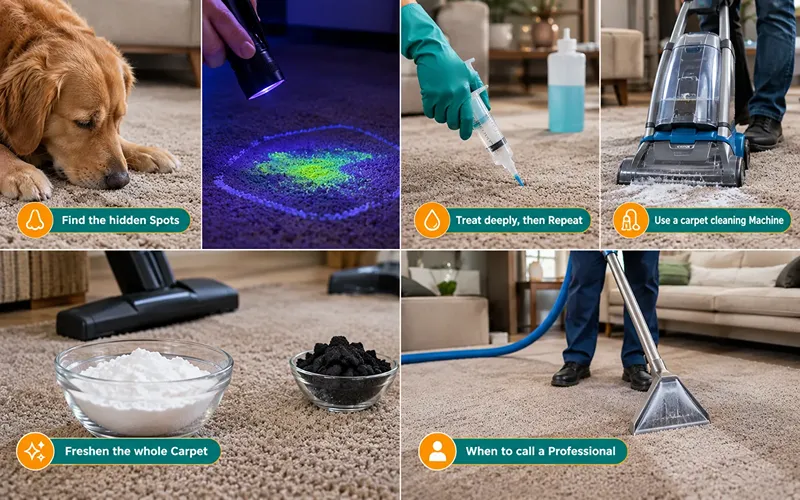
Old odors are harder because you often cannot see where they are. The urine has dried, and it may have reached the pad.
Find the hidden Spots
Use your nose first. Get close to the carpet in rooms where the smell is strongest. Then use a UV black light in a dark room. Dried urine usually glows a yellow or green color. Mark each spot with chalk or painter’s tape so you can treat it in daylight.
Treat deeply, then Repeat
For set-in urine, follow the step-by-step method above but use more enzyme cleaner. The product must reach every place the urine went. Some people use a syringe-style injector to push cleaner into the pad. Give it plenty of time to work and plan on more than one treatment.
Use a carpet cleaning Machine
A carpet cleaner or a small spot cleaner sprays solution and then sucks the dirty liquid back out. This extraction is what makes it so useful. You can rent one from many hardware or grocery stores.
For urine, run it with cool water or a pet-specific formula. Do not use the heat setting. Steam is fine for general dirt and body oils, but it can set urine odors permanently.
Freshen the whole Carpet
For a general pet smell across a room, vacuum well first. Then sprinkle baking soda over the entire carpet, leave it for at least an hour (overnight is better), and vacuum again. A small bowl of activated charcoal nearby can also absorb odors from the air.
When to call a Professional
Call a professional carpet cleaner if the smell returns after several treatments, if many areas are affected, or if you think urine has soaked into the pad. Ask whether they use pet odor treatments and whether they can treat or replace the padding. In severe cases, replacing a section of carpet and pad is the only real fix.
Quick Guide: Treating Odors by Type of Mess
Different messes need slightly different care. Use this table as a quick reference.
| Type of mess | First step | Main treatment | Finish |
| Fresh urine | Blot until nearly dry | Cool water rinse, then enzyme cleaner | Air dry, baking soda, vacuum |
| Old urine | Find spots with a black light | Heavy enzyme soak, repeat as needed | Extract with a carpet cleaner (no heat) |
| Cat urine | Blot fast, it is concentrated | Enzyme cleaner made for cat urine | Repeat, block access to the spot |
| Feces | Remove solids gently | Dish soap and cool water, then enzyme cleaner | Blot, dry, baking soda |
| Vomit | Scoop solids, blot liquid | Baking soda to absorb, then enzyme cleaner | Vacuum when dry |
| General pet smell | Vacuum thoroughly | Baking soda over the whole area | Vacuum, wash pet bedding |
How to Keep Pet Odors From Coming Back
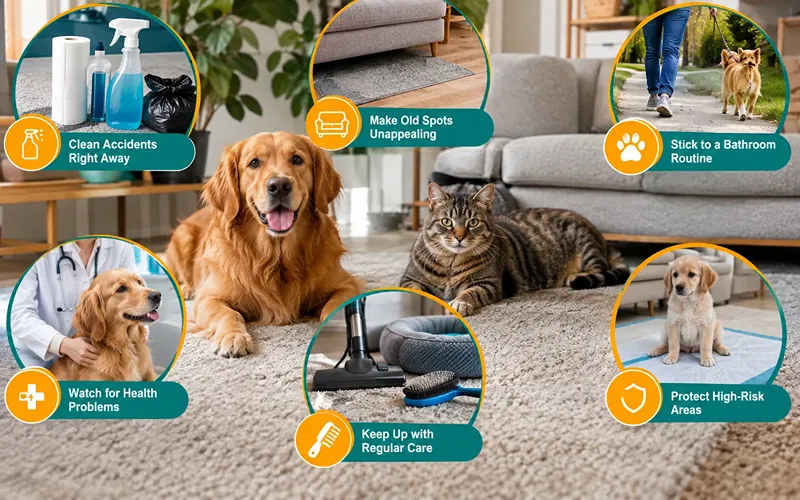 Cleaning removes the smell. Good habits keep it away. Pets often return to spots that still carry their scent, so prevention matters as much as cleaning.
Clean accidents right Away
Keep a small kit ready: paper towels, an enzyme cleaner, and a bag. Fast action stops urine from reaching the pad. Even at night, blot the spot first and do the full clean in the morning.
Make old spots Unappealing
After cleaning, place a piece of furniture, a mat, or a food bowl over the spot for a few weeks. Pets rarely soil where they eat or sleep. You can also block access to rooms where accidents keep happening.
Stick to a bathroom Routine
Take dogs out at the same times each day, especially after meals, naps, and play. Reward them right after they go outside. For cats, scoop the litter box daily, wash it regularly, and keep one more box than the number of cats.
Watch for health Problems
Sudden accidents from a house-trained pet can signal a medical issue, such as a urinary tract infection or kidney problem. Older pets may also lose bladder control. If accidents become frequent, see your vet before assuming it is a training issue.
Keep up with regular Care
- Vacuum carpets at least once or twice a week.
- Wash pet beds, blankets, and washable rugs every week or two.
- Bathe and brush your pet as their breed needs.
- Deep clean carpets every 6 to 12 months.
- Keep indoor air dry and well ventilated to slow bacteria growth.
Protect high-risk Areas
While training a puppy or helping a senior pet, use washable rugs or waterproof pads in problem areas. They are easier to clean than wall-to-wall carpet.
Final Thoughts
Learning how to get pet odor out of carpet comes down to three ideas. Remove as much of the mess as you can, break down what is left with an enzyme cleaner, and stop your pet from returning to the same spot.
Act quickly, avoid heat and ammonia, and be patient with old stains. With the right products and a few good habits, your home can smell fresh while still being a happy place for your pets.
Frequently Asked Questions
Does vinegar remove pet urine smell from carpet?
Vinegar helps with fresh, light urine odors because it neutralizes ammonia. It does not fully break down the uric acid crystals in older urine. For set-in smells, an enzyme cleaner works better.
Why does the smell come back after I clean?
Usually the urine was not fully removed. It may have reached the backing or pad, or the cleaner did not stay wet long enough. Humidity then reactivates the leftover crystals. Treat the area again with more enzyme cleaner and let it soak longer.
How long does baking soda need to sit on carpet?
At least 20 to 30 minutes for a light refresh. For stronger odors, leave it for several hours or overnight before vacuuming. Keep pets off the area while it sits.
Can I use a steam cleaner on pet odors?
You can steam clean for general dirt and pet smell. Avoid steam on urine spots, because heat can set the odor into the fibers. Treat urine with an enzyme cleaner first and let it dry fully.
Is it safe to use these cleaners around pets?
Most enzyme cleaners, baking soda, and diluted vinegar are safe when used as directed. Keep pets away until the area is dry and any powder is vacuumed up. Avoid ammonia, bleach, and strong essential oils.
Will I need to replace my carpet?
Not usually. Most odors respond to repeated enzyme treatment. Replacement is only needed when urine has soaked deep into the pad over a long time and nothing else works.