
A nosebleed, a slip of the kitchen knife, a child’s grazed knee or a pet’s scraped paw: blood on the carpet is one of the most common household stains, and one of the most stubborn. If you are searching for how to get blood out of carpet without leaving a pink shadow behind, the most important thing to know is simple. Speed matters more than any product you own.
Blood is a protein-based stain. While it is fresh, most of it sits in liquid form on and between the carpet fibres, and it lifts out easily with cold water and gentle blotting. As it dries, the proteins bond to the fibres, and the iron in the blood oxidises, turning bright red into a rusty brown mark. Heat makes this happen even faster by “cooking” the protein into the carpets in Dubai. The longer you wait, the harder the job becomes.
The good news is that even old, dried blood stains can usually be removed with patience and the right approach. This guide walks you through the tools you need, step-by-step methods for fresh and dried stains, reliable home remedies, the mistakes that set stains for good, and practical ways to protect your carpet fibres.
Safety first: If someone is injured, take care of them before the carpet. When cleaning blood that is not your own, wear disposable gloves, as blood can carry infections. Throw used paper towels away in a sealed bag and wash your hands well when you finish.
Essential Tools and Cleaning Products for Blood Stain Removal
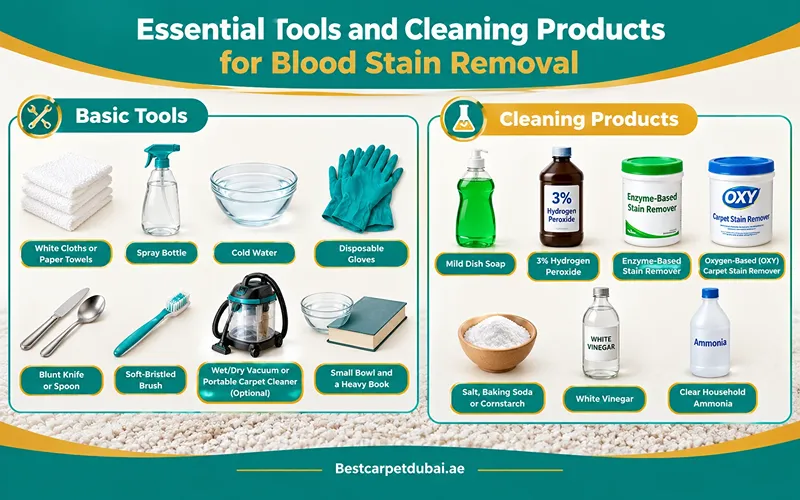
You do not need expensive equipment to remove blood stains from wall to wall carpet. Most of what works is already in your kitchen or bathroom cupboard. Gather what you need before you start so the stain does not dry while you search.
Basic Tools
- White cloths or paper towels: White is important. Coloured cloths can transfer dye onto damp carpet and leave a second stain.
- Spray bottle: Lets you apply cold water or cleaning solution in a controlled mist instead of soaking the carpet.
- Cold water: Your most important cleaning agent. Keep it cold from start to finish.
- Disposable gloves: Protect your hands from blood and from cleaning chemicals.
- Blunt knife or spoon: For gently lifting dried, crusty blood off the surface.
- Soft-bristled brush: An old soft toothbrush works well for loosening dried residue. Avoid stiff or wire brushes, which fray and flatten the pile.
- Wet/dry vacuum or portable carpet cleaner (optional): Pulls moisture and dissolved stain out of the carpet far better than blotting alone.
- Small bowl and a heavy book: For mixing pastes and for pressing towels into the carpet to draw out moisture.
Cleaning Products
- Mild dish soap: Choose a clear washing-up liquid without bleach, dyes or moisturisers.
- 3% hydrogen peroxide: The standard pharmacy strength. Very effective on blood, but it can lighten some carpets, so always patch test.
- Enzyme-based stain remover: Enzyme cleaners are designed to break down protein stains such as blood, urine and vomit.
- Oxygen-based (OXY) carpet stain remover: A ready-made option that uses peroxide-based chemistry in a carpet-safe formula.
- Salt, baking soda or cornstarch: Useful for making absorbent pastes.
- White vinegar: A mild, low-cost option for light stains on synthetic carpets.
- Clear household ammonia: For stubborn stains on synthetic sisal carpets only. Never use it on wool, and never mix it with other cleaners.
Which Method Should You Use?
| Stain type | Best first method | Back-up method |
| Fresh blood (minutes old) | Cold water and blotting | Dish soap solution |
| Fresh blood (light shadow left) | Dish soap solution | 3% hydrogen peroxide |
| Dried blood (hours to days) | Rehydrate, then enzyme cleaner | Hydrogen peroxide or salt paste |
| Old, set-in stain | Enzyme cleaner with longer dwell time | Ammonia solution (synthetic only) or professional cleaning |
| Wool or delicate carpet | Cold water and very mild dish soap | Wool-safe cleaner or professional |
How to Get Blood Out of Carpet When the Stain Is Fresh
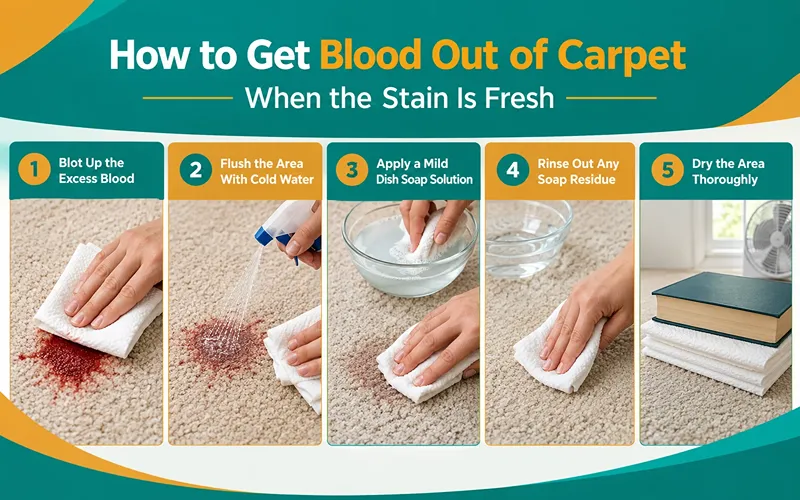
A fresh blood stain is the easiest kind to deal with. In many cases, cold water and patience are all you need. Follow these steps in order.
Step 1: Blot Up the Excess Blood
Press a clean white cloth or paper towel firmly onto the stain to soak up as much liquid as possible. Lift, move to a clean section of the cloth, and press again. Work from the outer edge of the stain towards the centre so you do not push blood outwards. Do not rub. Rubbing forces blood deeper into the pile and spreads it over a larger area.
Step 2: Flush the Area With Cold Water
Lightly spray or dab cold water onto the stain, then blot it up straight away with a dry cloth. Repeat this spray-and-blot cycle several times. Each round dilutes the blood and lifts more of it into the cloth. Use small amounts of water each time. Soaking the carpet can push the stain down into the backing and padding, where it is much harder to reach.
Step 3: Apply a Mild Dish Soap Solution
If a mark remains, mix one teaspoon of mild dish soap into two cups of cold water. Dip a clean white cloth into the solution, wring it out, and dab it onto the stain. Let it sit for about five minutes so the soap can loosen the proteins, then blot firmly with a dry cloth. Repeat until no more colour transfers to the cloth.
Step 4: Rinse Out Any Soap Residue
This step is often skipped, but it matters. Soap left behind in the fibres becomes sticky and attracts dirt, which can create a dark patch weeks later. Dampen a fresh cloth with plain cold water, blot the area, and then blot it dry. Repeat two or three times.
Step 5: Dry the Area Thoroughly
Lay a thick layer of dry paper towels over the spot and place a heavy book on top. Leave it for an hour or two to draw out the remaining moisture. Then let the carpet air dry completely, using a fan or open window to speed things up. Once dry, gently brush the pile with your fingers to restore its texture.
Still Seeing a Faint Pink Mark?
If a light stain remains after drying, dab a small amount of 3% hydrogen peroxide onto it with a cotton pad (after patch testing). It will fizz as it reacts with the blood. Leave it for a few minutes, blot, then rinse with cold water and dry as above.
How to Remove Dried and Stubborn Blood Stains From Carpet
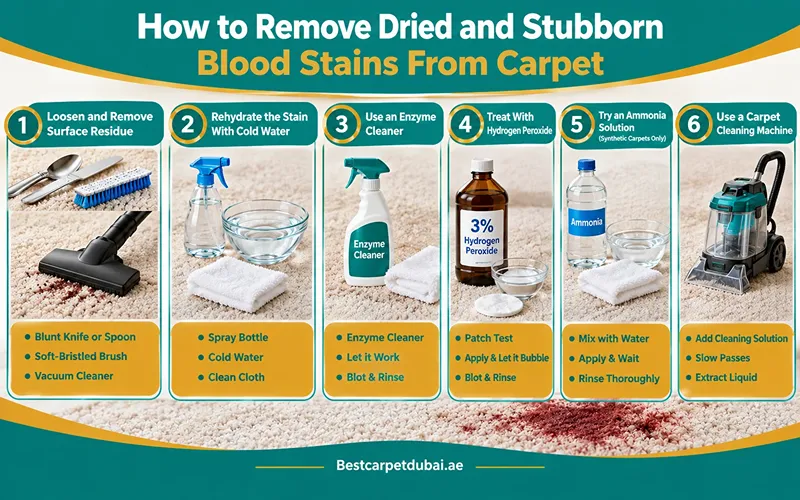
A dried blood stain on carpet needs more time and a little more chemistry, but it is rarely a lost cause. The key is to rehydrate the stain first, then use a cleaner that can break down the bonded proteins.
Step 1: Loosen and Remove Surface Residue
Use a blunt knife or spoon to gently scrape away any crusty, raised blood. Follow with a soft-bristled brush, using light strokes in one direction. Vacuum up the loose flakes before adding any liquid. This keeps you from turning dry flakes back into a fresh, spreading stain.
Step 2: Rehydrate the Stain With Cold Water
Spray the area lightly with cold water and leave it for 10 to 15 minutes. This softens the dried blood and makes it easier for cleaners to work. Blot away the excess before moving on.
Method 1: Use an Enzyme Cleaner
Enzyme cleaners are often the most effective choice for dried blood because they are designed to break proteins apart. Spray the product onto the stain, making sure it reaches the base of the fibres. Leave it for the time stated on the label, often 15 to 30 minutes, and keep the area slightly damp during that time. Blot, rinse with cold water, and repeat if needed. Always check the label first, because many enzyme cleaners are not suitable for wool or silk.
Method 2: Treat Stubborn Residue With Hydrogen Peroxide
For a stain that will not budge, 3% hydrogen peroxide is a powerful option.
- Patch test on a hidden area, such as inside a closet, and wait for it to dry to check for lightening.
- Apply a small amount directly to the stain with a dropper or cotton pad. Do not pour it.
- Let it bubble for five to ten minutes.
- Blot with a dry cloth, rinse with cold water, and blot dry.
- Repeat once or twice if necessary, rather than leaving it on for a long time.
Avoid hydrogen peroxide on wool, silk and dark or brightly coloured carpets unless your patch test is completely clean.
Method 3: Try an Ammonia Solution (Synthetic Carpets Only)
For very stubborn stains on nylon, polyester or olefin carpets, mix one tablespoon of clear household ammonia with half a cup of cold water. Apply a small amount, leave it for five minutes, then blot. Rinse thoroughly with cold water, as ammonia residue can damage fibres over time. Work in a well-ventilated room, and never use ammonia on wool, which it can damage.
Method 4: Use a Carpet Cleaning Machine
If you own a portable spot cleaner or carpet extractor, it can finish the job well. Fill it with cold water and a carpet-safe OXY or enzyme formula, make slow passes over the stain and a few centimetres around it, and extract as much liquid as you can. Machines are especially useful for larger stains, because they remove the dissolved blood instead of just moving it around.
Home Remedies and Cleaning Solutions for Blood Stains
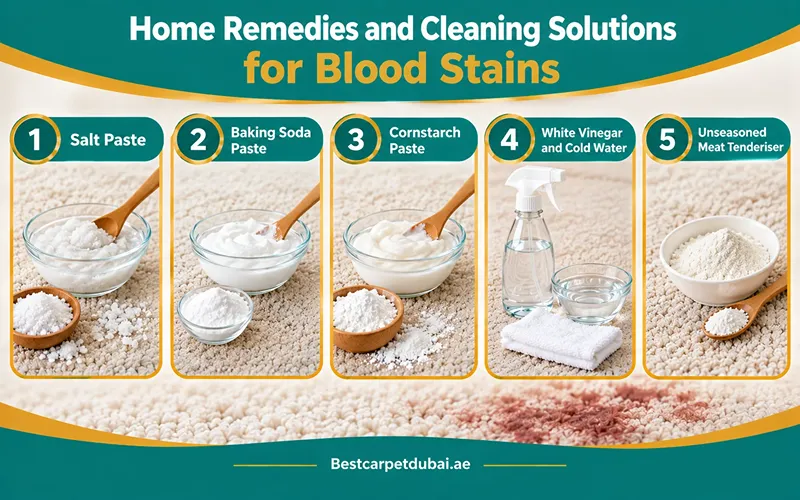
If you do not have a dedicated carpet stain remover, these home remedies can work well, especially on fresh or lightly set stains. Patch test each one first.
Salt Paste
Mix cold water and table salt into a thick paste. Spread it over the stain and leave it for 15 to 20 minutes. Salt helps draw moisture and blood up out of the fibres. Blot with a damp cold cloth, let the area dry, then vacuum up any remaining salt.
Baking Soda Paste
Combine two parts baking soda with one part cold water. Apply the paste, leave it for about 30 minutes, then blot it away with a damp cloth. Baking soda is gentle and also helps reduce odours. Vacuum once the area is fully dry.
Cornstarch Paste
Cornstarch works the same way as salt and is a good option for delicate carpets. Make a thick paste with cold water, apply it, let it dry completely, then brush and vacuum it away. The dried powder often lifts the stain with it.
White Vinegar and Cold Water
Mix one part white vinegar with two parts cold water in a spray bottle. Mist the stain, wait five to ten minutes, and blot. Rinse with plain cold water afterwards. Vinegar is best for light stains on synthetic carpets. Avoid it on natural stone flooring nearby, and never mix it with hydrogen peroxide in the same container.
Unseasoned Meat Tenderiser
This old trick works because many meat tenderisers contain natural enzymes that break down protein. Mix a tablespoon of unseasoned tenderiser with a little cold water to form a paste, apply it for 30 minutes, then blot and rinse. Because it digests protein, do not use it on wool or silk carpets.
Common Mistakes to Avoid When Removing Blood From Carpet
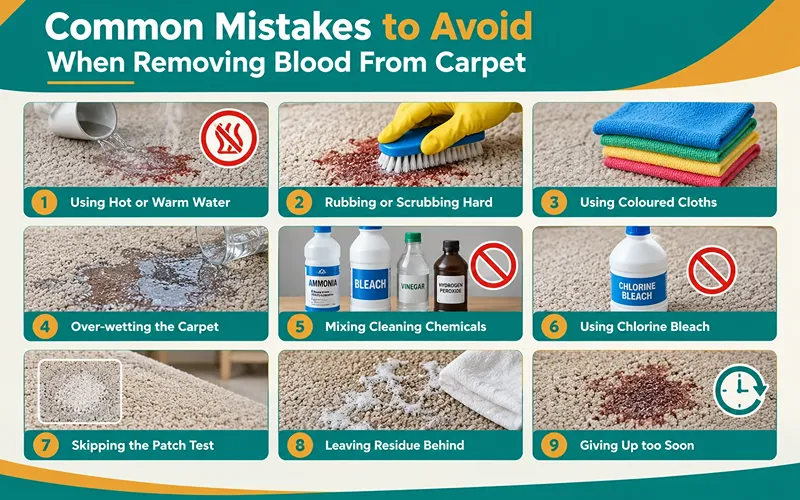
Many permanent blood stains are not caused by the blood itself, but by the way it was cleaned. Avoid these common errors.
- Using hot or warm water: Heat sets protein stains almost instantly. Keep every step cold, and do not use steam cleaners or hair dryers on the stain.
- Rubbing or scrubbing hard: This spreads the stain, pushes blood deeper and can fray or untwist the carpet fibres. Always blot and dab.
- Using coloured cloths: Dye can transfer onto wet carpet and leave a new stain.
- Over-wetting the carpet: Too much liquid soaks into the backing and padding. The stain may then “wick” back up to the surface as it dries, and trapped moisture can cause odours or mould.
- Mixing cleaning chemicals: Never mix ammonia with bleach, which releases toxic gas. Do not combine vinegar and hydrogen peroxide in one container either. Use one product at a time and rinse between them.
- Using chlorine bleach: It will remove the colour from your carpet along with the stain.
- Skipping the patch test: A five-minute test in a hidden spot can save you from a bleached patch in the middle of the room.
- Leaving residue behind: Soap and cleaner residue attract dirt, so always finish with a cold-water rinse.
- Giving up too soon: Dried stains often need two or three rounds of treatment. Be patient.
Practical Tips for Protecting Carpet Fibres and Preventing Damage
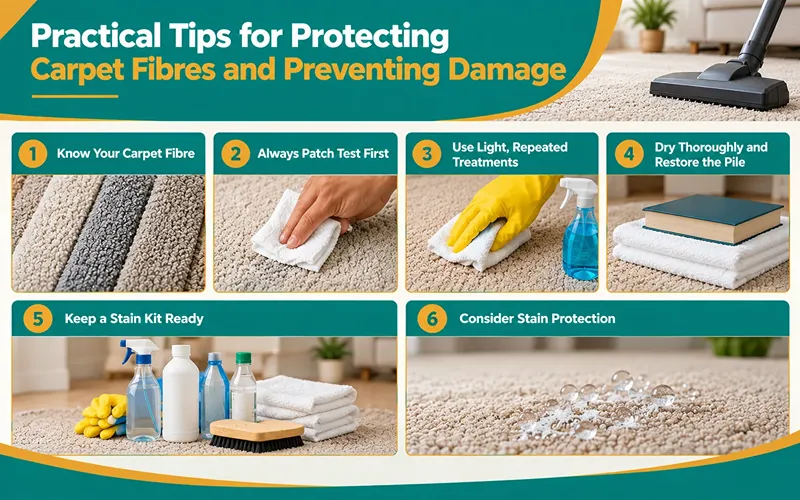
Removing the stain is only half the job. The aim is to leave your carpet looking and feeling the same as before.
Know Your Carpet Fibre
Check the label or manufacturer’s care guide before you choose a cleaner.
- Wool and other natural fibres: Sensitive to ammonia, enzymes, strong alkalis and peroxide. Use cold water and a very mild, wool-safe detergent.
- Nylon: Durable and handles most methods, but can be lightened by peroxide on darker colours.
- Polyester and olefin (polypropylene): Stain-resistant and usually tolerate stronger treatments well.
Always Patch Test First
Apply a small amount of any cleaner to a hidden area, wait until it dries, and check for fading, colour bleeding or texture changes before treating the visible stain.
Use Light, Repeated Treatments
Several gentle rounds are safer than one aggressive one. Small amounts of liquid, short dwell times and careful blotting protect both the fibres and the backing.
Dry Thoroughly and Restore the Pile
Always finish by drawing out moisture with weighted towels and letting the carpet air dry fully. Once dry, fluff the fibres with your fingers or a soft brush so the cleaned area blends in.
Keep a Stain Kit Ready
Store white cloths, gloves, a spray bottle, mild dish soap and a small bottle of hydrogen peroxide or enzyme cleaner together. When an accident happens, you can act within seconds.
Consider Stain Protection
Carpet protector treatments help fibres resist absorbing liquids, giving you more time to blot spills before they set. Regular vacuuming and professional cleaning every 12 to 18 months also keep fibres healthier and easier to clean.
Know When to Call a Professional
If the stain is very large, has soaked into the padding, sits on an expensive wool or antique rug, or has survived several careful attempts, call a professional carpet cleaner. They have extraction equipment and fibre-specific products that can save a carpet DIY methods might damage.
Conclusion
Knowing how to get blood out of carpet comes down to a few clear rules: act quickly, use cold water, and blot instead of rubbing. Fresh stains usually lift with cold water and a mild dish soap solution, followed by a rinse and thorough drying. For dried or stubborn blood stains, rehydrate the area first, then use an enzyme cleaner or 3% hydrogen peroxide, with ammonia kept as a last resort for synthetic carpets only. Home remedies such as salt, baking soda and cornstarch pastes are useful back-ups when you have nothing else on hand. Whatever method you choose, patch test first, avoid heat and harsh chemicals, and never mix cleaners. With a little patience and the right technique, your carpet can look as good as new.
Frequently Asked Questions
Does hydrogen peroxide bleach carpet?
It can. The 3% solution is mild, but it may lighten wool, silk and dark or brightly dyed carpets. Always patch test, apply small amounts and rinse with cold water afterwards.
Can you get old blood out of carpet?
Yes, in most cases. Rehydrate the stain with cold water first, then use an enzyme cleaner or hydrogen peroxide, repeating the treatment as needed.
Why should you never use hot water on blood?
Hot water causes the proteins in blood to bond tightly with carpet fibres, which sets the stain and makes it much harder to remove.