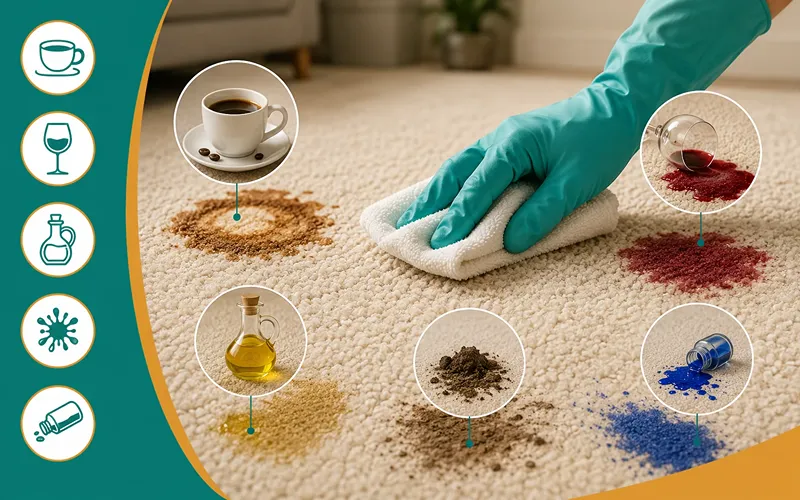
A dropped coffee mug, a tipped wine glass, a greasy handprint near the kitchen rug, carpet stains are one of those household headaches that always seem to happen at the worst possible moment. The good news is that most stains, even stubborn ones, can be lifted with a handful of ingredients you probably already have in your kitchen cabinet.
This guide by Best Carpet Dubai walks you through what to do the moment a spill happens, a simple method that works on almost any stain, and specific instructions for the trickiest culprits, coffee, wine, oil, and more.
What to Do When You Spill Something on Carpet
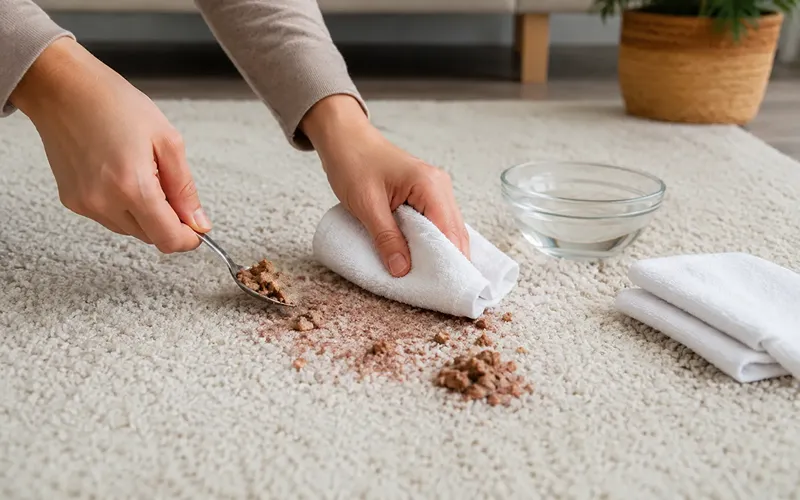
The single biggest factor in whether a stain comes out is how quickly you respond. Once a spill sits for a while, it has more time to work into the wall to wall carpet fibers and, in some cases, the padding underneath. As a first move, regardless of what was spilled:
- Remove any solid material (food chunks, wax, mud) before it gets pressed further in.
- Blot up as much liquid as you can with a clean, dry cloth.
- Avoid rubbing or scrubbing at this stage, that comes later, if at all.
Once the excess is gone, you can move on to identifying the stain and choosing the right treatment.
What You Need to Clean Carpet Stains
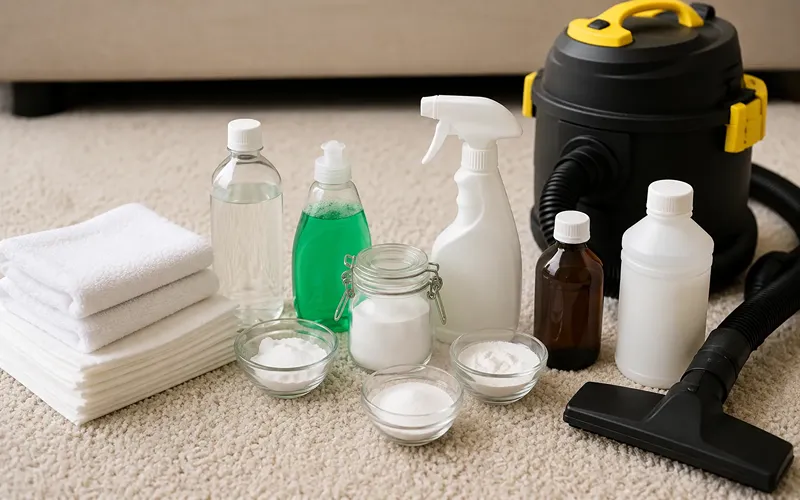
A small stain-response kit kept somewhere easy to grab makes a real difference. Most of what you need is inexpensive and works across several stain types:
- Clean white cloths or plain paper towels (colored towels can transfer dye onto light carpet)
- White vinegar
- Mild, unscented dish soap
- Baking soda and cornstarch
- Hydrogen peroxide (light-colored carpets only, used sparingly)
- Rubbing alcohol
- An enzyme-based cleaner (for pet stains)
- A spray bottle for mixing solutions
- A wet/dry shop vacuum, if you have one
How to Clean Any Carpet Stain: 7 Simple Steps
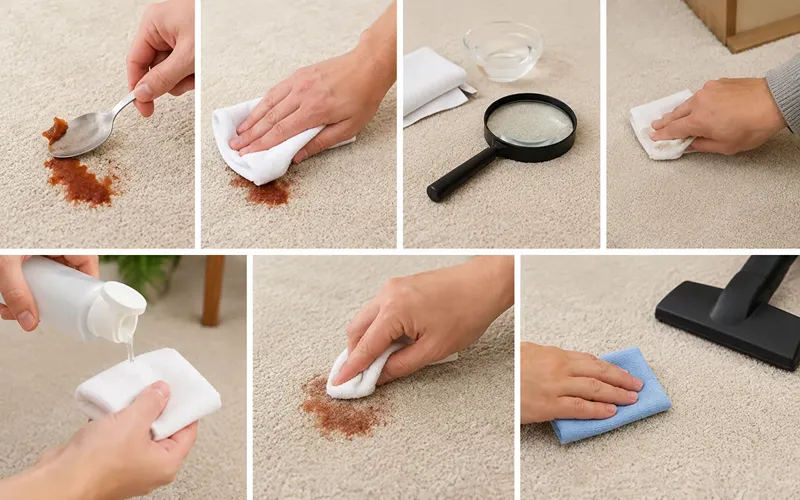
If you’re not sure exactly what you’re dealing with, or the stain isn’t covered in a section below, this general process is a safe starting point for most fresh spills:
- Remove excess material. Scrape off anything solid or semi-solid with a spoon or dull knife.
- Blot the spill. Press a dry cloth onto the area and lift straight up, don’t drag or rub.
- Identify the stain type (see the section below) so you can choose an appropriate cleaner.
- Patch-test your cleaning solution on a hidden section of carpet, such as inside a closet or under furniture, and wait a few minutes to check for discoloration.
- Apply a small amount of the solution to a cloth, not directly onto the carpet, to avoid oversaturating the fibers.
- Blot from the outer edge toward the center, so you’re not spreading the stain outward.
- Rinse lightly with a cloth dampened in plain water, then blot dry thoroughly or use a wet/dry vacuum to pull out excess moisture.
Identify the Stain Before Cleaning
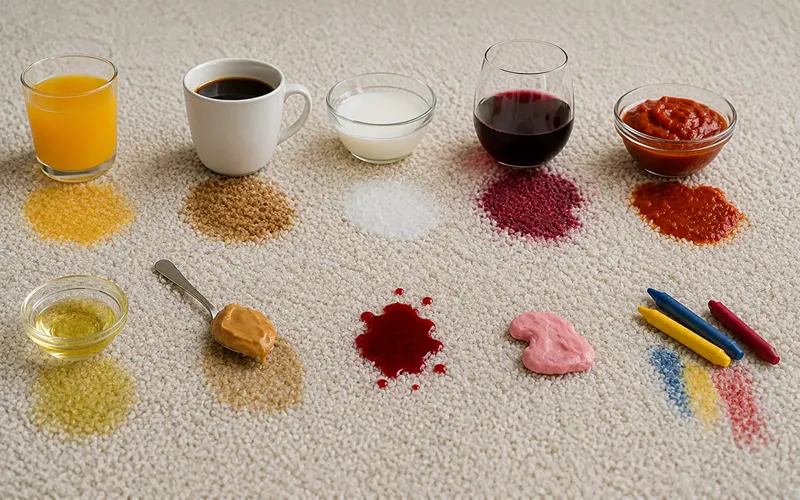
Different stains respond to different treatments, so a quick identification step can save you time and prevent a cleaning mistake:
- Water-based (juice, soda, tea): usually lift with light dilution and a mild soap solution.
- Oil-based (cooking oil, grease, motor oil, some makeup): repel water, so they need an absorbent powder before any liquid cleaner.
- Protein-based (blood, dairy, egg): respond best to cold water; heat can cause proteins to bind more tightly to fibers.
- Pigmented (coffee, wine, tomato sauce, chocolate): contain tannins or dyes that need a targeted, gentle cleaning approach and sometimes several rounds of treatment.
- Solid or waxy (gum, candle wax, crayon): typically need a hardening/freezing step before they can be lifted off, rather than a liquid cleaner.
How to Remove Coffee Stains from Carpet
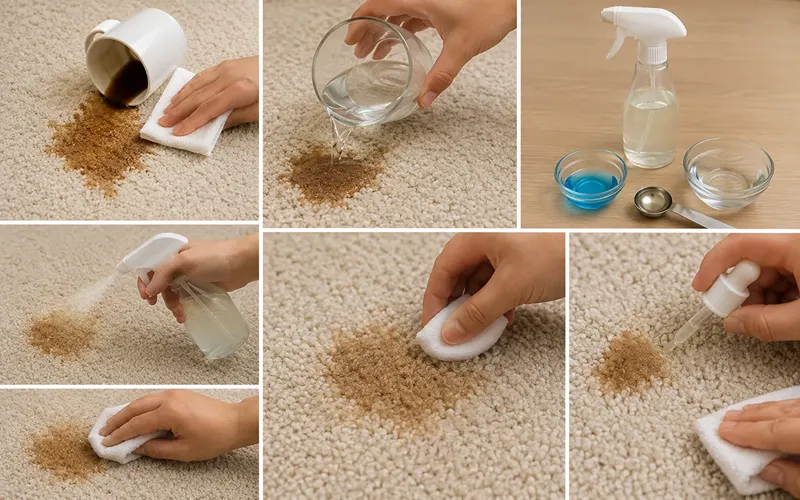
Coffee stains combine tannins (the pigment) with natural oils, which is why one cleaning pass often isn’t enough.
- Blot immediately with a dry cloth to lift as much liquid as possible.
- Dilute with cool water, then blot again. Cool water is generally the safer choice, since heat can make some pigments harder to remove, though results vary by carpet type.
- Mix a cleaning solution: one tablespoon of dish soap, one tablespoon of white vinegar, and two cups of warm water in a spray bottle. The vinegar helps loosen the tannins while the soap works on the oily residue.
- Apply and blot, working from the edges of the stain toward the center.
- For a stain that remains after this, try a light peroxide treatment. Mix a small amount of hydrogen peroxide (a tablespoon or two) with a drop of dish soap, dab it onto the stain only, and blot after a few minutes. Always patch-test first, since hydrogen peroxide can lighten some carpet dyes, use it sparingly and only where needed.
Coffee with milk or cream usually takes an extra round or two, since the added proteins bind with the tannins and make the stain more persistent.
How to Remove Red Wine Stains from Carpet
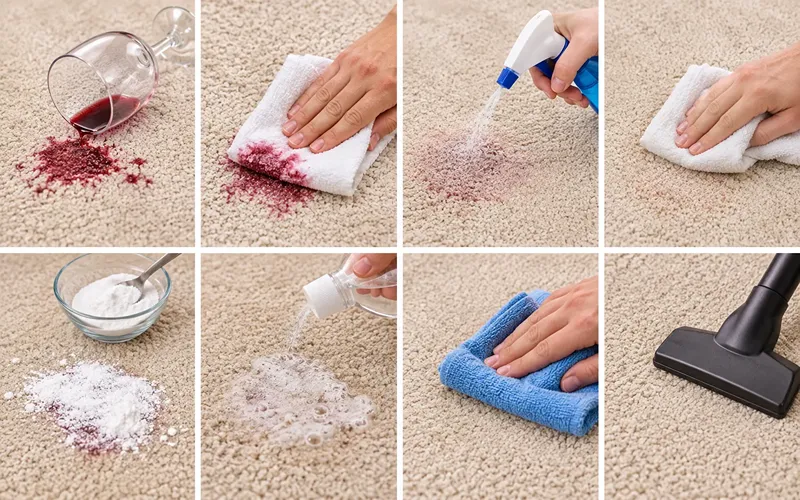
Red wine is a tough combination of tannins and additional pigments called anthocyanins, so it deserves a careful approach rather than a single dramatic fix.
- Blot firmly, working inward from the outer edge of the stain.
- Lightly dilute with cool water and blot again.
- Apply a mild cleaning solution, the same dish soap, vinegar, and warm water mix used for coffee works well here too.
- If some pigment remains, dust the damp area lightly with baking soda. This helps absorb residual moisture and pigment as it dries, vacuum it away once dry. If you notice fizzing where vinegar meets the baking soda, that’s just a natural acid reaction, not proof the stain is being lifted. Treat the baking soda as an optional drying aid, not the main cleaning step.
- Rinse and dry with a cloth dampened in plain water, then press dry with a towel.
For wine that has already dried, rehydrate the area first with a little cool water to soften the pigment before working through the same steps. Older, deeply set wine stains often respond better to professional treatment than repeated home attempts.
How to Remove Oil and Grease Stains from Carpet
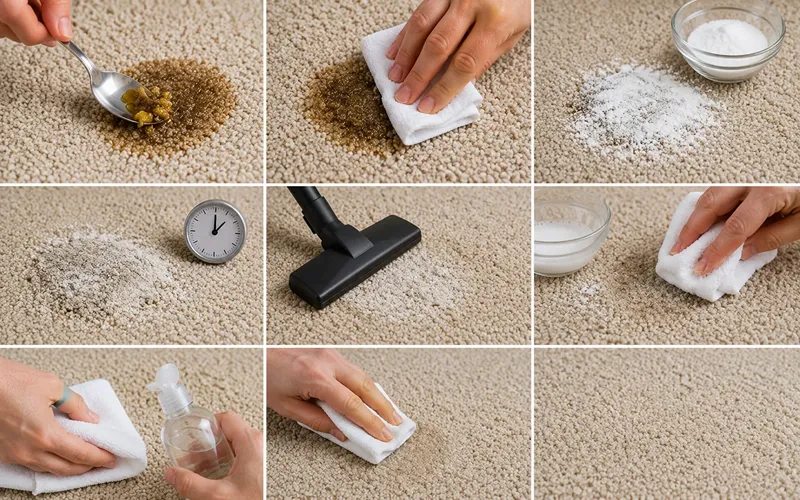
Oil-based stains, cooking oil, motor oil, butter, or makeup, behave differently from coffee or wine because oil repels water rather than dissolving in it. Adding water to a grease stain before absorbing the oil can spread it further instead of removing it.
- Scrape off any excess solid or semi-solid material with a spoon or dull knife.
- Blot, don’t pour, to soak up as much surface oil as possible.
- Cover with baking soda or cornstarch. These powders absorb oil out of the fibers as they sit.
- Let it sit for 15–30 minutes, then vacuum thoroughly.
- Break down remaining residue with dish soap and warm water, blotting repeatedly until no more grease transfers to the cloth.
- For stubborn spots, use a small amount of rubbing alcohol on a cloth (never poured directly on the carpet), then let the area air-dry.
Patch-test rubbing alcohol or any solvent before using it on a visible stain, some carpet dyes and fibers react to it.
How to Remove Other Common Carpet Stains
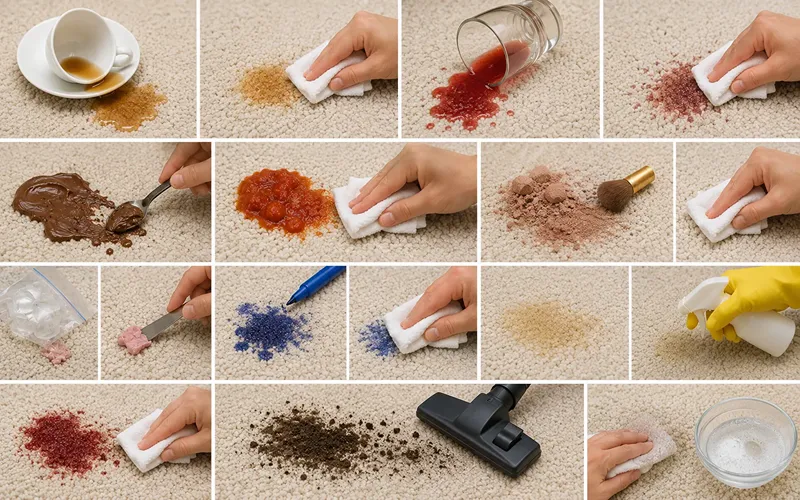
Tea: Similar to coffee, tannin-based. Blot, dilute with cool water, then use the same dish soap and vinegar solution.
Juice and soda: Blot up the liquid, dilute with cool water, and treat with a mild soap solution. Sugary residue can attract dirt if left untreated, so rinse thoroughly.
Chocolate: Scrape off any solid chocolate first, then blot and treat with a dish soap solution, working in cool water rather than warm.
Tomato sauce: Blot first, since tomato-based stains are both pigmented and slightly oily. A dish soap and cool water solution usually handles it, with a vinegar rinse if pigment remains.
Makeup: Depends on the product, oil-based makeup (foundation, lipstick) responds to the grease method above, while water-based products (some mascaras) respond to a mild soap solution.
Gum or wax: Harden the material first with an ice cube held in a bag, then gently scrape it off with a dull knife before treating any remaining mark.
Ink: Dab (never rub) with rubbing alcohol on a cloth, working from the outside in after a patch test. Fresh ink usually lifts within a few applications; older marks may need professional help.
Pet stains: Blot up as much moisture as possible, then treat with an enzyme-based cleaner, which breaks down the organic compounds responsible for both the stain and the odor, regular soap alone typically won’t fully neutralize the smell.
Blood: Use cold water only and blot repeatedly with a little dish soap; warm or hot water can make protein-based stains harder to remove.
Mud and dirt: Let it dry completely, then vacuum before applying any liquid, cleaning wet mud usually just smears it deeper into the fibers.
Carpet Stain Removal Quick-Reference
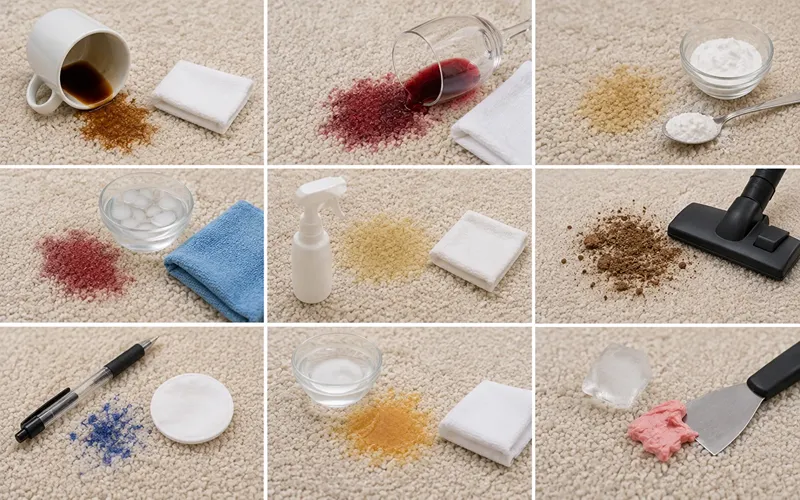
| Stain | First Action |
| Coffee | Blot and lightly dilute; follow with a mild dish soap and vinegar solution |
| Red wine | Blot immediately, dilute, then use a carpet-safe soap solution |
| Oil/grease | Absorb excess oil with baking soda or cornstarch before using any liquid cleaner |
| Blood | Blot with cold water and a little dish soap; avoid heat |
| Pet urine | Blot up moisture, then treat with an enzyme-based cleaner |
| Mud | Let dry fully, vacuum, then treat any remaining mark |
| Ink | Patch-test, then dab with rubbing alcohol on a cloth |
| Tea/juice/soda | Blot, dilute with cool water, treat with mild soap solution |
| Gum/wax | Harden with ice, scrape off, then treat any residue |
Cleaning Tips for Different Carpet Types
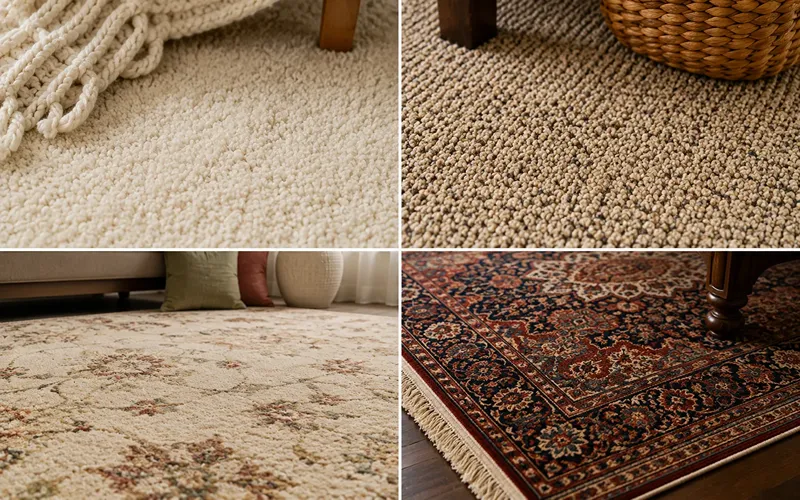
Not every carpet reacts to cleaning products the same way, so it’s worth factoring material into your approach:
- Wool and other natural fibers absorb liquid more deeply than synthetic carpet and can be more sensitive to harsh chemicals or high heat, gentler solutions and lower water volume are safer.
- Looped or berber carpet can snag or fray if scrubbed, which makes the blot-only rule especially important.
- Dyed or patterned carpet is more prone to discoloration from peroxide, bleach-based products, or strong solvents, patch-testing matters more here than on plain synthetic carpet.
- Delicate or antique rugs (Persian, Oriental, and similar) often do best with the mildest possible treatment, or a professional’s help rather than home solvents.
When in doubt, check the manufacturer’s care instructions or any documentation that came with the carpet before applying a cleaning solution, this is especially worthwhile for wool, natural-fiber, or high-value rugs.
Carpet Cleaning Mistakes to Avoid
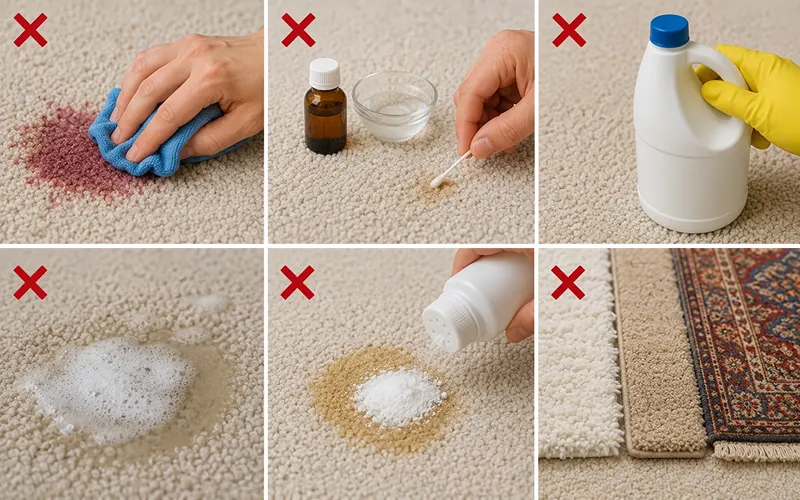
- Rubbing instead of blotting. This is the most common error and the fastest way to spread a stain and damage fibers.
- Skipping the patch test. Applying a new solution directly to a visible stain risks discoloration you can’t undo.
- Reaching for bleach. It can discolor or weaken carpet fibers, even on stains it technically removes.
- Oversaturating the carpet. Excess liquid can reach the backing or padding underneath, leading to lingering dampness, odor, or mold.
- Skipping the powder step on grease. Going straight to soap and water on an oil stain without absorbing the excess first tends to spread the grease rather than lift it.
- Assuming every carpet reacts the same way. A method that’s safe on synthetic carpet isn’t automatically safe on wool or a dyed, patterned rug.
Carpet Cleaning Safety Tips
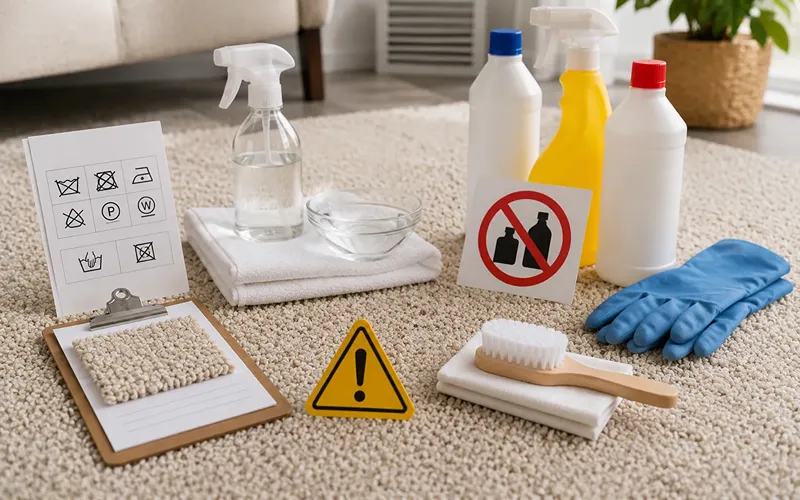
- Check the carpet manufacturer’s care instructions when available, especially for wool or specialty carpet.
- Always patch-test a cleaning solution on a hidden area before treating a visible stain.
- Never mix different cleaning chemicals, combining products like bleach and ammonia-based cleaners, for example, can create dangerous fumes.
- Apply solutions to a cloth rather than pouring them directly onto the carpet, to avoid oversaturating the fibers or padding.
- Ventilate the room while using cleaning products, especially rubbing alcohol or strong solvents.
- Keep all cleaning products away from children and pets, and follow the instructions on the product label.
When to Call a Professional Carpet Cleaner
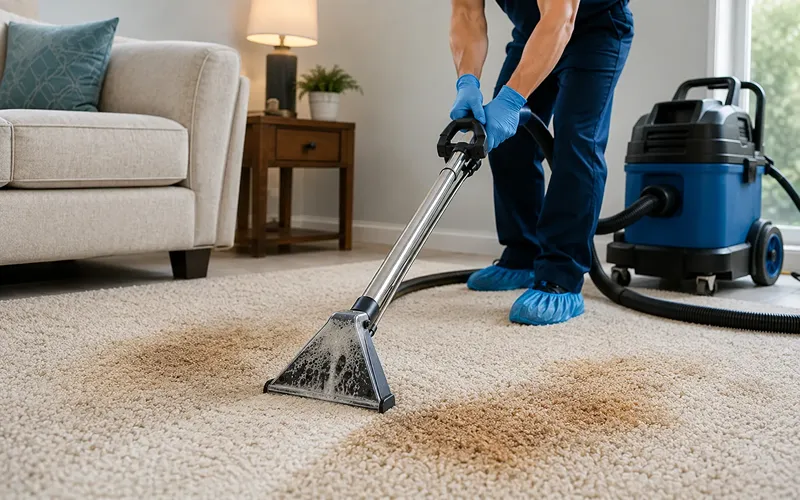
Most fresh stains respond well to the DIY methods above, but a few signs suggest it’s time to bring in a professional instead of continuing to treat it yourself:
- The stain keeps reappearing after cleaning, which often means it has reached the padding underneath.
- It’s an old or deeply set stain that hasn’t responded to a couple of rounds of home treatment.
- The affected area is large, or the carpet is a delicate material like wool or an antique rug.
- You’re dealing with a stain type, like set-in pet stains or old ink, that tends to need deeper extraction than blotting can achieve.
Professional cleaners typically use hot water extraction and specialized solvents that reach further into the fibers and padding than home methods can. For stubborn, older stains, this is often the most reliable fix.
How to Prevent Future Carpet Stains
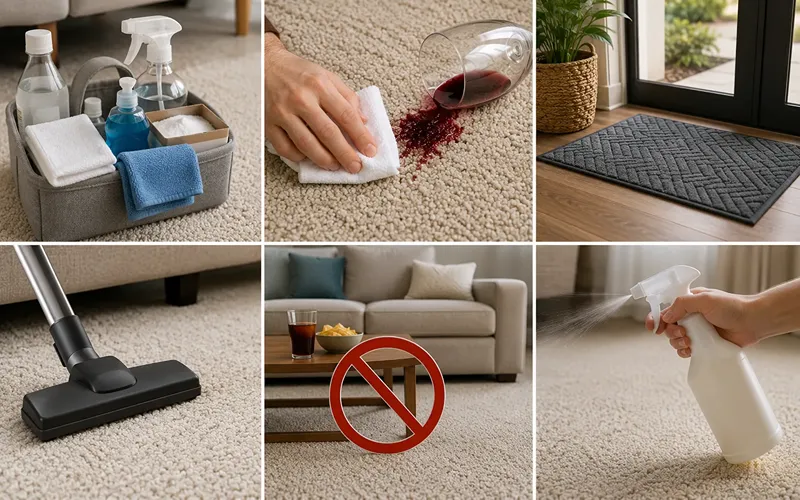
- Keep a stain kit (clothes, vinegar, baking soda, dish soap) somewhere easy to grab.
- Treat spills within the first few minutes when possible, this timing matters more than which product you use.
- Use entry mats at doorways to cut down on the dirt and moisture that gets tracked onto carpet.
- Vacuum regularly so loose dirt doesn’t work its way into the fibers and make future stains harder to lift.
- Where practical, keep food and drinks away from carpeted areas, especially in high-traffic rooms.
- Consider a carpet protector spray in spots that see frequent spills, like near a dining table.
Frequently Asked Questions
How do you remove a stain from carpet quickly?
Blot up as much liquid as possible right away, then apply a mild cleaning solution suited to the stain type, working from the outer edge inward. Speed matters more than any single product.
What is the best homemade carpet stain remover?
A mix of dish soap, white vinegar, and warm water handles most water-based and pigmented stains, while baking soda or cornstarch works best on oil and grease.
Can I use dish soap on the carpet?
Yes, a mild, unscented dish soap diluted in water is one of the gentler and more widely recommended options, though it’s still worth patch-testing on delicate or dyed carpet first.
Can baking soda remove carpet stains?
Baking soda is most effective as an absorbent for oil and grease, and can help draw out moisture and residue from other stains as they dry. It’s a helpful supporting step rather than a standalone fix for every stain type.
How do I remove an old carpet stain?
Rehydrate the area with a little cool water to soften the residue, then work through the appropriate cleaning steps for that stain type. Older stains often need a few extra rounds, and some may need professional treatment.
How do I remove pet stains and odors from carpet?
Blot up the moisture first, then use an enzyme-based cleaner, which breaks down the compounds causing the odor rather than just masking it.
Should I use hot or cold water on carpet stains?
Cool water is generally the safer starting point, especially for protein-based stains like blood, since heat can make some stains harder to remove. Results vary by stain and carpet type, so cool water remains the more cautious choice.
When should I call a professional carpet cleaner?
If a stain keeps returning after cleaning, covers a large area, involves a delicate carpet material, or hasn’t responded to a couple of home treatment attempts, a professional cleaner is usually the more reliable option.