
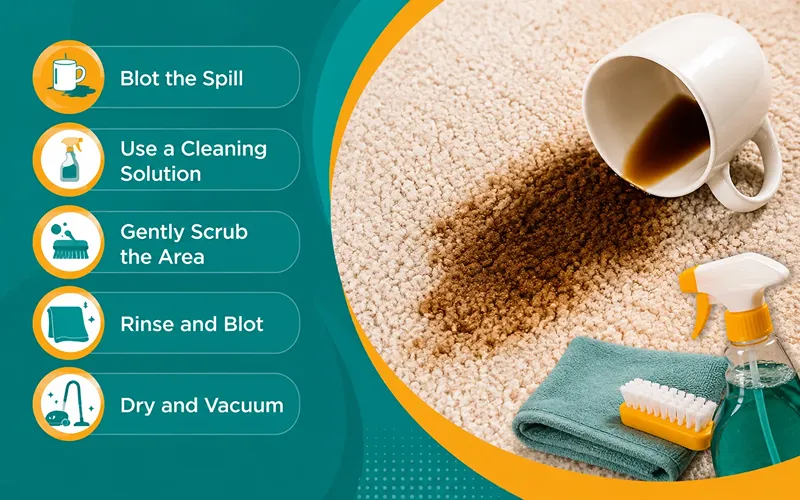
One tipped mug and your morning is suddenly a cleaning job. The good news: coffee is one of the more forgiving carpet stains if you deal with it properly. Most spills come out completely with things already in your kitchen, cold water, dish soap, white vinegar, baking soda.
This guide walks you through how to remove coffee stains from carpets in Dubai in both situations: the spill you caught right away, and the dark ring you only noticed days later. You’ll also find the mistakes that quietly make stains permanent, and a few habits that stop the next spill from becoming a problem at all.
Why Coffee Stains Are Harder Than They Look
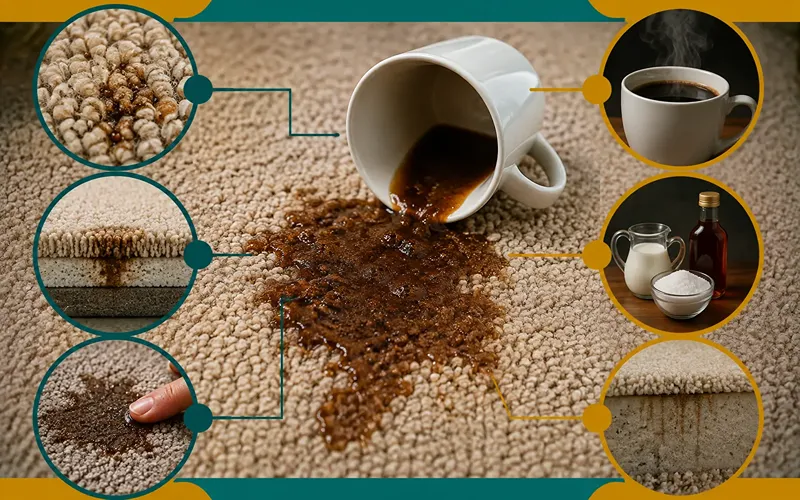
Coffee isn’t just brown water. Three things work against you:
Tannins. These are the natural plant compounds that give coffee its colour and slight bitterness. They bond to carpet fibres in the same stubborn way tea and red wine do.
Heat. Hot liquid opens up carpet fibres and sinks faster than a cold drink would. A hot spill has usually reached the backing before you’ve found a towel.
Add-ins. Milk, cream, sugar and flavoured syrups each bring their own problem. Milk proteins can sour and smell days later. Sugar dries sticky and starts collecting dust, so the spot slowly darkens even after the coffee itself is gone. Flavoured syrups often carry dyes of their own.
This is also why a stain can look gone when the sisal carpet is damp and reappear once it dries. If coffee soaked down into the padding, moisture wicks back up as it dries and carries the colour with it. That’s not a failed cleaning, it just means you need to go deeper and dry the spot properly.
Know Your Carpet Before You Start

Fibre type decides which cleaners are safe:
- Nylon and triexta are durable and usually stain-treated. Handles most household solutions well.
- Polyester resists water but holds oily residue, so creamy coffee clings harder.
- Olefin (polypropylene), water-resistant, but coffee can sit on top and dry into the surface.
- Wool, silk & cotton absorbent and sensitive. Skip vinegar, peroxide and anything strongly alkaline. Gentle blotting and cool water only, or call a professional.
- Plush, thick & pile acts like a sponge. The spill goes deeper than it looks.
Whatever you use, test it first on a hidden patch, inside a closet, under a sofa, and let it dry fully before treating the visible stain. Also check your wall to wall carpet warranty: some manufacturers void coverage if you use unapproved cleaners.
How to Remove a Fresh Coffee Stain from Carpet
Speed matters more than technique here. A spill treated in the first few minutes almost always comes out.
Step 1: Lift the Liquid First
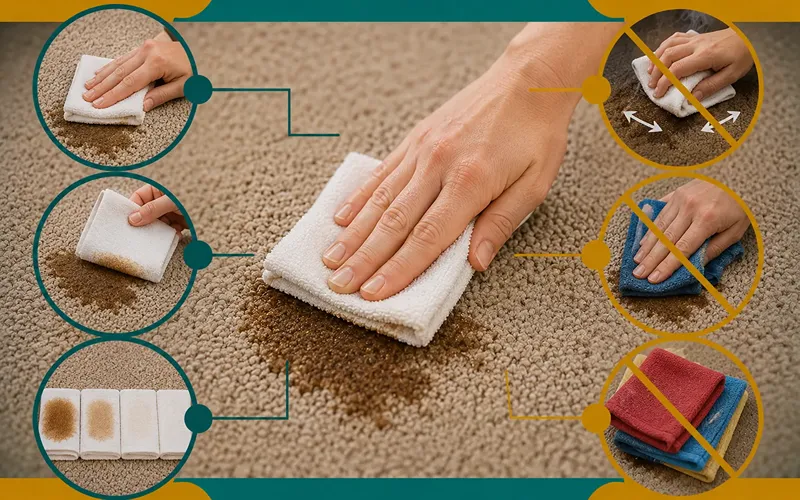
Grab a white cloth or plain paper towels. Press down firmly and hold. Lift, move to a dry section, press again. Keep going until the cloth stops picking up brown.
Work from the outside edge toward the middle. Blotting outward pushes the stain into clean wool carpet and makes the spot bigger.
Do not rub or scrub. Rubbing drives the coffee deeper and frays the fibre tips, which leaves a dull, fuzzy patch that shows even after the colour is gone.
Use white cloths only, coloured towels can transfer their own dye into damp carpet.
Step 2: Rinse with Cold Water
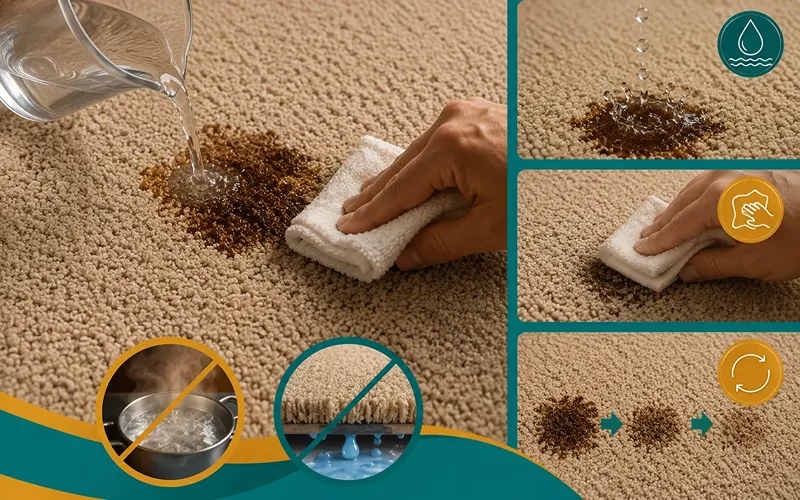
Splash a small amount of cold water onto the spot to dilute what’s left, then blot again. Repeat two or three times.
Two rules: keep the water cold, and go easy. Hot water can set tannin stains. Too much water soaks the padding and creates a slow-drying, potentially smelly problem underneath.
Step 3: Apply a Cleaning Solution
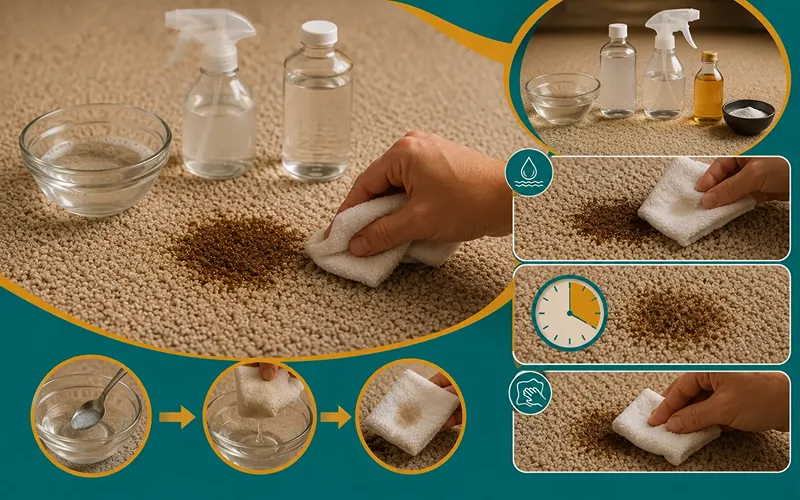
If the mark is still visible, mix one of the solutions below and dab it on with a cloth rather than pouring it. Let it sit for three to five minutes, then blot with a dry cloth.
Step 4: Rinse and Dry Properly
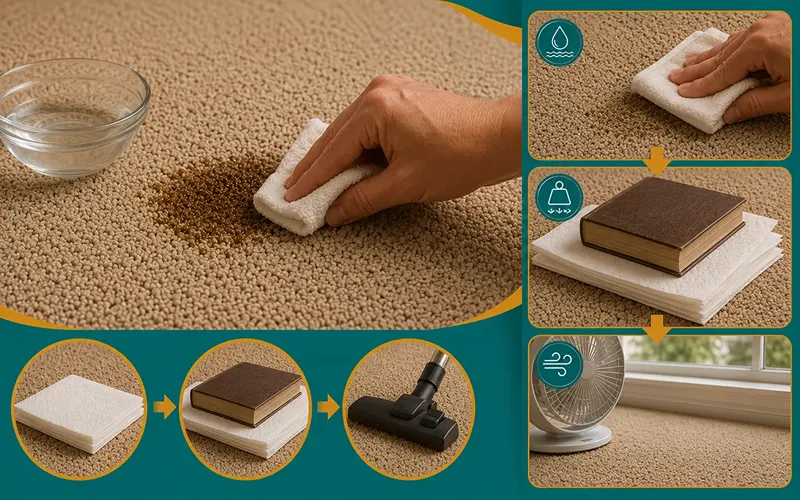
Rinse with a cloth dampened in cold water to pull out any leftover cleaner. Leftover soap is sticky and attracts dirt, which is how a “clean” spot turns grey a month later.
Then press a thick pad of dry paper towels over the area and weigh it down with a heavy book. Leave it for a few hours or overnight. This draws moisture up out of the backing instead of letting it dry from the top down. Open a window or run a fan, and vacuum once it’s fully dry to lift the pile back up.
How to Remove Dried Coffee Stains from Carpet
Old stains take patience and repetition rather than force. The goal is to soften the stain, then lift it in stages.
Step 1: Re-wet the Stain
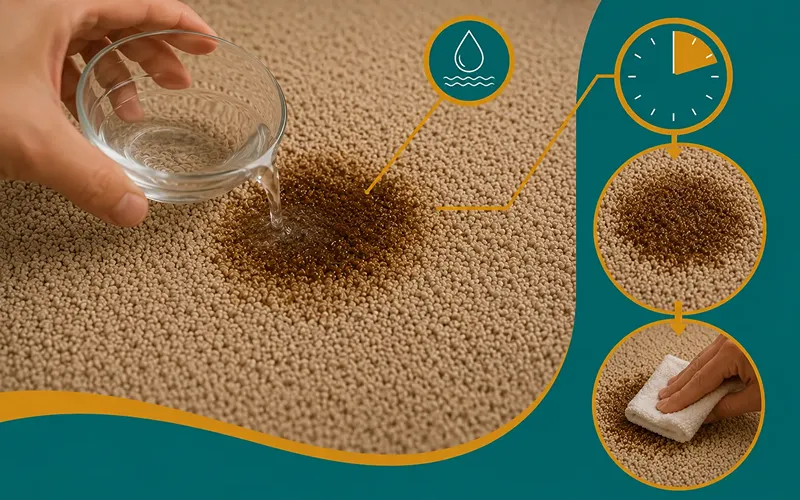
Dampen the dried spot with cold water and let it sit for five minutes. This loosens the bond between the tannins and the fibres so your cleaner can actually work. Blot up the excess before moving on.
Step 2: Treat with a Stronger Solution
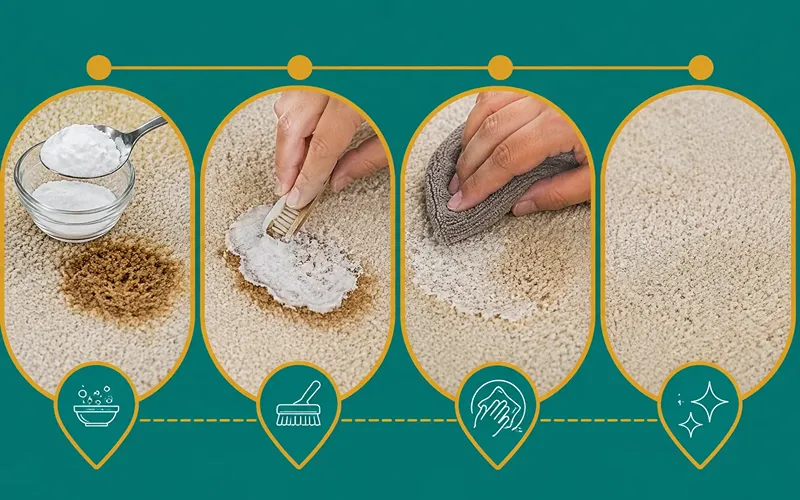
For dried stains, an oxygen-based cleaner or a peroxide paste (details below) usually does more than soap and water. Apply, wait, blot, don’t scrub.
Step 3: Repeat Three or Four Times
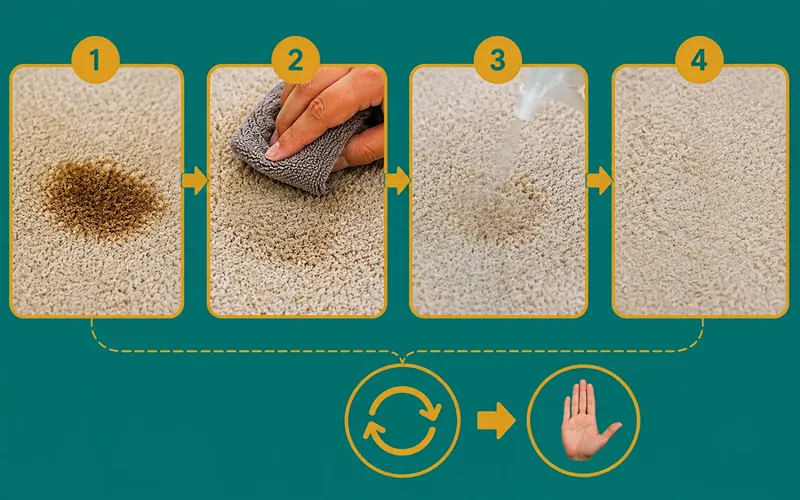
Old stains fade in layers. Expect several rounds with a rinse between each one. If the stain lightens a little each time, keep going. If two or three full rounds change nothing, stop, more scrubbing at this point damages the carpet more than it helps.
Step 4: Deal with the Wicking Problem
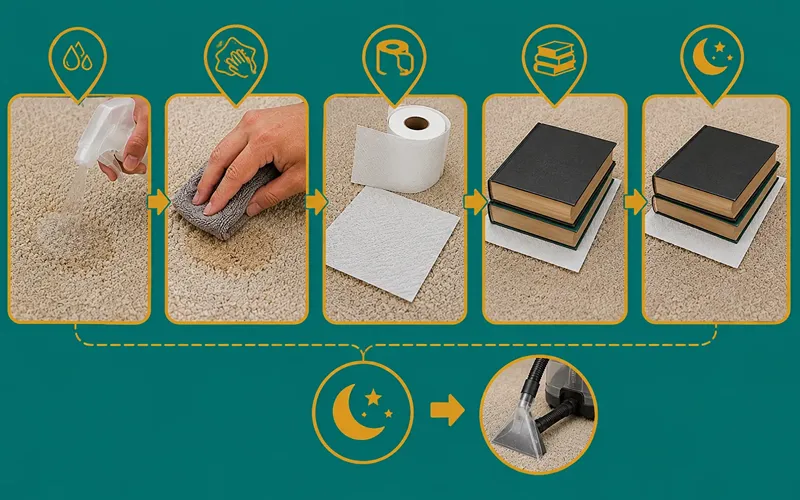
If the stain fades and then reappears after drying, coffee has reached the padding. Saturate the spot lightly with cold water, blot hard, then use the weighted paper-towel method for a full night. A rented or borrowed wet extraction machine handles this far better than towels if you have access to one.
Household Cleaning Solutions That Actually Work
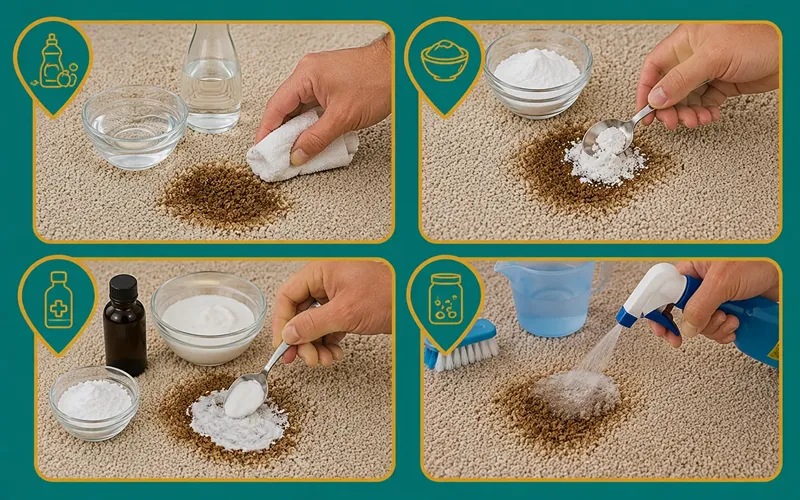
All of these use cold or room-temperature water. Test each one on a hidden area first.
Dish Soap and White Vinegar
The general-purpose option, best for fresh and moderately old stains.
Mix one tablespoon of liquid dish soap, one tablespoon of white vinegar and two cups of cold water. Dab on, wait three to five minutes, blot, then rinse thoroughly with cold water.
Dish soap breaks down the oils and sugars; vinegar helps neutralise the tannins. Rinse well, soap residue makes carpet sticky, and vinegar smell lingers a day or two.
Avoid wool.
Baking Soda
Best used as a follow-up for absorbing leftover moisture and odour, not as your main stain remover.
Blot the spill first, then sprinkle baking soda generously over the damp area. Leave it 15 to 20 minutes and vacuum thoroughly. For an old stain, mix it into a paste with a little cold water, spread it on, let it dry, then vacuum.
Vacuum properly, fine powder left in the pile is difficult to get out later.
Hydrogen Peroxide and Baking Soda Paste
The strongest household option for old, dark stains on light-coloured carpet.
Mix one part 3% hydrogen peroxide with two parts baking soda into a paste. Spread it on the stain, leave it for 10 to 15 minutes, blot with a white cloth and rinse with cold water.
Peroxide is a mild bleach. It can lighten dark or coloured carpet permanently and should never go on wool or silk. Test it and let the test spot dry completely before you commit.
Oxygen-Based Stain Removers
Products like OxiClean and similar oxy carpet sprays are the most reliable choice for set-in stains. Mix or spray per the label, leave five to ten minutes, blot and rinse. Test first, they can lighten delicate fibres too.
What to Skip
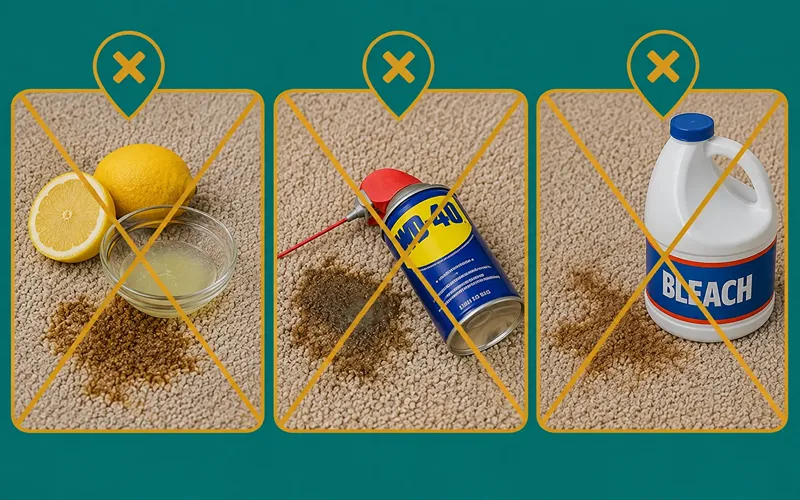
Lemon juice is often recommended, but the citric acid can bleach carpet dye, especially in sunny spots, and the sugars leave a sticky film. There are better options.
WD-40 appears in a lot of stain-removal lists. It leaves an oily residue that attracts dirt, which trades one stain for another.
Chlorine bleach should stay out of this entirely. Even on white carpet it can yellow synthetic fibres and weaken them permanently.
Common Mistakes That Make Coffee Stains Worse
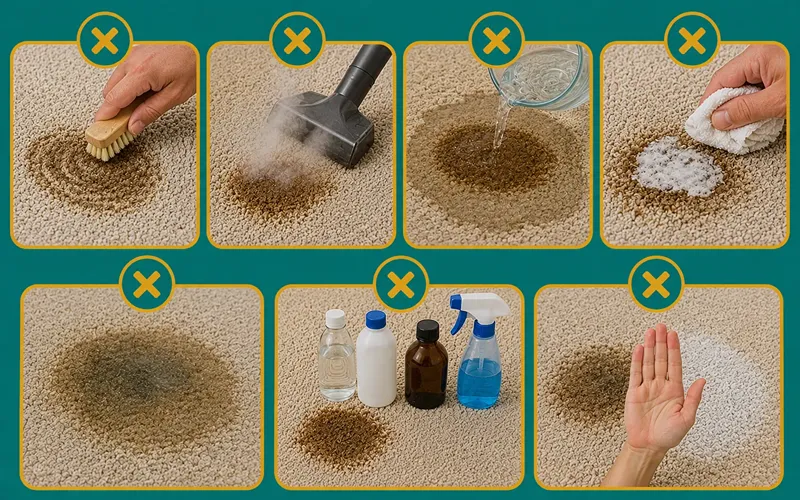
Scrubbing. The single most common one. It spreads the stain sideways, pushes it downward, and permanently roughens the fibre tips.
Using hot water or a steam cleaner too early. Heat sets tannin stains. Save steam for after the colour is out.
Soaking the carpet. Over-wetting sends coffee into the padding and invites mildew. Damp is enough.
Skipping the rinse. Leaving soap, vinegar or peroxide in the carpet creates a dirt magnet. The spot returns as a grey patch weeks later.
Not drying it properly. A spot that stays damp for two days can smell, particularly if the coffee has milk in it.
Mixing cleaners. Layering vinegar, peroxide, ammonia and commercial products on top of each other can create unwanted reactions and discolouration. Rinse fully between different methods.
Trying the same failed method five times. If a stain looks yellow or worse after repeated attempts, stop and get professional help.
When to Call a Professional Carpet Cleaner
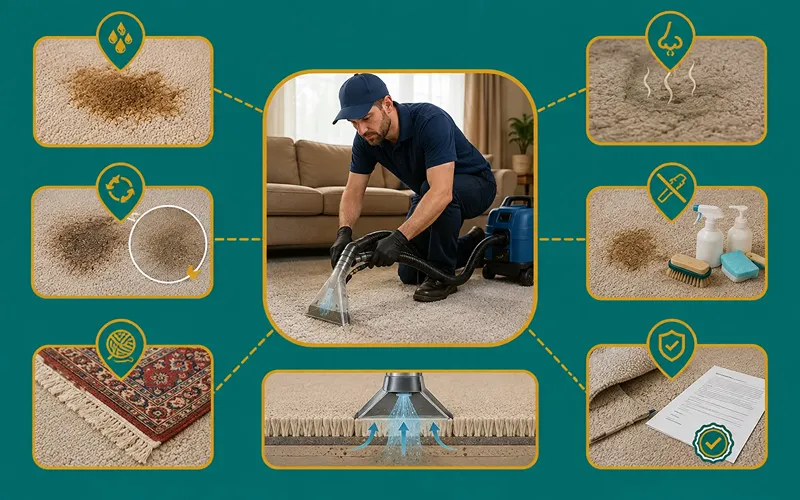
DIY handles most coffee spills. Bring in a professional when:
- The stain is large enough that it clearly reached the padding
- It keeps reappearing after every cleaning
- Your carpet is wool, silk, or a valuable rug
- There’s a lingering sour or musty smell from milk or cream
- Several DIY attempts have already failed
- The carpet is new and still under warranty, check what your warranty requires first
Professionals use hot water extraction and fibre-specific solutions that pull the stain out of the backing rather than just off the surface.
How to Prevent Coffee Stains on Carpet
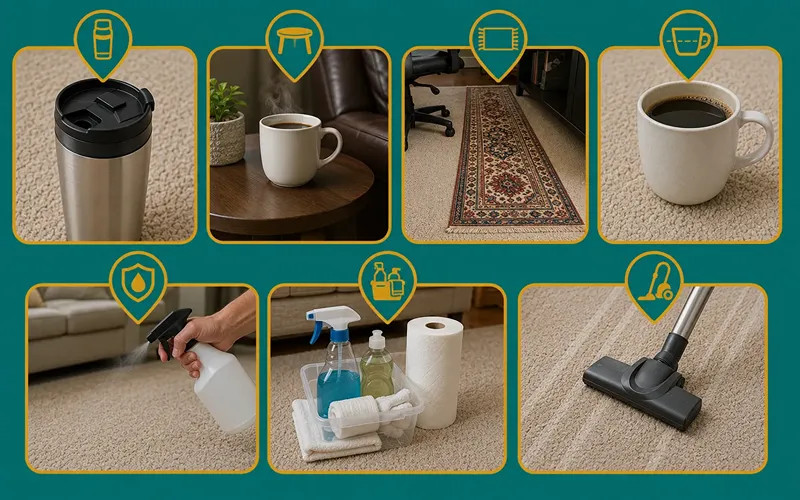
Prevention is far easier than removal:
- Use a travel mug with a sealing lid for anything you carry across a carpeted room.
- Set the cup down on a hard surface, a side table or tray, not the floor or a soft arm rest.
- Put a rug or runner in the spot where you usually drink, near a desk or reading chair.
- Fill mugs three-quarters full. Most spills are the top inch of an overfilled cup.
- Apply a carpet protector every 6 to 12 months, especially in high-traffic rooms. It won’t stop a spill but it buys you the minutes that matter.
- Keep a small stain kit handy, white clothes, a spray bottle of the dish soap solution, paper towels. Speed is most of the battle.
- Vacuum weekly. Clean fibres release stains more easily than dirt-loaded ones.
Final Thoughts
Knowing how to remove coffee stains from carpet comes down to a few basics: blot instead of rubbing, keep everything cold, work from the outside in, rinse out whatever you apply, and dry the area properly. Fresh spills usually need nothing more than water and dish soap. Dried stains need patience and two or three repeat treatments.
And when a stain has reached the padding or your carpet is wool, calling a professional early costs less than replacing a section of carpet you damaged trying to save it.
Frequently Asked Questions
Can old coffee stains be removed from carpet?
Usually, yes, it just takes several rounds. Re-wet the stain with cold water, apply a peroxide-and-baking-soda paste (on a light carpet) or an oxygen cleaner, blot, rinse, and repeat. Stains that have sat for months may not come out completely at home.
Does vinegar remove coffee stains from carpet?
Vinegar helps break down the tannins and works well combined with dish soap and cold water. It’s safe on most synthetic carpets but should be avoided on wool, and it needs a proper rinse afterwards.
Will dish soap alone get coffee out of carpet?
For a fresh spill, often yes. A few drops of dish soap in two cups of cold water, dabbed on and blotted, handles most same-day stains. Rinse well so no soap stays behind.
Why does my coffee stain keep coming back?
The coffee soaked into the carpet padding. As the area dries, moisture wicks the colour back up to the surface. Flush the spot with cold water, blot hard, and dry it under weighted paper towels overnight.
Can I use a steam cleaner on a coffee stain?
Not as your first step, heat can set tannins. Remove the colour with cold-water methods first, then use a steam or extraction cleaner to clean and freshen the area.
How do I remove a coffee stain from white carpet?
Blot, treat with dish soap and cold water, then use diluted hydrogen peroxide if the mark remains. Peroxide is safer than chlorine bleach, which can yellow synthetic fibres. Always test in a hidden spot first.
Does the stain come out if the coffee has milk and sugar?
Yes, but plan on extra rinsing. Dish soap handles the fats and sugars; baking soda afterwards absorbs any remaining odour. Milky spills need thorough drying to avoid a sour smell.