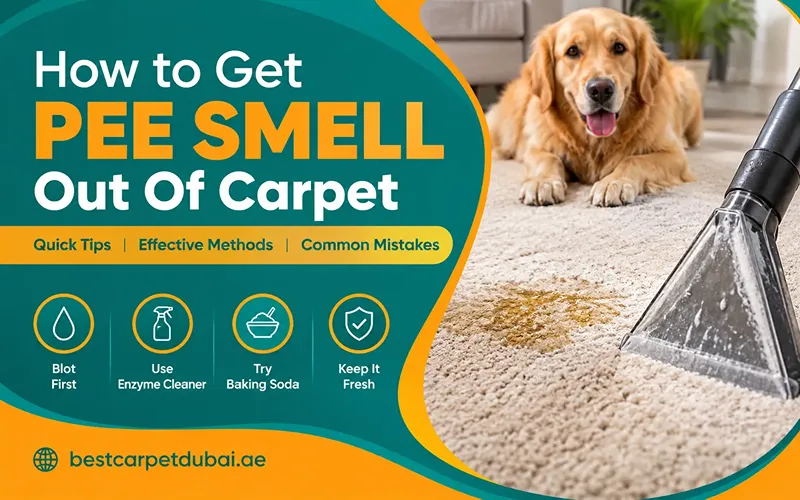
A urine accident on carpet is never just a stain. Long after the spot looks clean and dry, the smell can come back on a humid day or when someone walks across the room. If you are searching for how to get pee smell out of carpet, the reason your last attempt failed is usually the same: the surface was cleaned, but the source underneath was left behind.
This guide walks through what actually removes urine odor, how to handle both fresh and old accidents, what to do about pet urine, and the common mistakes that can permanently lock the smell into carpets in Dubai.
Why Urine Smell Is So Hard to Remove
Understanding what you are dealing with makes the cleaning steps make sense.
Uric acid crystals are the real problem
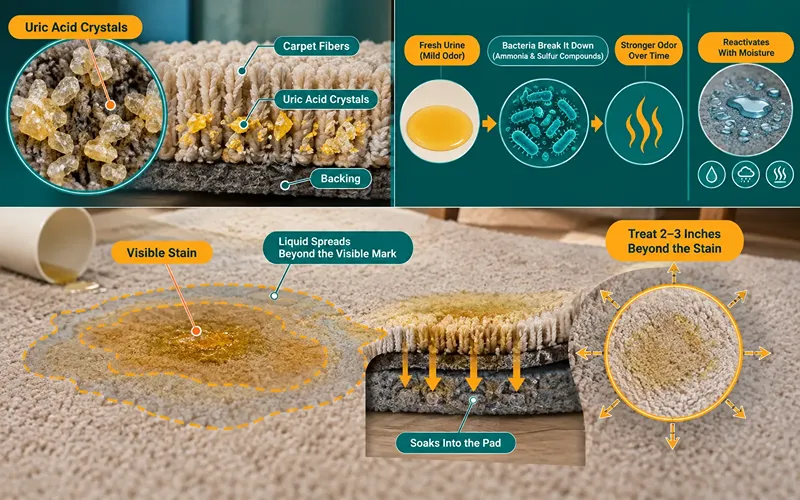
Urine contains uric acid, salts, urea, and bacteria. When it dries, the water evaporates but uric acid crystals stay behind, bonded to the wall to wall carpet fibers and backing. These crystals do not dissolve in plain water, which is why shampooing alone often fails.
Worse, they reactivate with moisture. Humidity, a wet mop, or even a steamy summer afternoon can bring the smell straight back weeks later.
Fresh urine is fairly mild. Within hours, bacteria break it down into ammonia and sulfur compounds, which is what your nose actually detects. Urine odor does not fade on its own. It usually gets stronger.
The stain is bigger than it looks
This is the detail most people miss. Liquid spreads outward as it soaks through sisal carpet into the pad below, so the wet area underneath can be several times larger than the mark you see on the surface.
If you only treat the visible spot, untreated urine at the edges wicks back up into the fibers as the carpet dries. Always treat an area extending at least 2 to 3 inches past the visible stain.
What You’ll Need
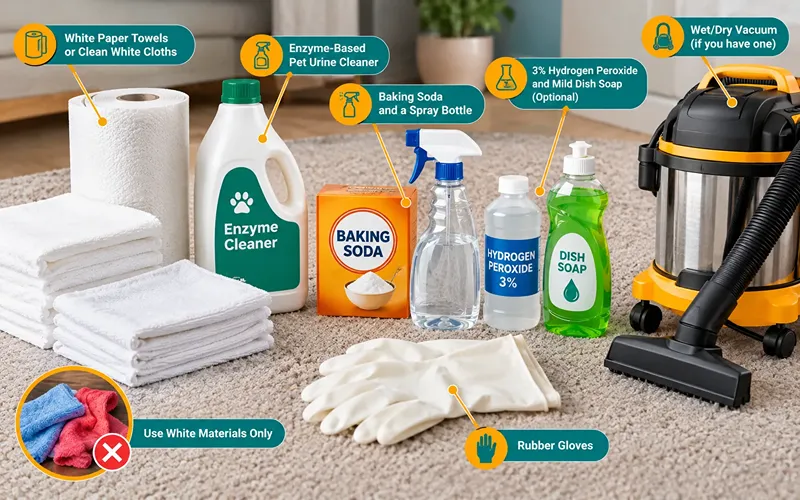
Gather these before you start so you are not hunting for supplies with a wet stain on the floor:
- White paper towels or clean white cloths
- An enzyme-based pet urine cleaner
- Baking soda and a spray bottle
- 3% hydrogen peroxide and mild dish soap (optional, for stains)
- A wet/dry vacuum if you have one
- Rubber gloves
Use white materials throughout. Dyed cloths can bleed into damp carpet and leave you with a second problem.
How To Get Pee Smell Out Of Carpet: Step-by-Step Method
This is the core process for a fresh accident. Work through it in order.
Step 1: Blot, Never Scrub
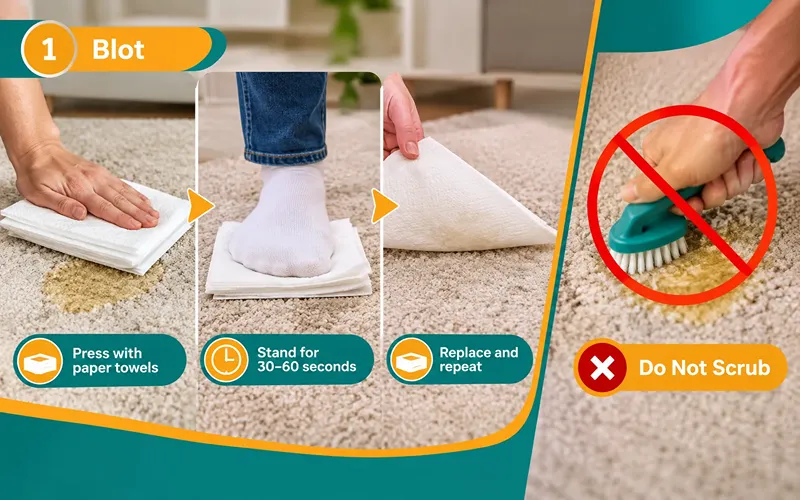
Press a thick pad of paper towels firmly onto the wet area. Stand on it for 30 to 60 seconds so pressure pulls liquid up from the pad below. Replace and repeat until the towels come up nearly dry.
Do not scrub or rub. Scrubbing spreads urine sideways, pushes it deeper into the backing, and frays carpet fibers so the spot stays visible forever.
Step 2: Rinse with Cool Water
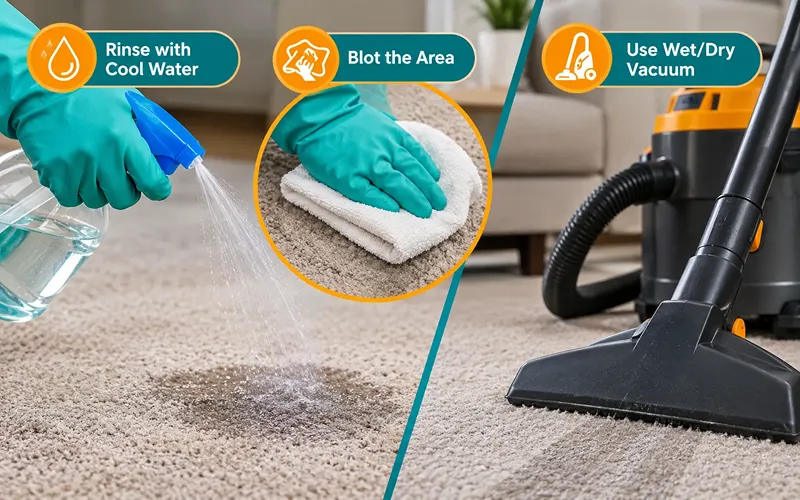
Lightly pour or spray cool water over the area, then blot it out the same way. This dilutes the urine salts still sitting in the fibers. Do not soak the carpet. You want damp, not flooded.
If you have a wet/dry vacuum, use slow overlapping passes to pull moisture out. Every drop you extract now is odor you will not have to fight later.
Step 3: Apply an Enzyme Cleaner
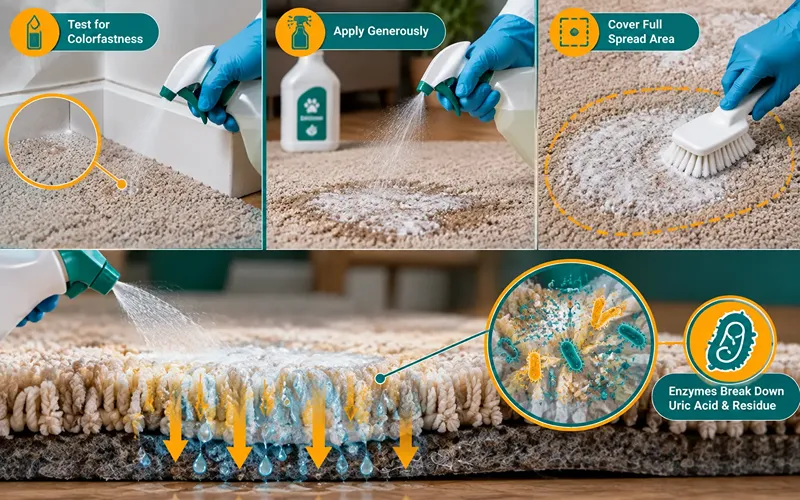
Enzyme cleaners are the single most effective product for urine odor. The enzymes digest the uric acid and protein residues instead of covering them up.
- Test on a hidden corner first for colorfastness.
- Apply generously. The cleaner must reach as deep as the urine did, which usually means more product than feels necessary.
- Cover the full spread area, not just the visible mark.
Step 4: Give it time to Work
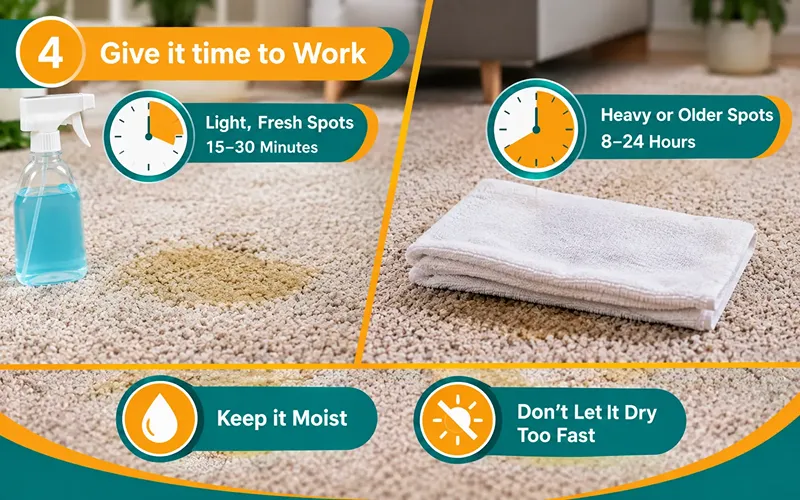
Enzymes need contact time and moisture. Follow the product label, but as a rule:
- Light, fresh spots: 15 to 30 minutes
- Heavy or older spots: cover with a damp cloth and leave 8 to 24 hours
Letting it dry out too fast is the most common reason enzyme cleaners “don’t work.”
Step 5: Blot, then dry Properly
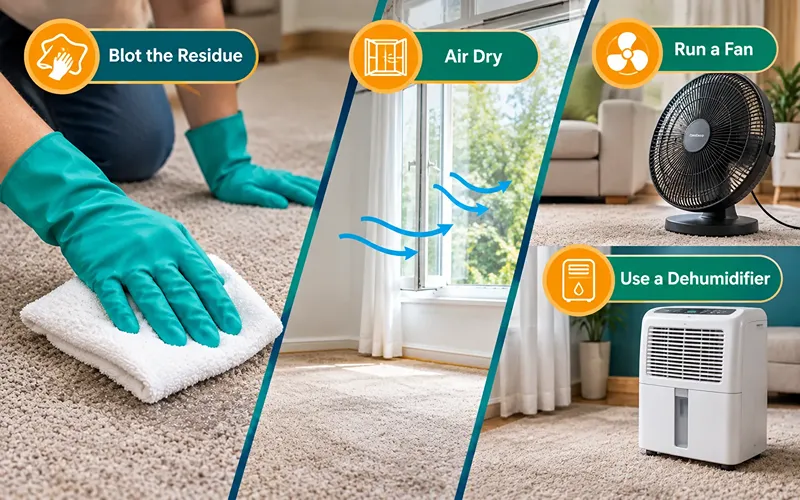
Blot up the residue and let the area air dry completely. Open a window, run a fan, or point a dehumidifier at the spot. Slow drying invites mildew, which adds a second odor on top of the first.
Step 6: Deodorize with Baking Soda
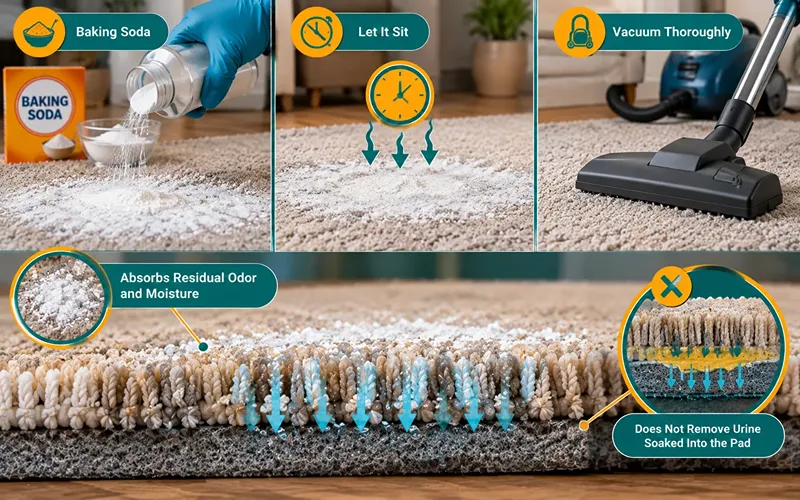
Once the carpet is dry, sprinkle baking soda over the area, leave it several hours or overnight, then vacuum thoroughly. Be realistic about what this does: it absorbs residual surface odor and moisture, but it will not remove urine that has soaked into the pad.
Step 7: Check again after 24 Hours
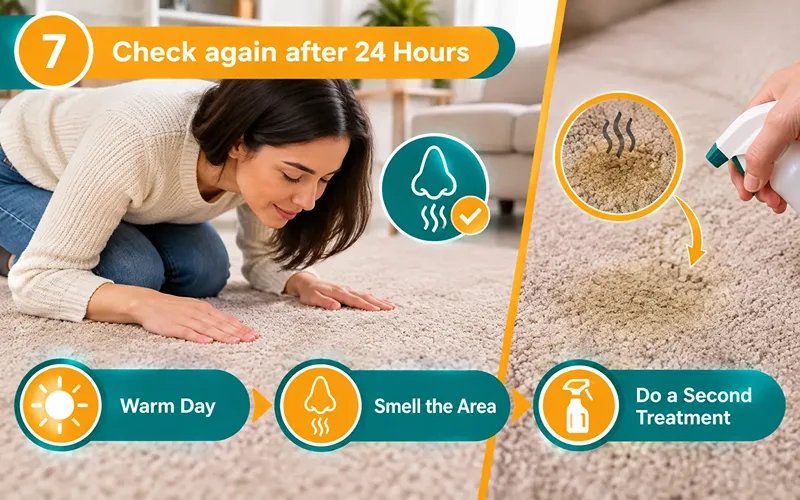
Smell the area once it is fully dry, ideally on a warm day. If odor returns, urine has reached the pad and you need a second, deeper treatment.
How to Remove Old, Dried Urine Smell
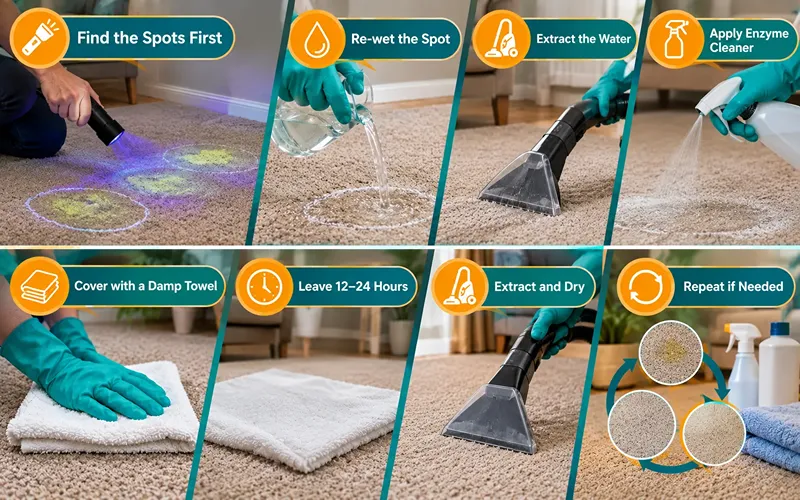
Old stains need a different approach because the crystals have had time to bond.
Find the spots first
You cannot treat what you cannot locate. Turn off the lights and scan the carpet with a UV blacklight. Dried urine fluoresces as dull yellow or green patches. Outline each one with chalk or tape. Your nose works too, so get low and check corners, baseboards, and furniture legs.
Re-wet, then Treat
Dried urine has to be dissolved before it can be removed:
- Saturate the spot with cool water, going wider than the marked outline.
- Extract with a wet/dry vac or blot heavily.
- Apply enzyme cleaner generously and cover with a damp towel to keep it wet.
- Leave 12 to 24 hours, then extract and dry.
- Repeat if any odor remains. Set-in spots often need two or three rounds.
If the smell survives three proper treatments, the urine is almost certainly in the pad or subfloor, and surface cleaning will never fully solve it.
Home Remedies: What Works and What Doesn’t
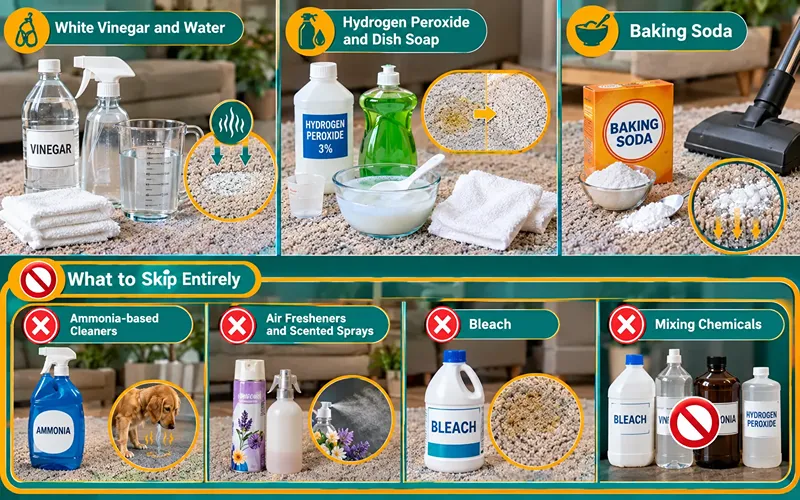
White Vinegar and Water
A 1:1 mix of white vinegar and water helps neutralize alkaline salts and knock back surface odor. It is cheap, safe on most carpets, and useful as an intermediate rinse.
Its limits are worth knowing. Vinegar does not break down uric acid crystals, and some trainers advise against it around pets because the sharp scent can encourage a dog or cat to re-mark the spot. Use it as a supporting step, not your main treatment.
Hydrogen peroxide and Dish Soap
For visible yellow staining, mix 1 cup of 3% hydrogen peroxide with 1 teaspoon of mild dish soap. Apply, wait 5 to 10 minutes, then blot and rinse.
Peroxide can lighten or bleach carpet, especially darker colors and wool. Always test a hidden area first and never leave it sitting for hours.
Baking Soda
Excellent for absorbing lingering surface odor and moisture. Ineffective against urine that has reached the backing or pad. Use it at the end of the process.
What to skip Entirely
- Ammonia-based cleaners. Ammonia smells like urine to a pet, which invites repeat accidents in the same spot.
- Air fresheners and scented sprays. These mask odor for a few hours and change nothing underneath.
- Bleach. It damages fibers, can react dangerously with ammonia in urine, and does not remove uric acid.
- Mixing chemicals. Never combine peroxide, vinegar, bleach, and ammonia products in any order.
Dealing With Pet Urine Specifically

Why pets return to the Same Spot
Even after you can no longer smell anything, your dog or cat still can. Residual scent marks the location as an approved bathroom, so complete odor removal is a training requirement, not just a comfort issue.
Cats are the harder case. Their urine is more concentrated and higher in uric acid, so it usually takes more than one enzyme application.
Stop the repeat Accidents
- Have your pet checked by a vet. Sudden indoor accidents can signal a urinary tract infection, kidney problems, or diabetes.
- Block access to the treated area for a few days while it dries.
- Reward correct bathroom behavior instead of punishing accidents, which mostly teaches a pet to hide.
- For older or unwell pets, add more frequent outdoor breaks or an extra litter box.
Common Mistakes to Avoid
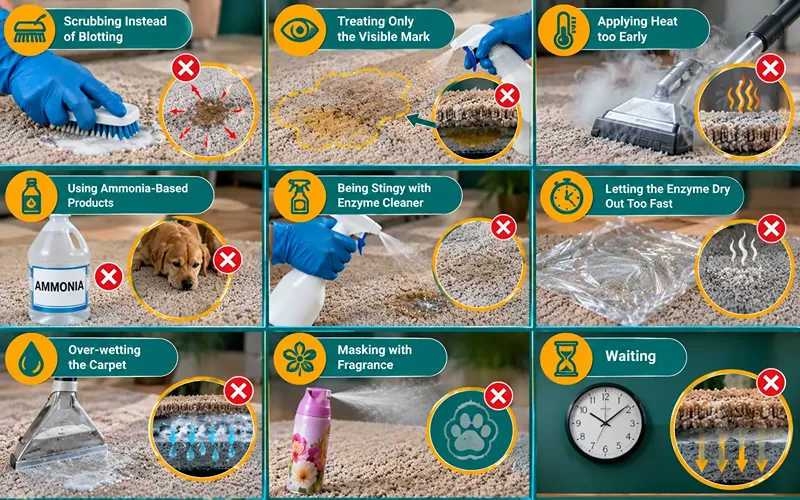
These are the errors that turn a fixable spot into a permanent one:
- Scrubbing instead of blotting. Spreads the stain and damages fibers.
- Treating only the visible mark. The urine underneath is wider than what you can see.
- Applying heat too early. Hot water and steam can set protein-based stains and bond odor into synthetic fibers. Treat with enzymes first and save heat for later, if at all.
- Using ammonia-based products. They invite pets back to the same spot.
- Being stingy with enzyme cleaner. It has to physically reach the urine to work.
- Letting the enzyme dry out too fast. Cover it to hold moisture.
- Over-wetting the carpet. Excess water pushes urine deeper and risks mold in the pad.
- Masking with fragrance. The odor always returns.
- Waiting. Every hour lets more liquid reach the pad and subfloor.
When to Call a Professional Carpet Cleaner
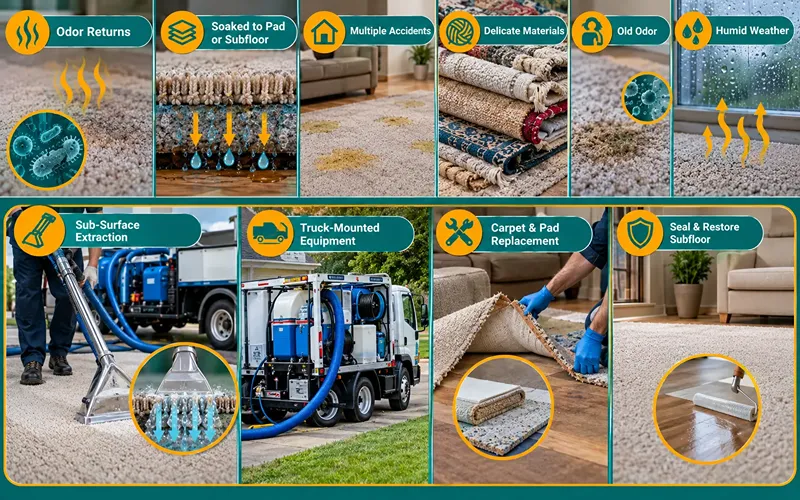
DIY methods handle most single accidents. Some situations need equipment you do not have at home. Consider professional help when:
- The odor returns after two or three thorough treatments
- Urine has soaked through to the pad or subfloor
- There are multiple accidents across a large area
- The carpet is wool, silk, antique, or otherwise delicate
- You inherited old odor from a previous owner or tenant
- The smell spikes in humid weather, which points to untreated crystals underneath
Professionals use sub-surface extraction tools that flush urine out of the backing and pad, plus truck-mounted equipment that removes far more moisture than a rental machine. In severe cases they can pull back the carpet, replace affected pad sections, and seal the subfloor before relaying it. For deeply saturated flooring, that is the only reliable fix.
How to Prevent Odor From Coming Back
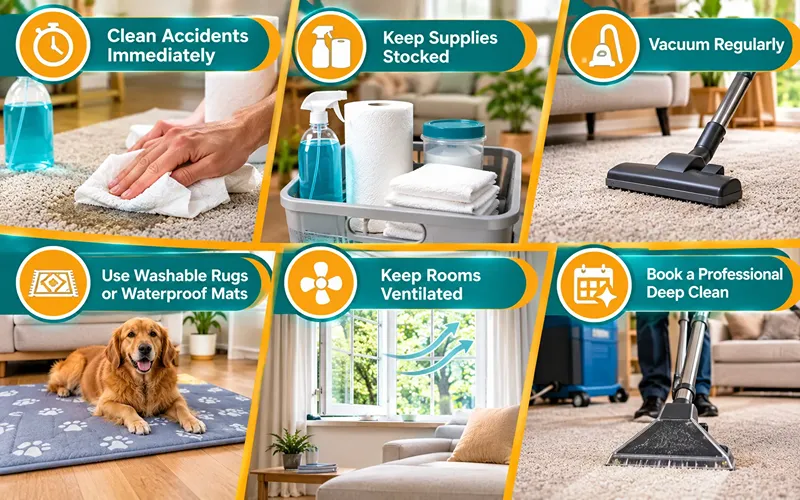
- Clean accidents immediately. Minutes matter more than products.
- Keep enzyme cleaner and paper towels stocked so you are never delayed.
- Vacuum high-traffic and pet areas at least twice a week.
- Use washable rugs or waterproof mats in accident-prone spots.
- Ventilate carpeted rooms and keep indoor humidity moderate.
- Book a professional deep clean every 12 to 18 months if you have pets or young children.
Final Thoughts
Removing urine odor comes down to three things: acting fast, treating the full area rather than the visible stain, and using an enzyme cleaner that breaks down uric acid instead of covering it. Skip any of those and the smell tends to come back.
If you have worked through these steps and the odor still lingers on warm or humid days, the urine has likely reached the pad or subfloor, beyond what home methods can fix. A professional carpet cleaning service can perform sub-surface extraction and deep deodorizing to remove the source completely. Get in touch for an assessment and find out what your carpet needs before you consider replacing it.
Frequently Asked Questions
Does urine smell in carpet ever go away on its own?
No. Uric acid crystals stay in the fibers indefinitely and bacteria make the odor worse over time. The smell has to be removed, not waited out.
Why does my carpet still smell after shampooing?
Shampooing cleans the surface but does not dissolve uric acid crystals or reach the pad. Enzyme treatment followed by proper extraction targets the actual source.
Can I use a steam cleaner on urine?
Be careful. High heat can set protein-based stains and bond odor into synthetic fibers. Treat with an enzyme cleaner first and extract thoroughly. If you use a machine afterward, cool or warm water extraction is safer than steam.
How long does an enzyme cleaner take to work?
Around 15 to 30 minutes on light, fresh spots and 12 to 24 hours on heavy or dried ones. Keep the area damp during that time.
Does baking soda alone remove pee smell?
Only surface odor. It cannot reach urine sitting in the carpet backing or pad, so use it as a final step rather than a standalone fix.
How do I find dried urine I can’t see?
Use a UV blacklight in a darkened room. Dried urine glows dull yellow-green. Mark each spot before you start cleaning.
Is human urine easier to remove than pet urine?
Slightly, since it is usually less concentrated. The method is identical.
Will I have to replace the carpet?
Rarely, if you act early. Replacement is normally only needed after long-term saturation of the pad and subfloor, and even then a professional can often save the carpet by replacing the pad and sealing the floor beneath.