Your yoga mat works hard. Every session leaves behind sweat, skin oils, lotion, and dust, and the floor underneath adds dirt of its own. Over time, that buildup can make the surface slippery, leave a stale smell, and wear the mat out faster.
Knowing how to clean a yoga mat the right way keeps your practice more comfortable and more hygienic. Regular cleaning helps you:
- Restore grip, since oils and residue make most mat surfaces slick
- Reduce odors caused by trapped sweat and moisture
- Limit the buildup of bacteria and fungi, especially on shared or studio mats
- Protect the material so your mat lasts longer
The best cleaning method depends on what your mat is made of. PVC, TPE, natural rubber, and cork each react differently to water, soap, heat, and sunlight. This guide covers routine and deep cleaning, material-specific care, proper drying, and the mistakes to avoid.
One rule applies throughout: always check your mat’s care instructions first. The manufacturer’s guidance should take priority over any general advice, including the tips below.
What You Need to Clean a Yoga Mat
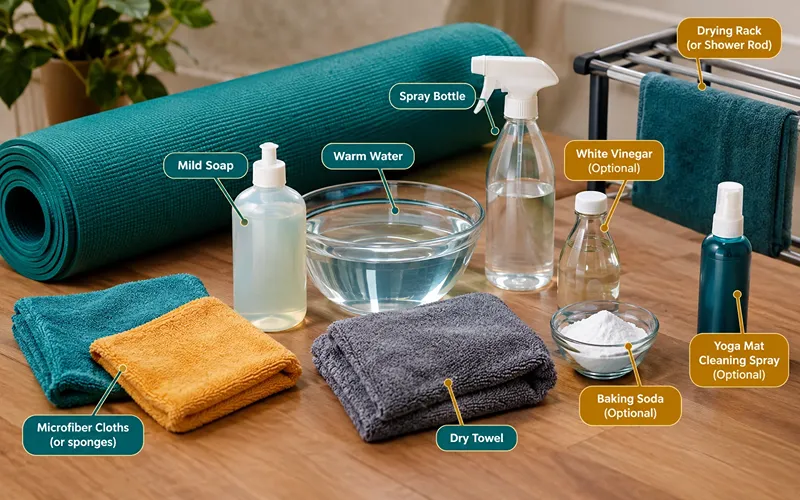 You don’t need special equipment. Most of these supplies are already in your home.
Basic supplies
- Two soft cloths or sponges. Microfiber works well. Use one for cleaning and one for wiping away residue.
- Mild, fragrance-free soap. A gentle liquid soap is enough. Avoid heavy degreasers and anything with bleach.
- Warm water. Lukewarm is best. Hot water can damage some materials.
- A spray bottle. Useful for homemade solutions and quick wipe-downs.
- A clean, dry towel. For blotting excess water after a deep clean.
Optional supplies
- White vinegar. Diluted, it helps with odors on durable rubber mats.
- Baking soda. Absorbs smells and can lift light stains.
- A yoga mat cleaning spray. Choose one labeled safe for your mat’s material.
- A drying rack or shower rod. Lets air reach both sides of the mat.
Skip stiff brushes, scouring pads, and strong household cleaners. They can scratch, discolor, or break down the surface.
How to Clean a Yoga Mat After Every Use
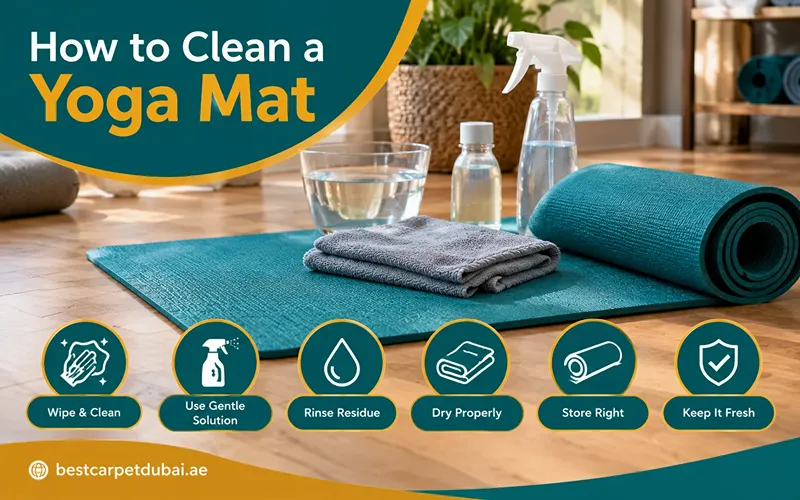
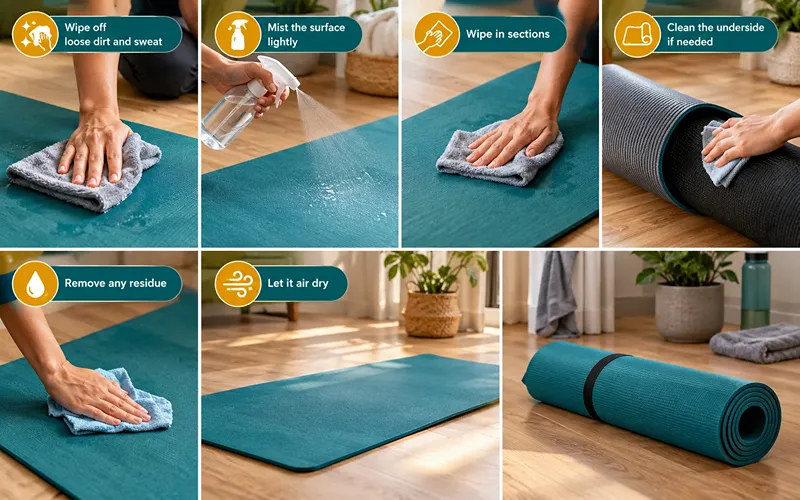 A quick wipe-down after each session takes about two minutes and prevents most buildup. It’s the single most effective habit for keeping a mat fresh.
- Wipe off loose dirt and sweat. Use a dry or slightly damp cloth while the sweat is still fresh.
- Mist the surface lightly. Use a gentle homemade solution or a anti-fatigue mat spray suited to your material. Spray just enough to dampen the surface, not soak it.
- Wipe in sections. Work from one end to the other, paying extra attention to where your hands and feet land.
- Clean the underside if needed. If you practiced on a dusty floor or outdoors, give the bottom a quick wipe too.
- Remove any residue. If your cleaner feels slick, wipe again with a cloth dampened with plain water.
- Let it air dry. Leave the mat unrolled until it’s completely dry to the touch before rolling it up.
How to Deep Clean a Yoga Mat
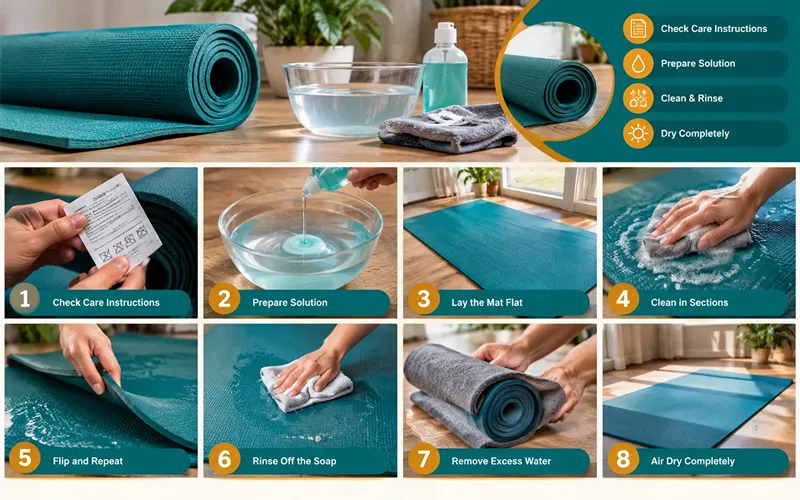 Deep clean your mat when it looks grimy, feels slippery, or still smells after a wipe-down. For regular practice, about once a month is a good baseline. If you sweat heavily or do hot yoga, every one to two weeks may be better.
Step-by-Step Deep Cleaning
- Check the care instructions. Some mats tolerate more water than others. Natural rubber and cork need the gentlest approach.
- Prepare a mild solution. Mix a few drops of gentle soap into about 2 cups (roughly 500 ml) of lukewarm water.
- Lay the mat flat. A clean floor, a bathtub, or a clean outdoor surface in the shade all work.
- Clean in small sections. Dip a soft cloth or sponge, wring it out well, and wipe in gentle circles from one end to the other.
- Flip and repeat. Clean the underside the same way.
- Rinse off the soap. Wipe the whole mat with a clean cloth dampened with plain water. Repeat until it no longer feels slick. Leftover soap is a common cause of slipping.
- Remove excess water. Lay a dry towel on the mat, roll them up together, and press firmly to squeeze out moisture.
- Air dry completely. Unroll and dry the mat as described in the drying section below.
Should You Soak a Yoga Mat?
Only if the manufacturer says it’s safe. Some closed-cell PVC mats can handle a brief soak or rinse in a tub. Most other mats, especially natural rubber, cork, and many TPE mats, can absorb water, lose their shape, or separate into layers if soaked.
Yoga Mat Cleaning Methods
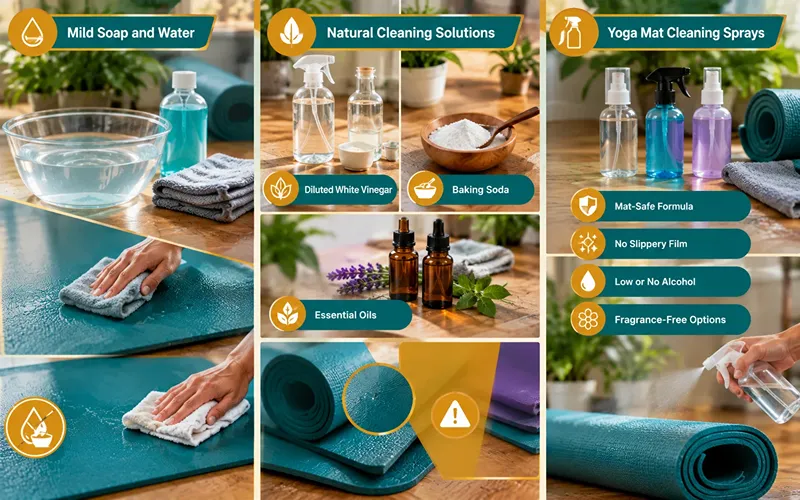 There are three main ways to clean a yoga mat. Mild soap and water is the safest starting point for almost any mat.
Mild Soap and Water
This is the most widely recommended method because it’s gentle and works on most materials. Use only a few drops of soap per 2 cups (about 500 ml) of warm water. More soap doesn’t mean a cleaner mat; it usually means a slippery one.
Apply with a damp, well-wrung cloth rather than pouring water onto the mat. Always finish with a plain-water wipe to remove residue.
Natural Cleaning Solutions
If you prefer homemade cleaners, these options work well on durable mats:
- Diluted white vinegar. Mix 1 part vinegar with 3 parts water in a spray bottle. It helps neutralize odors and cut light grime. The vinegar smell fades as the mat dries.
- Baking soda. Sprinkle a thin layer on a dry mat, leave it for 15 to 30 minutes, then wipe it off with a damp cloth. It’s useful for odors.
- Essential oils. A drop or two of tea tree or lavender oil can add a fresh scent to a vinegar spray. Use them sparingly, as they can irritate sensitive skin.
Test any natural solution on a small, hidden area first. Skip vinegar and essential oils on natural rubber, since acids and oils can degrade it over time. Also note that vinegar freshens and cleans but is not a registered disinfectant.
Yoga Mat Cleaning Sprays
Commercial mat sprays are convenient for quick cleaning after class. When choosing one, look for:
- A label that says it’s safe for your mat’s material
- A formula that doesn’t leave a slippery film
- Low or no alcohol if your mat is natural rubber or cork
- Fragrance-free options if you have sensitive skin
Which Method to Use
| Method | Best for | Use with caution on |
| Mild soap and water | Routine and deep cleaning on most mats | Cork (use very little water) |
| Diluted vinegar spray | Odors and light grime on PVC and TPE | Natural rubber, cork |
| Baking soda | Odors and light stains | Delicate or highly textured surfaces |
| Mat cleaning spray | Quick cleaning after each use | Any mat the label doesn’t list |
How to Clean Different Yoga Mat Materials
Your mat’s material decides how much water, soap, and heat it can handle. If you’re not sure what yours is made of, check the label or the product page.
| Material | Water tolerance | Best way to clean | Avoid |
| PVC | High | Mild soap and water, diluted vinegar | Harsh solvents, high heat |
| TPE | Moderate | Damp cloth with mild soap | Soaking, heat, direct sun |
| Natural rubber | Low to moderate | Damp cloth, minimal mild soap, rubber-safe spray | Oils, vinegar, alcohol, sunlight, soaking |
| Cork | Low | Damp cloth, plain water or a little mild soap | Soaking, hard scrubbing, harsh chemicals |
PVC Yoga Mats
PVC mats are durable and usually closed-cell, so sweat and water stay on the surface instead of soaking in. That makes them the easiest type to clean.
- Use mild soap and water or a diluted vinegar spray.
- A quick rinse in the tub may be fine if the manufacturer allows it.
- Precautions: Avoid harsh solvents and hot water. Long exposure to heat or sun can make PVC sticky or brittle.
TPE Yoga Mats
TPE mats are lightweight and generally resist moisture, but they’re more sensitive to heat than PVC.
- Wipe with a cloth dampened in a mild soap solution.
- Rinse with a plain-water cloth and dry in the shade.
- Precautions: Don’t soak TPE mats. Keep them away from direct sun, heaters, and hot cars, which can warp or soften the material.
Natural Rubber Yoga Mats
Natural rubber offers excellent grip, but it’s the most sensitive material to oils, sunlight, and harsh cleaners.
- Wipe with a damp cloth and only a small amount of mild soap.
- Use a spray labeled safe for natural rubber.
- Dry with a towel, then air dry away from sunlight.
- Precautions: Avoid essential oils, oil-based cleaners, vinegar, and frequent use of alcohol, which can dry out or break down rubber. Sunlight can cause fading, cracking, and crumbling. Some surface marks and color changes are normal over time.
Cork Yoga Mats
Cork is naturally resistant to moisture and tends to hold fewer odors, so it often needs less frequent deep cleaning.
- Wipe gently with a damp cloth using plain water or a tiny amount of mild soap.
- Mist lightly rather than wetting the surface.
- Dry the mat promptly after cleaning.
- Precautions: Never soak a cork mat. Most have a rubber or TPE backing that can separate from the cork if it gets waterlogged. Avoid stiff brushes and harsh chemicals, and clean the backing according to its own material.
How to Remove Sweat, Dirt, Stains, and Odors
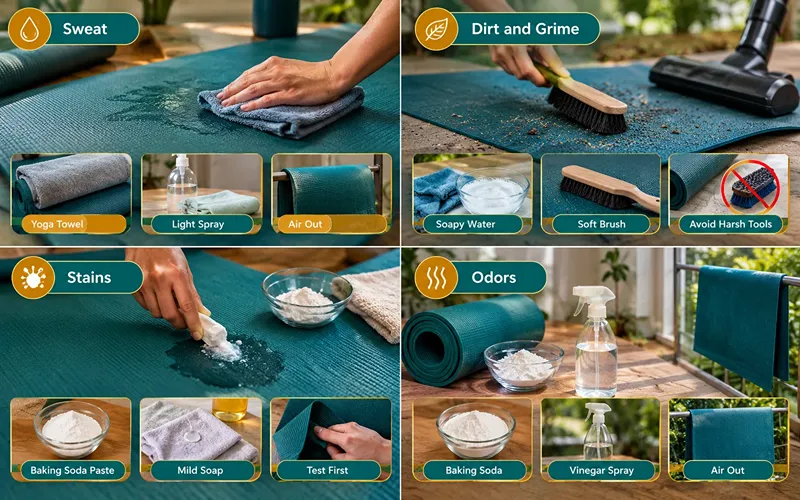 Most problems are easier to fix when you deal with them early. Here’s how to handle the most common ones.
Sweat
- Wipe your mat right after practice, before sweat dries and settles into the surface.
- Use a yoga towel on top of the mat during hot or intense sessions to catch most of the sweat.
- Follow up with a light spray and wipe, then let the mat air out.
Dirt and Grime
- Shake off or brush away loose debris first, ideally outdoors.
- Wipe with a cloth dampened in mild soapy water.
- On textured PVC or TPE mats, a soft-bristled brush can gently lift dirt from grooves. Keep brushes away from cork and natural rubber.
Stains
- Treat stains as soon as you notice them.
- For PVC and TPE mats, make a paste of baking soda and a little water. Apply it to the stain, leave it for 10 to 15 minutes, then wipe gently and rinse with a damp cloth.
- For makeup or lotion marks, a drop of mild soap on a damp cloth usually works.
- Test any stain treatment on a hidden corner first.
- On natural rubber and cork, some discoloration is permanent. It’s cosmetic, so avoid hard scrubbing that could damage the surface.
Unpleasant Odors
A lingering smell usually means moisture or residue is trapped in the mat. To freshen it:
- Give the mat a full deep clean.
- Make sure it dries completely on both sides.
- Sprinkle baking soda on the dry surface, leave it for 30 minutes or longer, then wipe it off.
- For PVC and TPE mats, follow up with a diluted vinegar spray.
- Air the mat out in a shaded, well-ventilated spot.
New mats often have a manufacturing smell. Leaving the mat unrolled in a ventilated room for a few days usually helps it fade. If a used mat still smells musty after thorough cleaning and drying, it may have mold inside and could need replacing.
How to Dry a Yoga Mat Properly
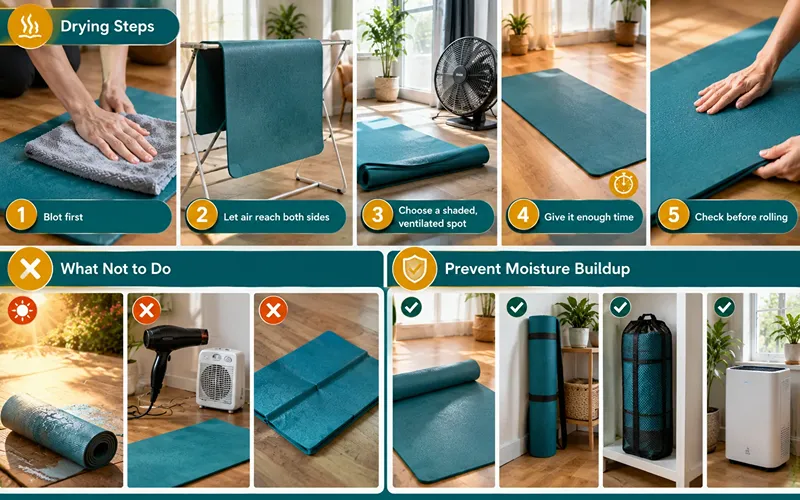 Drying matters as much as cleaning. Rolling up a damp mat traps moisture inside, which leads to musty smells and can encourage mold.
Drying Steps
- Blot first. Press a dry towel over the surface, or roll the mat up with a towel inside to squeeze out excess water.
- Let air reach both sides. Hang the mat over a drying rack, shower rod, or the back of a chair, or lay it flat and flip it halfway through.
- Choose a shaded, ventilated spot. Room temperature with good airflow is ideal. A fan can speed things up.
- Give it enough time. A light wipe-down may dry in under an hour. A deep-cleaned mat can take several hours, and thicker or rubber mats may need up to a day.
- Check before rolling. Touch both sides. Roll or store the mat only when it feels fully dry.
What Not to Do
- Don’t dry your mat in direct sunlight.
- Don’t use a hair dryer, heater, radiator, or clothes dryer.
- Don’t fold the mat sharply while it’s wet, as this can leave lasting creases.
How to Prevent Moisture Buildup
- Unroll your mat when you get home from class, even if you wiped it down at the studio.
- Store it in a cool, dry, ventilated place.
- Avoid sealed plastic bags or closed mat bags while the mat is still damp.
- In humid climates, air your mat out regularly, even between cleanings.
Common Yoga Mat Cleaning Mistakes to Avoid
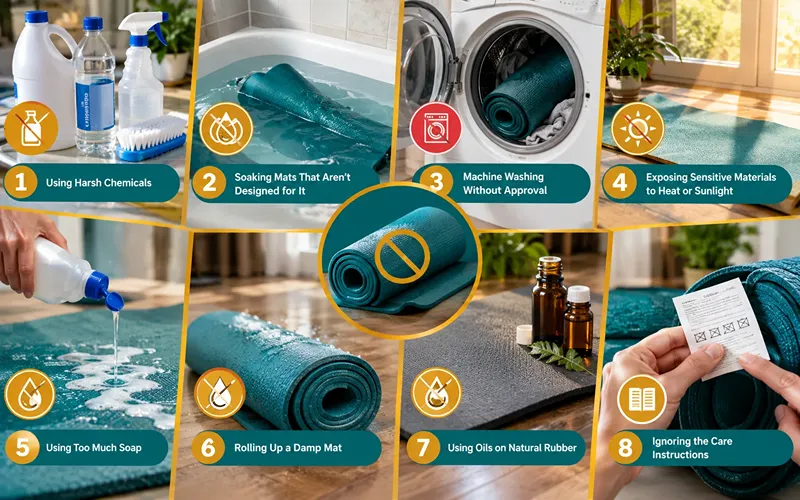 A few common habits can shorten a mat’s life or make it less pleasant to use.
Using Harsh Chemicals
Bleach, ammonia, undiluted alcohol, and abrasive cleaners can break down the surface, cause discoloration, and reduce grip. Residue from strong cleaners can also irritate your skin during practice.
Soaking Mats That Aren’t Designed for It
Natural rubber, cork, and many TPE mats can absorb water, lose their shape, or separate into layers when soaked. Unless your care instructions say otherwise, clean with a damp cloth instead.
Machine Washing Without Approval
The agitation in a washing machine can stretch, tear, or crumble many mats, and dryer heat can warp them. Only machine wash a mat if the label specifically allows it.
Exposing Sensitive Materials to Heat or Sunlight
UV light and heat can make natural rubber brittle and cause TPE to soften or warp. Avoid drying your mat in the sun or leaving it in a hot car.
Using Too Much Soap
Extra soap leaves a slippery film that’s hard to rinse away. A few drops are enough.
Rolling Up a Damp Mat
This traps moisture and is one of the most common causes of persistent odors.
Using Oils on Natural Rubber
Essential oils, oil-based soaps, and body oils can gradually degrade natural rubber. Keep them away from rubber mats.
Ignoring the Care Instructions
General cleaning tips are a helpful guide, but your mat’s manufacturer knows its materials best. When in doubt, follow their instructions.
Tips to Keep Your Yoga Mat Clean and Fresh for Longer
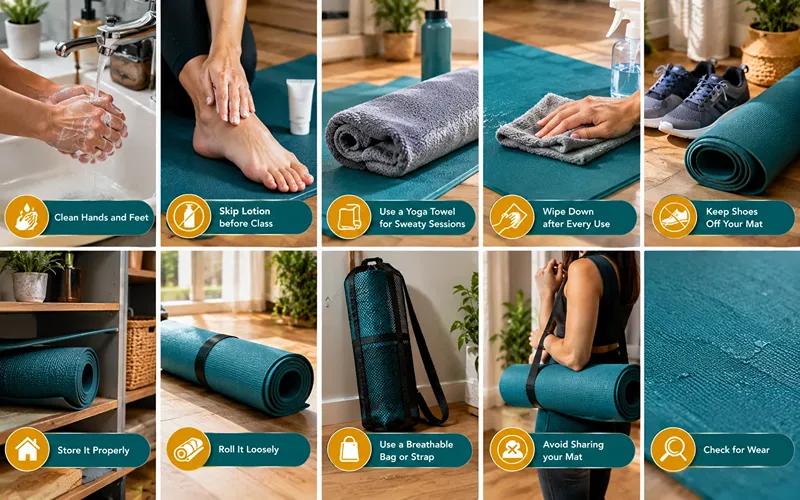 Good habits reduce how often you need to deep clean and help your mat last longer.
- Start with clean hands and feet. Washing before practice keeps oils and dirt off the mat.
- Skip lotion before class. Lotions and body oils make mats slippery, and some can degrade natural rubber.
- Use a yoga towel for sweaty sessions. It absorbs moisture and is easy to throw in the wash.
- Wipe down after every use. Two minutes now saves a much bigger cleaning job later.
- Keep shoes off your mat. Shoes carry dirt and grit that wear down the surface.
- Store it properly. Keep your mat in a cool, dry place away from direct sunlight. Avoid leaving it in a car, where temperatures can climb quickly.
- Roll it loosely. Many people roll their mat with the practice surface facing out, which helps the ends lie flat when unrolled.
- Use a breathable bag or strap. This protects the mat while letting air circulate.
- Avoid sharing your mat. If you do share, clean it before and after.
- Check for wear. Flaking, cracking, thinning, or a smell that won’t go away are signs it’s time for a new mat.
Conclusion
Learning how to clean a yoga mat comes down to a few simple habits. Wipe it down after every session, deep clean it when it looks dirty or starts to smell, and always let it dry completely before rolling it up.
Use gentle cleaners, such as a few drops of mild soap in warm water, and match your method to the mat’s material. PVC handles water well, while TPE, natural rubber, and cork need a lighter touch. Avoid harsh chemicals, unnecessary soaking, direct sunlight, and high heat.
Most importantly, follow your manufacturer’s care instructions. With consistent care, your mat will stay clean, grippy, and comfortable for many sessions to come.
Frequently Asked Questions
How often should I clean my yoga mat?
Give it a quick wipe after every session. Deep clean about once a month if you practice regularly, or every one to two weeks if you practice daily, sweat heavily, or do hot yoga. Clean it sooner whenever it looks dirty, smells, or feels slippery.
Can I put my yoga mat in the washing machine?
Most yoga mats should not go in a washing machine. Only machines wash a mat if its care label explicitly says it’s safe. If it is, use a gentle cycle, cold water, and a small amount of mild detergent. Skip fabric softener and always air dry. Never put a yoga mat in a clothes dryer.
Can I clean my yoga mat with vinegar?
Yes, for many PVC and TPE mats. Mix 1 part white vinegar with 3 parts water, spray lightly, and wipe. It helps with odors and light grime. Avoid vinegar on natural rubber, and test it first on cork. Check your manufacturer’s guidance before using it.
Can I use disinfectant wipes or sprays on my yoga mat?
Occasionally, on some PVC and TPE mats, if the manufacturer allows it. Alcohol and strong disinfectants can dry out and break down natural rubber and cork. If you need to disinfect a shared mat, choose a product labeled safe for that material, follow its directions, and wipe with a water-dampened cloth afterward to remove residue.
How long does a yoga mat take to dry?
A light wipe-down may dry in under an hour. After a deep clean, allow several hours or up to a day, depending on the mat’s thickness, material, and room humidity.
Why is my yoga mat still slippery after cleaning?
The most common cause is leftover soap or cleaner. Wipe the mat with a cloth dampened in plain water, then let it dry fully. New mats can also feel slick at first and often improve with use.
How do I know when to replace my yoga mat?
Replace your mat if it’s flaking, cracking, thinning, losing grip permanently, or keeps a musty smell even after thorough cleaning and drying.