A new carpet can make a room feel warmer, quieter, and more finished. Pick the wrong one, though, and you could be living with crushed piles in the hallway, stubborn stains in the living room, or a bedroom floor that feels scratchy underfoot for the next ten years.
The good news is that learning how to choose the right carpet for your home isn’t complicated once you understand a few basics. Whether you’re exploring different carpets in Dubai or shopping for your home anywhere else, the best choice comes down to four questions: what the carpet is made of, how its fibers are constructed, where it’s going, and how much care you’re willing to give it.
This guide walks you through carpet types, materials, pile styles, room-by-room recommendations, buying tips, and maintenance, so you can shop with confidence instead of guessing.
Understanding the Main Types of Carpet
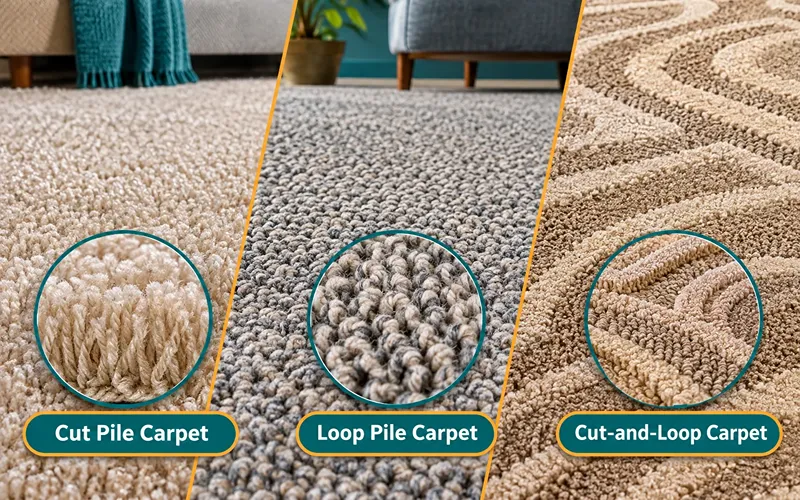 Every wall to wall carpet is made by looping yarn through a backing. What happens to those loops afterward creates the three basic carpet types. Each one looks, feels, and wears differently.
Cut Pile Carpet
The yarn loops are sliced at the top, leaving individual tufts standing upright. This is the most common type in homes.
- Feel: Soft and cushioned underfoot
- Best for: Bedrooms, living rooms, family rooms
- Watch out for: Footprints, vacuum marks, and flattening in busy walkways
Loop Pile Carpet
The loops are left intact. Because there are no cut ends to fray or untwist, loop pile holds up well to heavy foot traffic.
- Feel: Firmer, with a textured, nubby surface
- Best for: Hallways, home offices, basements, and stairs
- Watch out for: Snags from pet claws or dragged furniture, which can pull a loop and create a run
Cut-and-Loop Carpet
This style combines cut and uncut loops in the same carpet, often at different heights, to create sculpted patterns like swirls, squares, or chevrons.
- Feel: Medium softness with visual depth
- Best for: Dens, dining areas, and family rooms where you want pattern without a separate rug
- Bonus: The pattern does a good job of hiding dirt and wear
Popular Carpet Materials Compared
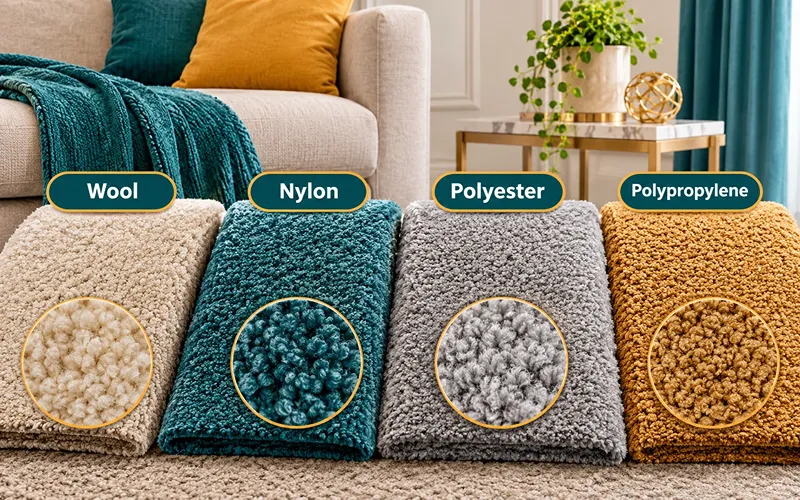
The fiber is the single biggest factor in how a carpet performs. Two carpets can look identical in the showroom and age completely differently because of what they’re made from.
Wool Carpet
Wool is the premium natural fiber. It’s soft, naturally flame-resistant, and has a springy structure that bounces back from foot traffic.
- Pros: Luxurious feel, excellent resilience, naturally hides soil, renewable
- Cons: Most expensive option; can absorb moisture and some stains; not ideal for damp spaces
- Good choice if: You want a long-lasting, high-end carpet for a living room or primary bedroom
Nylon Carpet
Nylon is the most widely used synthetic fiber, and for good reason. It’s the toughest option at a mid-range price.
- Pros: Outstanding durability and resilience, holds up in high-traffic areas, works well with stain-resistant treatments
- Cons: Costs more than polyester; untreated nylon can stain
- Good choice if: You have kids, pets, or busy hallways and stairs
Polyester (PET) Carpet
Polyester is known for rich colors and a soft hand at an affordable price. Many polyester carpets are made from recycled plastic bottles.
- Pros: Very soft, vibrant colors, naturally resists water-based stains, budget-friendly
- Cons: Less resilient than nylon, so it can mat and crush in busy areas; can attract oil-based stains
- Good choice if: You’re carpeting low-traffic bedrooms or guest rooms on a budget
Polypropylene (Olefin) Carpet
Polypropylene is a solution-dyed fiber, meaning color is added before the fiber is formed. That makes it extremely fade- and stain-resistant.
- Pros: Inexpensive, resists moisture, mildew, and bleach, colorfast in sunlight
- Cons: Low resilience, crushes easily, and can attract oily soil
- Good choice if: You need carpet for a basement, rental, or sunny room, often in a loop pile like Berber
Quick Comparison
| Material | Durability | Softness | Stain Resistance | Relative Cost |
| Wool | High | High | Moderate | Highest |
| Nylon | Very high | Medium–high | High (when treated) | Mid to high |
| Polyester | Moderate | Very high | High (water-based stains) | Low to mid |
| Polypropylene | Low–moderate | Medium | Very high | Lowest |
Blends such as 80% wool and 20% nylon are also worth a look. They pair wool’s comfort with nylon’s toughness, usually at a lower price than pure wool.
How Carpet Pile Types and Styles Affect Appearance and Performance
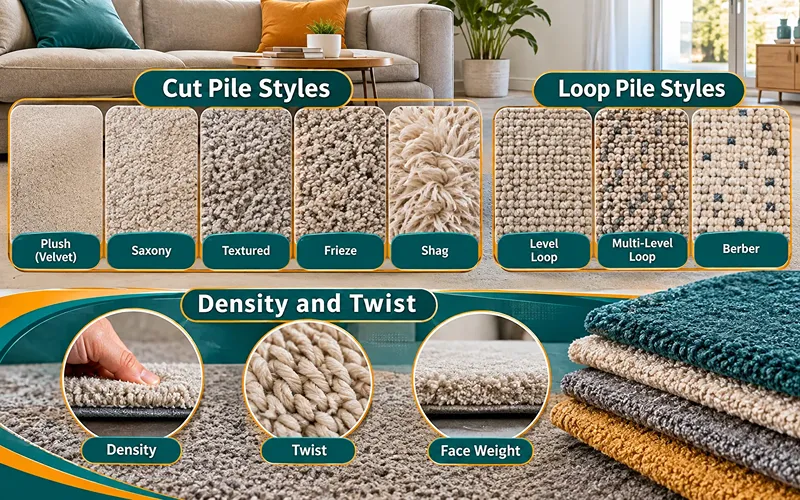 “Pile” refers to the visible surface of the carpet: the height, twist, and arrangement of the fibers. Pile style shapes both how a carpet looks on day one and how it looks after five years of use.
Common Cut Pile Styles
- Plush (velvet): Short, dense, evenly cut fibers create a smooth, formal surface. It looks elegant but shows footprints and vacuum tracks, so it suits formal living rooms and adult bedrooms.
- Saxony: Slightly longer, tightly twisted fibers give a soft, refined look. It’s a popular bedroom choice but can show traffic patterns.
- Textured: Fibers are cut at uneven heights and twisted to create a slightly rough surface. This is one of the most practical home styles because it hides footprints and wear.
- Frieze: Long, tightly twisted fibers curl in different directions for a casual, shaggy look. It’s excellent at hiding dirt and works well in family rooms.
- Shag: Very long, loose fibers make a bold, retro statement. It’s cozy but harder to clean and best kept to low-traffic spaces.
Common Loop Pile Styles
- Level loop: All loops are the same height. It’s very durable and common in basements and offices.
- Multi-level loop: Loops at varied heights create subtle patterns and texture.
- Berber: A thick, knotted loop pile, often with flecks of color. It’s tough and hides dirt, but loops can snag with pets.
Density and Twist: The Hidden Quality Signals
Pile style tells you how carpet looks. Density and twist tell you how long it will last.
- Density is how tightly fibers are packed. Bend a sample backward; if you can easily see the backing, the carpet is less dense and will crush faster.
- Twist level is how many times each fiber strand is twisted per inch. Tighter twists resist matting and untwisting, so they hold their shape longer.
- Face weight is the ounces of fiber per square yard. Higher is usually better, but only when paired with good density. A tall, loose pile can have a high face weight and still wear poorly.
As a rule of thumb, a shorter, denser, tightly twisted pile will outperform a long, loose, fluffy one in any busy area.
Choosing Carpet Room by Room
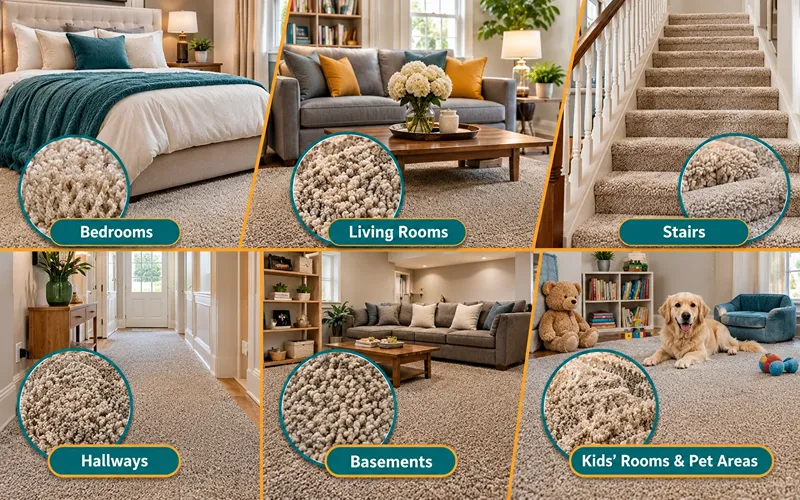
The best carpet for a bedroom is rarely the best carpet for a staircase. Match the carpet to how each space is actually used.
Bedrooms
Bedrooms see light traffic, mostly with bare feet, so comfort comes first.
- Recommended: Plush, Saxony, or soft polyester or wool cut pile
- Tip: Add a quality cushioned underlay for extra softness and warmth
- Example: A Saxony-style polyester in a soft neutral works well for a guest room, while a wool plush makes a primary bedroom feel like a hotel suite
Living Rooms and Family Rooms
These are the busiest carpeted spaces in most homes, with daily foot traffic, furniture, kids, and pets.
- Recommended: Textured or frieze nylon, or a wool-nylon blend
- Tip: Choose a mid-tone color or subtle pattern to disguise everyday soil
- Example: A textured nylon in warm greige handles movie nights, toys, and visitors without showing every footprint
Stairs
Stairs take more wear than any other surface because every step concentrates pressure on the edge, or nosing.
- Recommended: Low, dense cut pile or a tight level loop in nylon or wool
- Avoid: Shag, long plush, and loose Berber, which can be slippery or snag easily
- Tip: Ask your installer about a firm, thin underlay. Thick, soft cushion on stairs causes the carpet to flex and wear out faster at the nosing.
Hallways and Entryways
Hallways funnel traffic into a narrow path, so wear patterns show quickly.
- Recommended: Level loop, cut-and-loop, or tight textured nylon
- Tip: Patterns and flecked colors hide traffic lanes better than solid shades
Basements
Basements can be damp and are often used as playrooms or gyms.
- Recommended: Polypropylene or solution-dyed nylon with a moisture-resistant underlay
- Alternative: Carpet tiles, which let you replace damaged squares instead of the whole floor
Kids’ Rooms and Pet Areas
- Recommended: Stain-resistant nylon or polyester in a textured or frieze style
- Avoid: Loop pile with pets, since claws can catch and pull loops
- Tip: Look for carpets with built-in stain and soil protection and a pet-specific warranty
Key Factors to Consider Before You Buy
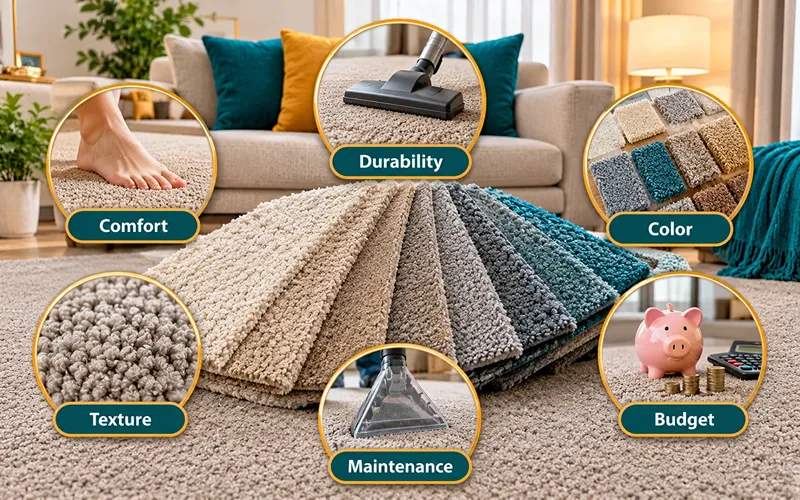 Once you know the options, weigh them against these six factors. Ranking them for each room makes the final decision much easier.
Durability
Durability depends on fiber, density, and twist more than price tag. For high-traffic areas, prioritize nylon or wool with a tight twist and dense construction. Many manufacturers also publish a traffic or performance rating; choose a heavy-traffic rating for stairs and hallways.
Comfort
Softness comes from the fiber and the pile height, but the underlay (padding) matters just as much. A good pad improves comfort, insulation, and noise reduction, and it also protects the carpet backing from wear. Don’t pair a premium carpet with a cheap, thin pad.
Color
Color affects how big a room feels and how forgiving the carpet is.
- Light colors (cream, pale gray) make small rooms feel larger but show stains quickly
- Mid-tones (greige, taupe, warm gray, soft brown) are the most forgiving for everyday living
- Dark colors hide stains but reveal lint, pet hair, and dust
- Flecked or multi-tone carpets are the best at hiding both dirt and wear
Always view samples in your own home, in both daylight and evening light, before deciding.
Texture
Texture changes both the look and the upkeep. Smooth plush feels formal and luxurious, while textured and frieze surfaces feel relaxed and hide marks. Loop and cut-and-loop styles add visual interest and work well in modern or minimalist spaces.
Maintenance
Be honest about how much cleaning you’ll realistically do. Busy households benefit from stain-resistant synthetics, solution-dyed fibers, and textured styles. Wool needs gentler cleaning products, and shag requires more vacuuming effort.
Budget
Your total cost includes more than the carpet itself:
- Carpet price per square foot or square meter
- Underlay
- Installation labor
- Removal and disposal of old flooring
- Extras such as stair work, moving furniture, and transition strips
To stretch your budget, spend more on carpet for high-traffic rooms and choose more affordable options for guest rooms and closets.
Practical Carpet Buying Tips
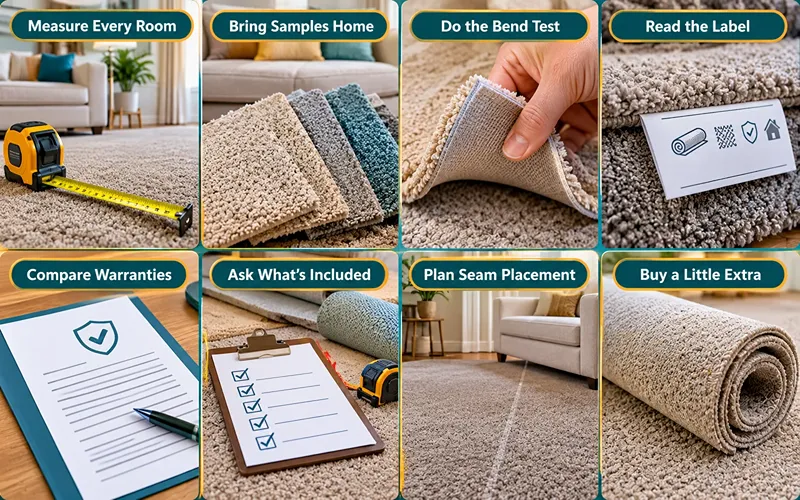
Use these steps to move from browsing to buying with confidence.
- Measure every room first. Note doorways, closets, and stair counts. Most retailers will measure for free, but your own numbers help you compare quotes.
- Bring samples home. Order large samples and leave them on the floor for a few days. Walk on them barefoot and check them at different times of day.
- Do the bend test. Fold a sample back. Dense carpet shows little or no backing.
- Read the label. Check fiber type, face weight, density, twist, and any stain or soil protection.
- Compare warranties carefully. Look at wear, stain, and texture-retention coverage separately. Many warranties require professional cleaning every 12 to 24 months, so keep receipts.
- Ask what’s included in the quote. Confirm the underlay, removal of old flooring, furniture moving, stair fees, and threshold strips.
- Plan seam placement. Ask the installer where seams will fall. Seams are least noticeable away from doorways and under furniture.
- Buy a little extra. A small leftover piece makes future patch repairs possible and guarantees a perfect color match.
Common Carpet Buying Mistakes to Avoid
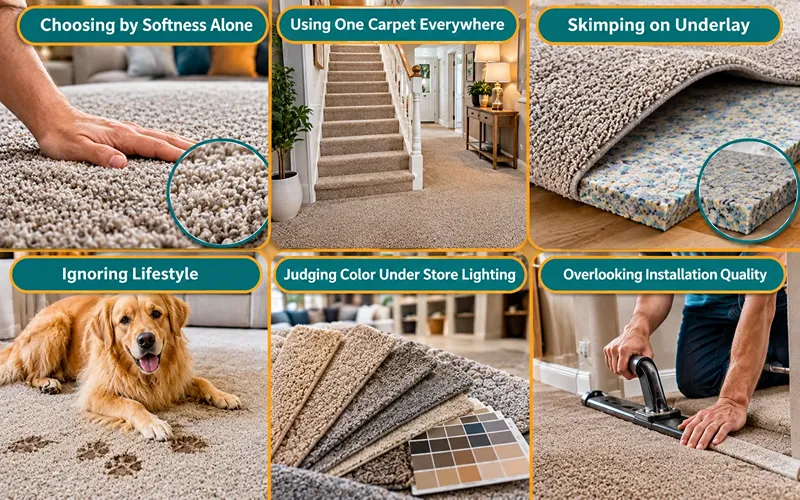
- Choosing by softness alone. The softest carpet in the store is often the least durable. Feel matters, but construction matters more.
- Using one carpet everywhere. It’s simpler, but a single plush carpet throughout the home will wear out quickly on stairs and hallways.
- Skimping on underlay. A poor pad shortens carpet life, voids some warranties, and makes even good carpet feel cheap.
- Ignoring lifestyle. A pale wool carpet may look stunning in the showroom, but it’s a tough match for muddy dogs and toddlers.
- Judging color under store lighting. Showroom lights can make colors look warmer or brighter than they will at home.
- Overlooking installation quality. Poor stretching leads to ripples and buckling. Choose installers with good reviews and ask about their workmanship guarantee.
How to Maintain and Extend the Life of Your Carpet
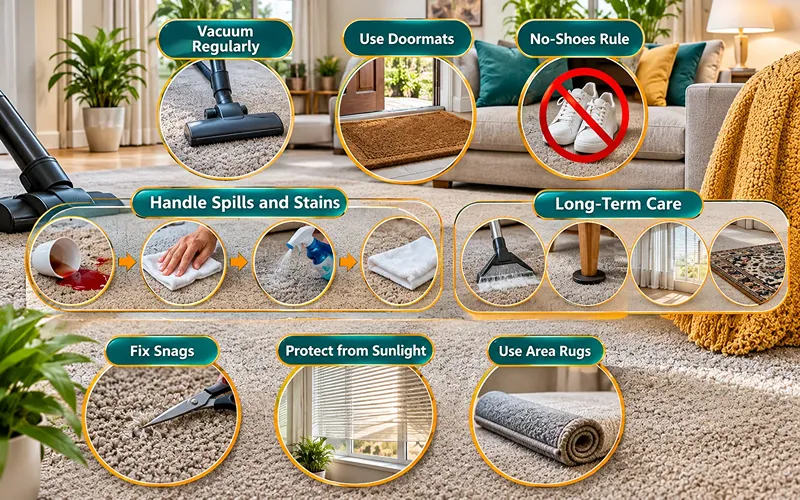 Even the best carpet needs regular care. Dirt particles act like sandpaper on fibers, so most wear happens from the bottom up, long before you see it.
Daily and Weekly Habits
- Vacuum regularly. Aim for twice a week in busy areas and weekly elsewhere. Use a vacuum with adjustable height, and turn off the beater bar for wool, shag, and loop pile.
- Use doormats. Place mats inside and outside every entrance to trap dirt before it reaches the carpet.
- Adopt a no-shoes rule. It’s one of the easiest ways to cut down on soil and oily residue.
Handling Spills and Stains
- Act quickly; fresh spills are far easier to remove.
- Blot from the outside edge inward. Never rub, which spreads the stain and frays fibers.
- Use plain water or a cleaner approved for your carpet fiber. Test it on a hidden spot first.
- Rinse lightly and blot dry with a clean white cloth.
Long-Term Care
- Deep clean every 12 to 18 months. Professional hot water extraction removes embedded dirt and often keeps your warranty valid.
- Rearrange furniture occasionally. This spreads wear and prevents permanent dents. Use furniture coasters under heavy pieces.
- Protect from sunlight. Blinds, curtains, or UV-filtering window film reduce fading, especially for wool and nylon.
- Use area rugs or runners in the heaviest walkways to take the brunt of daily traffic.
- Fix snags right away. Trim a pulled loop level with the surface using scissors. Never pull it, or you may unravel a whole row.
With consistent care, a quality nylon or wool carpet can look good for 10 to 15 years or more, while budget polyester and polypropylene usually last around 5 to 10 years, depending on traffic.
Final Thoughts
Knowing how to choose the right carpet for your home comes down to matching the carpet to the room and to your lifestyle. Start with the fiber: nylon for toughness, wool for luxury, polyester for soft comfort on a budget, and polypropylene for damp or sunny spaces. Then pick a pile style and density that suit each room’s traffic, choose a forgiving color, and invest in a quality underlay and professional installation.
Take samples home, read the labels, and think about how your household really lives. Make those choices carefully, care for the carpet consistently, and your new floor will stay comfortable and good-looking for years.
Frequently Asked Questions
What is the most durable carpet material for a busy home?
Nylon is generally the most durable carpet fiber for busy homes. It’s highly resilient, bounces back from foot traffic, and performs well with stain-resistant treatments. Wool is also very durable but costs more and needs gentler care.
What type of carpet is best for homes with pets?
A stain-resistant nylon or polyester in a cut pile, textured style is usually the best fit. Avoid loop pile and Berber, since claws can snag the loops. Mid-tone or flecked colors close to your pet’s coat color will also help hide hair.
Is a thicker carpet always better?
No. Pile height and thickness affect softness, but density and twist determine durability. A short, dense carpet will often outlast a thick, loosely tufted one. On stairs, a lower and firmer carpet is safer and wears better.
How long does carpet usually last?
Most carpets last between 5 and 15 years. Budget polyester and polypropylene sit at the lower end, while well-maintained nylon and wool can last 15 years or longer. Traffic, underlay quality, and cleaning habits make a big difference.
Do I really need a good carpet pad?
Yes. The underlay absorbs impact, adds comfort and insulation, reduces noise, and prevents the carpet backing from breaking down. Many manufacturers also require an approved pad for the warranty to apply.