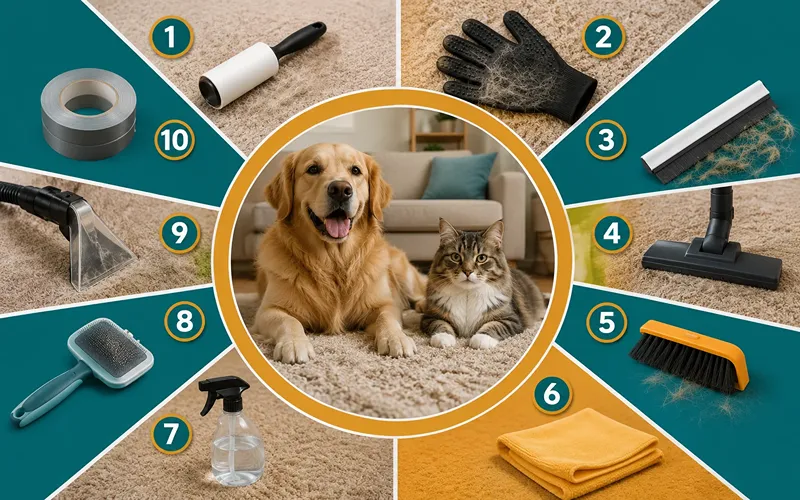
If you share your home with a dog or cat, you already know the struggle, no matter how often you vacuum, pet hair keeps working its way back into the carpet. Whether you’re trying to remove dog hair from carpet after a walk or remove cat hair from carpet around a favorite napping spot, you don’t need expensive gear to get pet hair out of carpet for good. Below are ten methods by Best Carpet Dubai that actually work, using tools you probably already have at home.
Why Pet Hair Gets Stuck in Carpet Fibers?
Before jumping into the methods, it helps to understand what you’re up against. Pet hair is lightweight and carries a static charge, which makes it cling to fabric rather than sit loosely on the surface. Combine that with the texture of most carpets, especially plush, cut-pile, or looped styles, and the hair gets woven into the base instead of resting on top where a vacuum can easily grab it. This is why a regular vacuuming session often leaves your carpet looking cleaner without actually removing what’s trapped underneath, the pet hair stuck in carpet fibers stays put long after the surface looks tidy.
Before Removing Pet Hair, Check Your Carpet Type
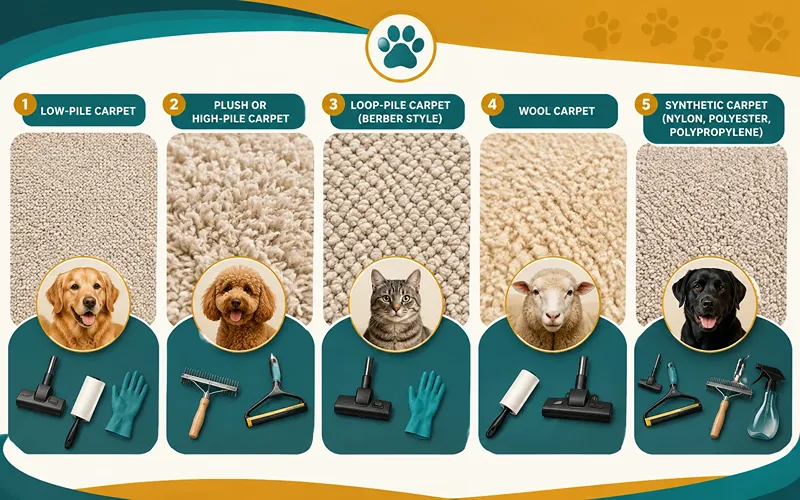
Not every wall to wall carpet pet hair removal method on this list is safe for every carpet. Aggressive tools like pumice stones, stiff-bristle rakes, and hard scraping can fray or damage certain fibers, so it’s worth knowing what you’re working with before you start.
- Low-pile carpet: Short, tightly woven fibers make it easier for hair to sit closer to the surface, so lighter methods like a vacuum, lint roller, or damp glove usually do the job without needing anything abrasive.
- Plush or high-pile carpet: Thicker, longer fibers let hair burrow deep, which is where a carpet rake or rubber squeegee tends to work best. Avoid a pumice stone here, since it can catch and pull long fibers rather than just the hair.
- Loop-pile carpet (including Berber-style weaves): The looped construction can snag on stiff brushes or rakes, potentially pulling threads loose. Stick to a vacuum, damp rubber glove, or fabric softener spray instead of anything with sharp bristles or a scraping motion.
- Wool carpet: Wool fibers are more delicate and can be damaged by excess moisture or harsh scrubbing. Favor dry methods, a lint roller, rubber glove used sparingly, or gentle vacuuming, and always check the manufacturer’s care instructions before applying any liquid solution.
- Synthetic carpet (nylon, polyester, polypropylene): These materials are generally the most durable and pet-friendly, holding up well to vacuuming, squeegees, rakes, and fabric softener sprays without much risk of damage.
When in doubt, test any new method on a small, hidden section of carpet first, and skip pumice stones or stiff brushes altogether on wool or loop-pile styles.
1. Vacuum with the Right Technique
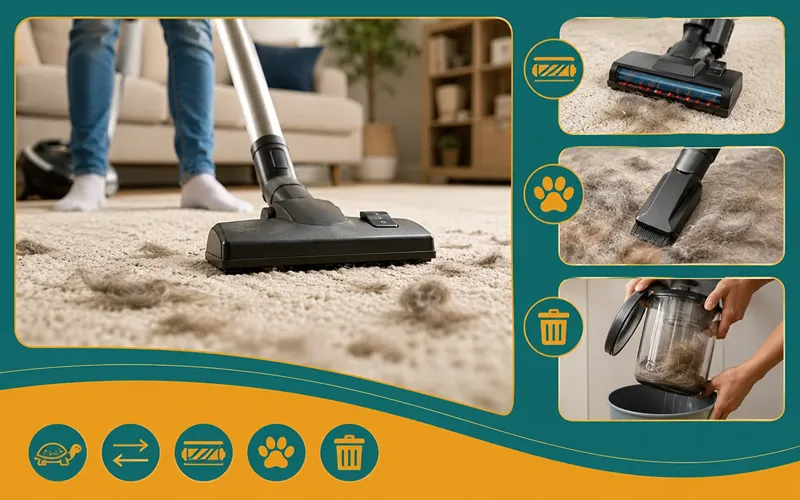
A vacuum cleaner is still your first line of defense against stubborn pet hair, but how you use it matters more than how powerful it is. Go over problem areas slowly, in both directions, rather than in one quick pass. If your vacuum has a motorized brush roll or a dedicated pet-hair attachment, use it, the spinning bristles work through the pile and lift hair that a suction-only nozzle would miss. Empty the canister or bag often, since a full container weakens suction and leaves more hair behind with every pass.
2. Try a Damp Rubber Glove
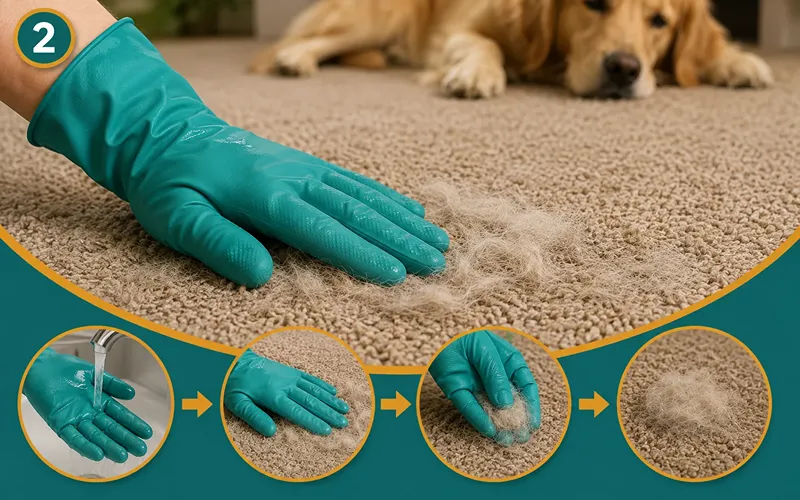
This trick sounds too simple to work, but it’s one of the most effective options on this list for lifting embedded pet hair. Slightly dampen a pair of rubber or latex gloves with water, then run your palm across the sisal carpet in short strokes. The combination of moisture and rubber creates friction that pulls hair to the surface, where it rolls into small clumps you can pick up by hand. Rinse the glove under running water every so often to release the hair that builds up.
3. Use a Rubber Squeegee or Rubber Broom
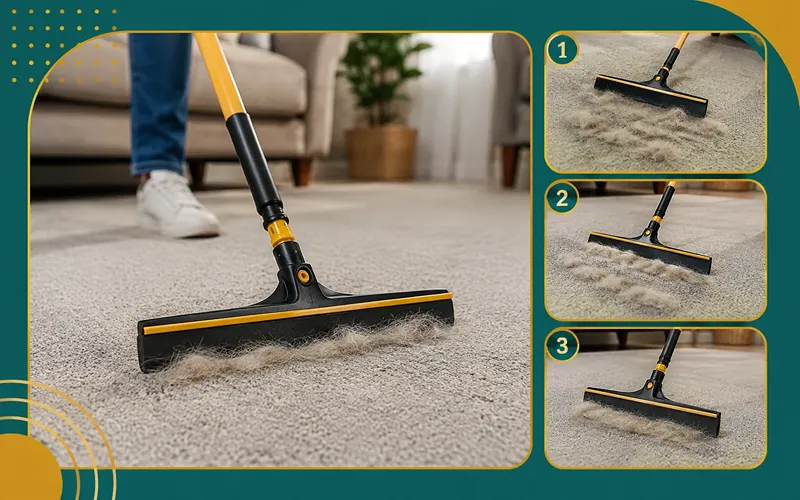
A window-cleaning squeegee isn’t just for glass. Drag the rubber edge across your carpet using firm, even strokes, and you’ll see fur start to gather into rows. The rubber generates the same static pull as a damp glove but covers more ground in less time, which makes it a good choice for larger rooms or hallways with heavy shedding.
4. Roll a Long-Handled Lint Roller
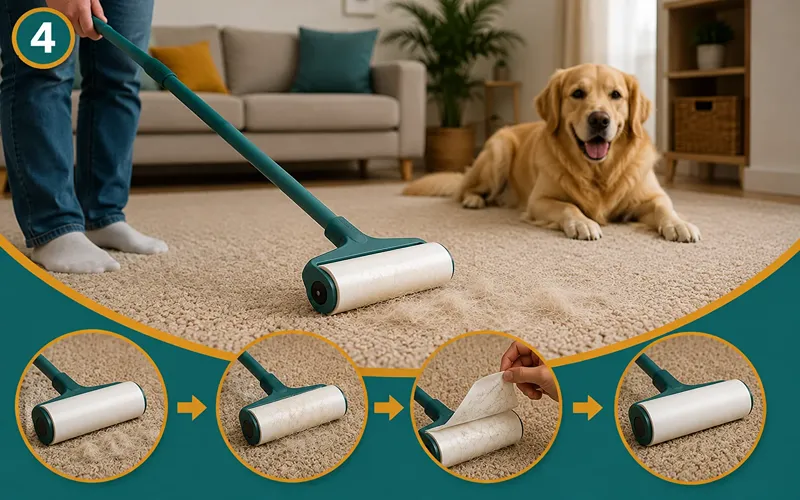
Standard lint rollers work fine on small spots, but for wider coverage, look for an extra-large or long-handled version made for floors. Roll it slowly over the carpet and replace the sticky sheet once it fills up. This method is best suited to smaller areas like stair treads, rugs, or a favorite napping spot rather than an entire room, since the adhesive sheets wear out quickly.
5. Spray a Diluted Fabric Softener Solution
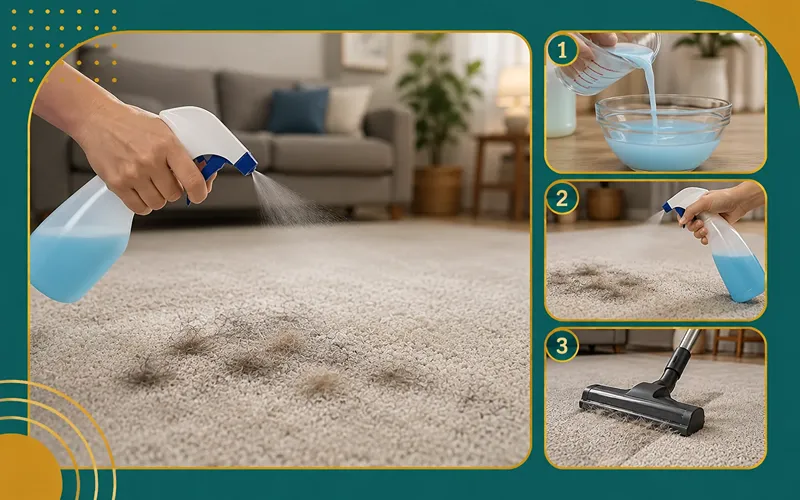
Mix one part fabric softener with three parts water in a spray bottle, then mist it lightly over the affected area, don’t soak the carpet. Fabric softener cuts down the static cling that makes hair stick to the fibers in the first place. Once the carpet has dried, go over it with a vacuum or a stiff brush, and you’ll notice the hair lifts away far more easily than before.
6. Sprinkle Baking Soda Before Vacuuming
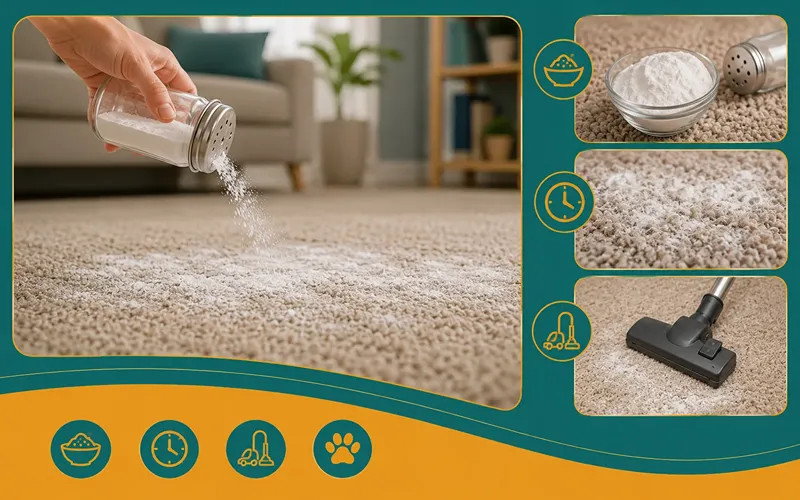
Baking soda won’t remove hair on its own, but it loosens the grip fur has on carpet fibers and neutralizes any lingering pet odor at the same time. Sprinkle a generous, even layer over the area, let it sit for about 15 minutes, then vacuum thoroughly. This is a good step to add before a deeper clean or ahead of guests arriving.
7. Brush It Out with a Stiff-Bristle Carpet Rake
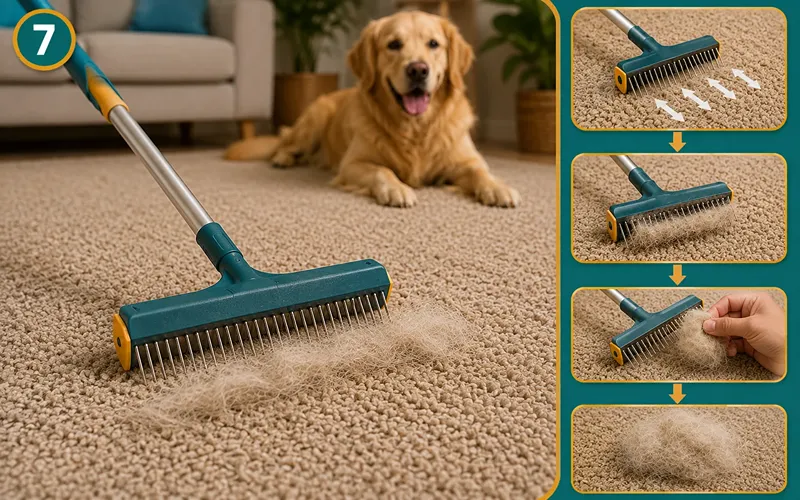
A carpet rake or a stiff pet brush with metal pins works on the same principle as brushing your pet, it digs into the pile and drags trapped hair to the surface. Pick a direction and brush toward it consistently so the fur collects in one area rather than spreading around. Stop periodically to clear hair off the bristles so the tool keeps working effectively.
8. Scrape Gently with a Pumice Stone
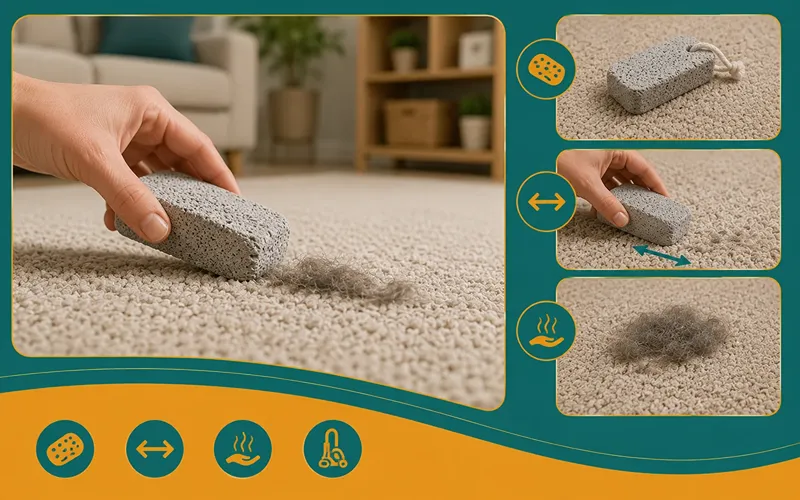
A pumice stone, the same kind used for skin care, can be run gently across carpet to gather embedded hair without damaging the fibers. Use light pressure and short strokes, since scrubbing too hard can fray delicate carpet types. This works particularly well on low-pile carpets where hair sits closer to the surface.
9. Rub Down the Carpet with a Balloon
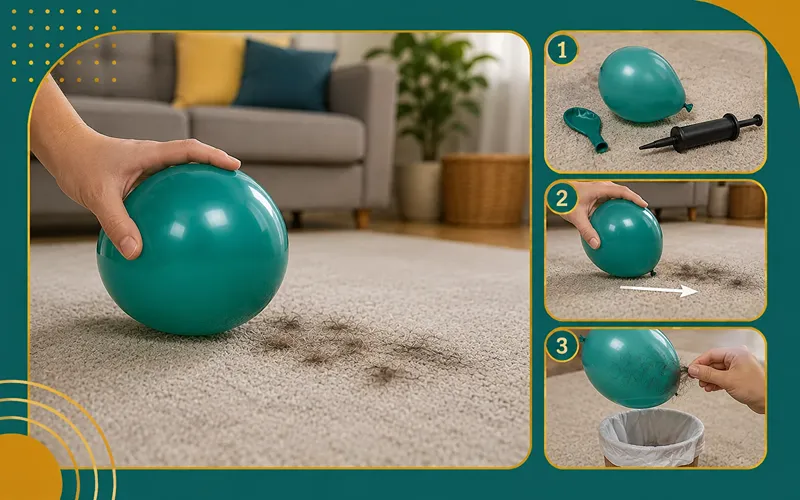
It sounds unconventional, but static electricity is genuinely useful here. Blow up a balloon and rub it lightly across the carpet in one direction. The electrostatic pull draws hair toward the balloon’s surface, and you can wipe it clean and repeat as needed. It’s a low-cost trick that works well on small areas or rugs.
10. Call in a Professional Carpet Cleaner
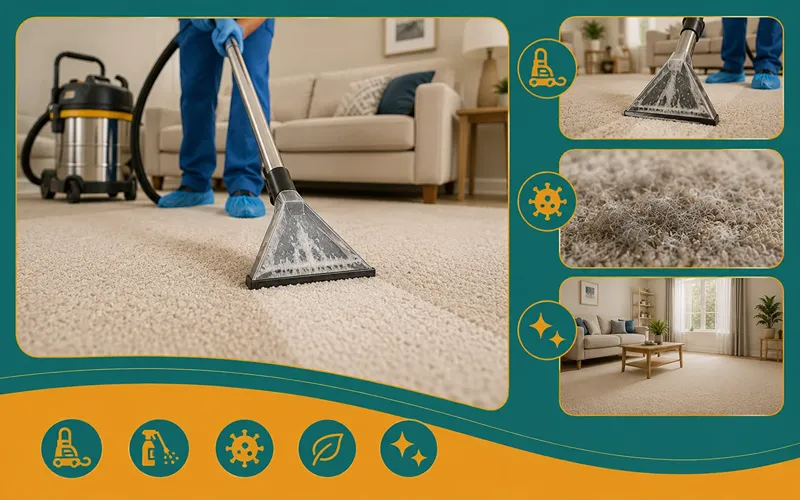
If pet hair has built up over months or years, or if your carpet has deep padding that traps fur no home method can reach, a professional deep clean may be worth the investment. Professional equipment reaches further into the pile than any household tool and can also remove trapped allergens, dirt, and odor along with the hair, leaving carpets looking closer to new.
What Is the Best Way to Remove Pet Hair from Carpet?
There’s no single “best” method for every situation — the right choice depends on how much hair you’re dealing with, how large the area is, and how much time you want to spend. As a quick rule of thumb: use a vacuum for everyday maintenance, reach for a damp rubber glove or squeegee when hair is stuck deep in the fibers, and call in a professional when the buildup has been ignored for months. Here’s how all ten methods stack up against each other:
| Method | Best For | Effort |
| Vacuum | Regular, everyday cleaning | Low |
| Rubber glove | Embedded hair in small areas | Low |
| Rubber squeegee/broom | Large rooms and hallways | Medium |
| Lint roller | Small spots, stairs, rugs | Low |
| Fabric softener spray | Loosening hair before vacuuming | Low |
| Baking soda | Odor control plus light buildup | Low |
| Carpet rake | Heavy, deep-set buildup | Medium |
| Pumice stone | Low-pile carpets | Medium |
| Balloon | Small areas, quick touch-ups | Low |
| Professional cleaning | Severe, long-term buildup | High |
If you only have time for one approach, pair a thorough vacuum with a damp rubber glove or squeegee pass, together they cover both loose surface hair and the hair trapped deep in the pile, which is the combination most pet owners find works best day to day.
Preventing Pet Hair Buildup Going Forward
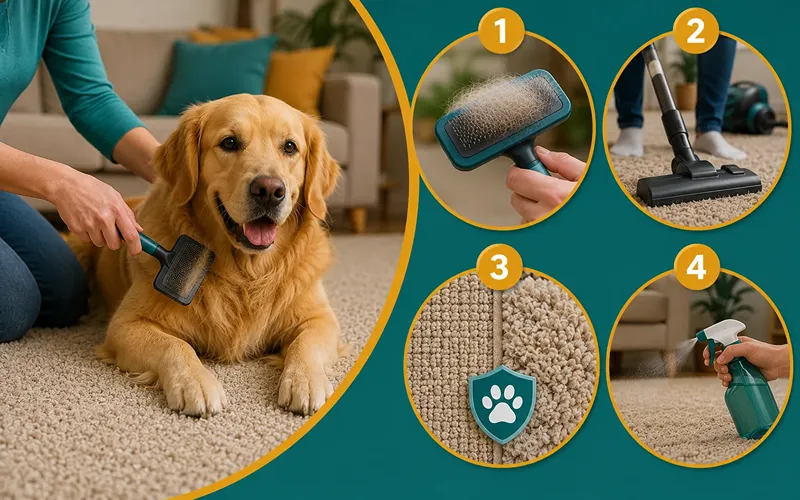
Removing existing hair is only half the battle, good carpet cleaning for pet owners is really about staying ahead of the problem. A few habits can cut down how much hair ends up embedded in the first place:
- Brush your pet regularly, especially during shedding season, to catch loose fur before it reaches the floor.
- Vacuum on a consistent schedule rather than waiting until hair is visible, since buildup happens gradually.
- Choose pet-friendly carpet materials, such as polypropylene or tightly woven cut-pile styles, if you’re shopping for new flooring, these resist fur far better than loose loop-pile carpets.
- Use an anti-static spray occasionally on high-traffic areas where your pet spends the most time.
Final Thoughts
There’s no single fix that eliminates pet hair from carpet forever, but combining a few of these methods will make the job noticeably easier. Start with a thorough vacuum, follow up with a static-based method like a rubber glove or squeegee for the hair that’s still holding on, and bring in a professional clean occasionally for a deeper reset. With the right routine, you can keep your carpets looking fresh without the constant battle against shedding.
Frequently Asked Questions
What’s the fastest way to remove pet hair from carpet?
For a quick fix, a damp rubber glove or rubber squeegee usually beats other methods on speed, the rubber’s grip lifts hair in just a few strokes without any prep work. If you have a little more time, vacuuming first and following up with one of these tools removes both loose and embedded hair in one session.
Does vinegar help remove pet hair from carpet?
Vinegar isn’t as effective as fabric softener for this specific job. While a diluted vinegar solution can help with odor and light staining, it doesn’t loosen hair’s grip on the fibers the way fabric softener does, so it won’t lift embedded hair as noticeably.
How often should I vacuum a carpet if I have pets?
Most pet owners get the best results vacuuming two to three times a week, with high-traffic areas or rooms where pets nap getting an extra pass. Sticking to a schedule prevents hair from building up to the point where it needs a more intensive method to remove.
Can I use a regular lint roller on carpet, or do I need a special one?
A standard lint roller works fine on small areas, but the adhesive sheets fill up quickly on carpet compared to clothing. For anything larger than a rug or a few stair treads, an extra-large or long-handled roller made for floors will save you time and rollers.
Why does pet hair keep coming back even after I vacuum?
This usually means the vacuum is only picking up loose surface hair while leaving what’s embedded deeper in the fibers untouched. Pairing a vacuum with a friction tool, like a damp glove, squeegee, or fabric softener spray, addresses both layers instead of just the top one.
Is baking soda safe to use on all carpet types?
Baking soda is generally safe on synthetic and low-pile carpets, but it’s worth vacuuming thoroughly afterward to avoid leaving residue in wool or high-pile carpets, where fine particles can settle deeper into the fibers. As always, test a small area first if you’re unsure.