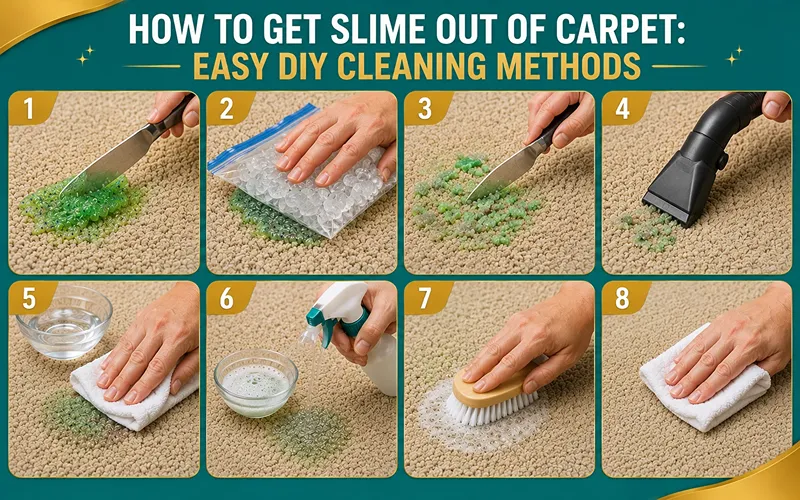
Scrape off the excess, freeze what’s left with ice cubes, then treat the spot with a mix of white vinegar and warm water. Blot, never scrub, until the residue lifts, rinse lightly, and vacuum once the carpet is dry. Most slime spills come out completely with items already sitting in your kitchen.
Slime is one of those things kids adore and parents quietly dread. It takes ten minutes to make and about two seconds to end up ground into the living room rug. If you’re staring at a neon green blob wedged between your carpet fibers right now, take a breath. It looks worse than it is.
Treat this as your complete carpet stain guide by Best Carpet Dubai: it walks you through exactly what to do, whether the slime is still gooey or has been hiding under the couch for three days.
Why Slime Clings to Carpet Fibers So Stubbornly?
Understanding what you’re up against makes the cleanup faster. Most homemade slime is a polymer built from white PVA glue, water, and an activator like borax or contact lens solution. The activator links the glue molecules into long, stretchy chains. Those chains are exactly what makes slime fun to play with, and exactly why it wraps itself around individual carpet strands instead of sitting on top of them.
Then there are the extras. Food coloring, glitter, foam beads, and shaving cream each bring their own problem. The glue is sticky, the dye stains, and the glitter refuses to vacuum up. That’s three different cleaning challenges in one puddle, which is why a single wipe with a wet cloth never works.
The good news: the glue base is water-soluble. In practice, the skill you need here is the same one used to remove glue from carpet, break the polymer’s grip and everything else follows.
What You Need to Clean Slime From Carpet?
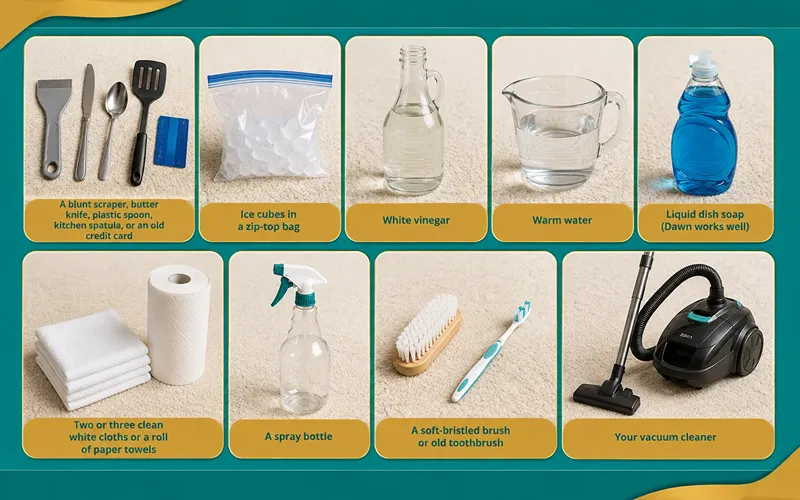
Gather these before you start so you’re not running around mid-cleanup:
- A blunt scraper, butter knife, plastic spoon, kitchen spatula, or an old credit card
- Ice cubes in a zip-top bag
- White vinegar
- Warm water
- Liquid dish soap (Dawn works well)
- Two or three clean white cloths or a roll of paper towels
- A spray bottle
- A soft-bristled brush or old toothbrush
- Your vacuum cleaner
Use white cloths only. Colored towels can transfer their own dye into damp wall to wall carpet, and you’ll end up cleaning two stains instead of one.
4 Rules to Follow Before You Touch the Stain
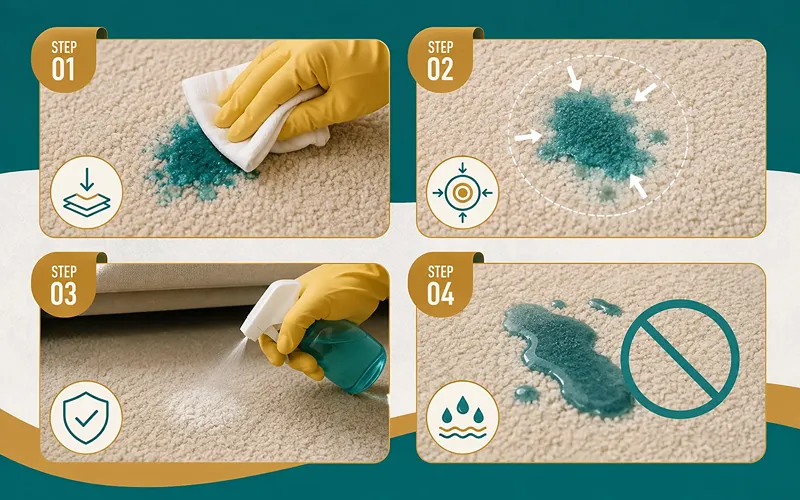
Skip these and you can turn a small spot into a permanent one.
Blot, don’t rub. Rubbing drives slime deeper into the pile and spreads the dye outward. Press straight down, lift straight up.
Work from the outside in. Start at the edge of the spill and move toward the center. This stops the stain from growing wider.
Always spot test. Dab your cleaning solution on a hidden patch of sisal carpet first, under a sofa or inside a closet, and wait a few minutes. You’re checking that the colors don’t run.
Don’t soak the carpet. Excess moisture seeps into the padding underneath, where it can trigger mildew and odor. Light misting beats pouring, every time.
How to Get Fresh Slime Out of Carpet
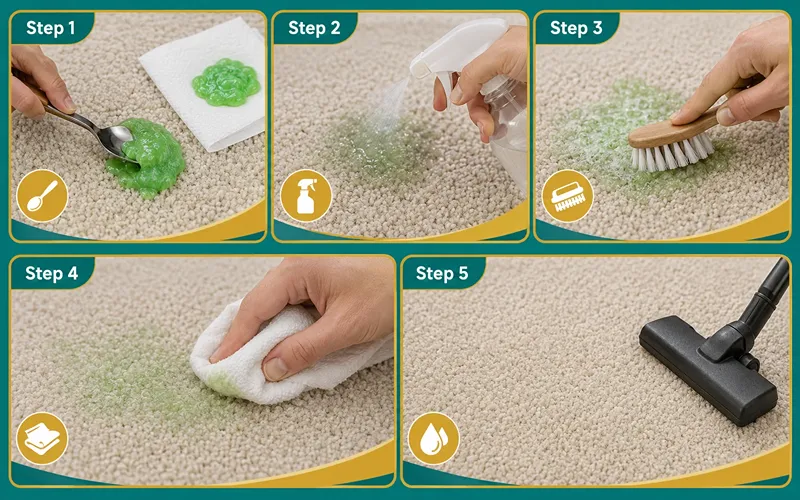
Wet slime is the easy version. Move fast and you’ll barely leave a trace.
Step 1: Lift the bulk. Slide a spoon or spatula underneath the blob and peel it upward with a plucking motion rather than a sideways swipe. Transfer each glob onto a paper towel set beside the spill.
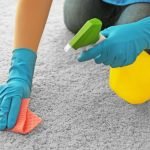
Step 2: Mist with vinegar solution. Combine two parts white vinegar with one part warm water in your spray bottle. Lightly coat the area and let it sit for five minutes. The acetic acid weakens the bonds holding the polymer together.
Step 3: Agitate gently. Work a soft brush through the fibers in small circles. You should feel the slime loosening and coming up in watery little clumps.
Step 4: Blot and repeat. Press a dry white cloth into the spot to absorb the liquid and residue. Keep alternating between light misting and blotting until nothing more transfers to the cloth.
Step 5: Rinse and dry. Dab the area with plain warm water to lift out the vinegar, blot it as dry as you can, and let it air dry fully. Vacuum afterward to fluff the pile back up.
How to Get Dried Slime Out of Carpet?
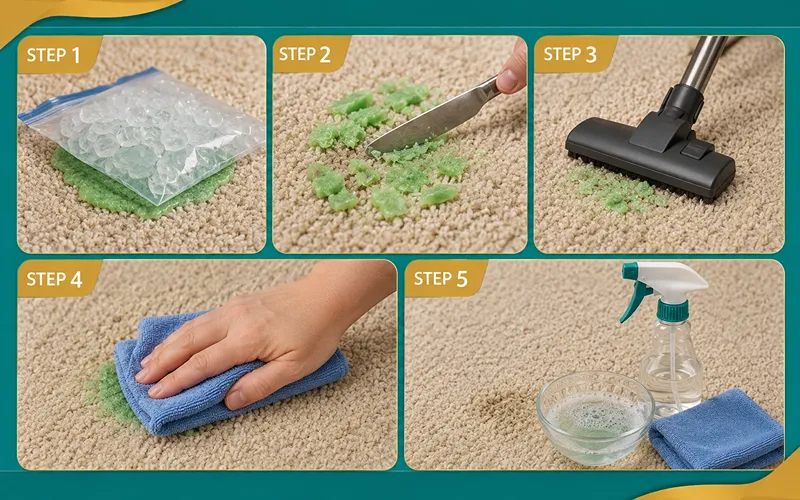
Dried slime on carpet needs a different opening move. Instead of softening it immediately, you make it brittle first.
Step 1: Freeze it solid
Fill a plastic bag with ice cubes and press it directly onto the crusty patch. Give it 10 to 15 minutes. Frozen slime loses its elasticity and its grip on the carpet fibers.
Step 2: Chip it away
Use a butter knife or the edge of a plastic spoon to crack the frozen mass apart. It should fracture into pieces rather than stretch. Pick out the larger chunks by hand as they break free.
Step 3: Vacuum the debris
Run the vacuum over the area before you introduce any liquid. Wet slime fragments can clog the hose, so this order matters. Go over the spot from a few different angles to pull loose bits out of the pile.
Step 4: Rehydrate what’s left
Whatever remains is bonded deep in the fibers. Soak a cloth in warm water, wring it out, and press it onto the residue for a minute or two. Softening the leftovers lets you pluck them out with the same upward motion you’d use on fresh slime.
Step 5: Treat the spot
Now switch to the vinegar or dish soap method below and finish the job.
Slime Removal Methods Compared at a Glance
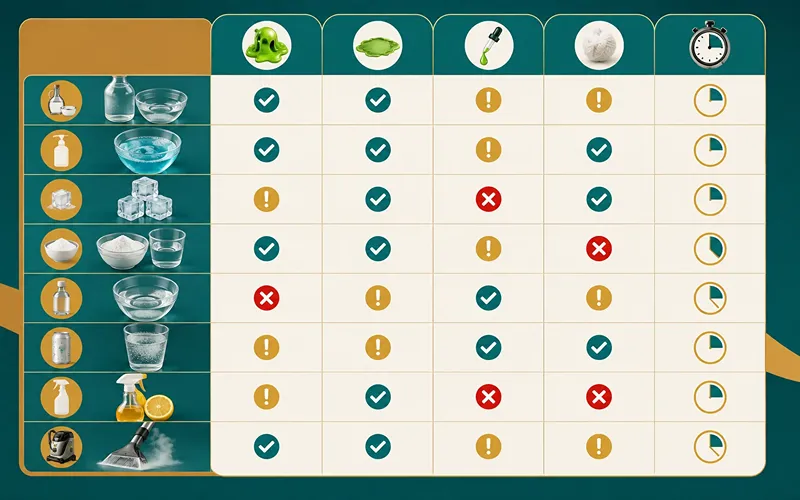
Not sure which approach fits your situation? Use this table to narrow it down before you start.
| Method | Fresh Slime | Dried Slime | Removes Dye | Safe for Wool | Time Needed |
| White vinegar + water | ✅ Excellent | ✅ Excellent | ⚠️ Partial | ⚠️ Diluted only | 10-15 min |
| Dish soap + warm water | ✅ Excellent | ✅ Good | ⚠️ Partial | ✅ Yes | 10 min |
| Ice cubes | ⚠️ Works, but messy | ✅ Excellent | ❌ No | ✅ Yes | 15-20 min |
| Baking soda + vinegar | ✅ Good | ✅ Good | ⚠️ Partial | ❌ Avoid | 15-20 min |
| Rubbing alcohol | ❌ Not needed | ⚠️ Residue only | ✅ Excellent | ⚠️ Test first | 5-10 min |
| Club soda | ⚠️ Mild | ⚠️ Mild | ✅ Good | ✅ Yes | 5-10 min |
| Citrus adhesive remover | ⚠️ Overkill | ✅ Good | ❌ No | ❌ Avoid | 15 min + rinse |
| Hot water extraction | ✅ Excellent | ✅ Excellent | ⚠️ Partial | ⚠️ Pro only | 20-30 min |
7 DIY Methods to Remove Slime From Carpet
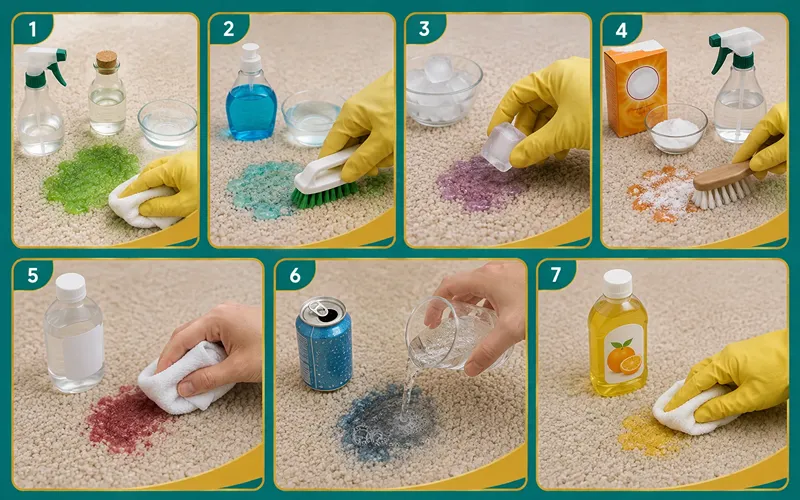
Different messes call for different tools. Here’s when to reach for each.
1. White vinegar and warm water
Best for: almost every slime spill, fresh or dried
Mix two parts vinegar to one part warm water. Spray, wait five to ten minutes, agitate lightly, then blot. Vinegar for slime works because its acetic acid dissolves the glue base without harming most synthetic carpet fibers, and it’s safe to use around kids and pets. The smell fades completely once the carpet dries.
2. Dish soap and warm water
Best for: greasy or butter slime, and delicate carpets
Stir one teaspoon of dish soap into a cup of warm water. Spray lightly, let it sit for a few minutes, then blot with a damp cloth. This is the gentlest option on the list, a good first attempt if you’re nervous about your carpet’s colorfastness. Rinse thoroughly, since leftover soap attracts dirt.
3. The ice cube freeze
Best for: thick, hardened blobs
Covered above. Worth repeating that this method handles the physical bulk brilliantly but does nothing for dye. Expect to follow up with a stain treatment if the slime was brightly colored.
4. Baking soda and vinegar
Best for: stubborn residue with a lingering odor
Sprinkle baking soda over the damp spot, then mist it with your vinegar solution. The fizzing reaction helps lift particles out of the fibers. Wait ten minutes, scrub gently, then blot with warm water. Be thorough about removing every trace of baking soda, dried clumps leave a gritty feel underfoot.
5. Rubbing alcohol
Best for: colored dye left behind after the slime is gone
Dampen a white cloth with isopropyl alcohol and dab the discoloration. Don’t pour it directly onto the carpet. Alcohol breaks down food coloring effectively, but it’s strong, so spot test first and let the area air out afterward.
6. Club soda
Best for: light dye stains and vinegar-free households
The carbonation lifts pigment out of fibers without any harsh chemicals or smell. Pour a small amount over the mark, let it bubble for a minute, and blot. It’s mild, so you may need a couple of rounds.
7. Citrus-based adhesive remover
Best for: last-resort sticky residue
A commercial slime cleaner or citrus adhesive remover can cut through the sticky film that nothing else touches. The catch is that oil-based removers leave a slick film behind, which then attracts dirt to the exact spot you just cleaned. If you use one, follow immediately with a dish soap rinse and blot until the area no longer feels slippery.
Slime Stain Removal: Dealing With the Color Left Behind
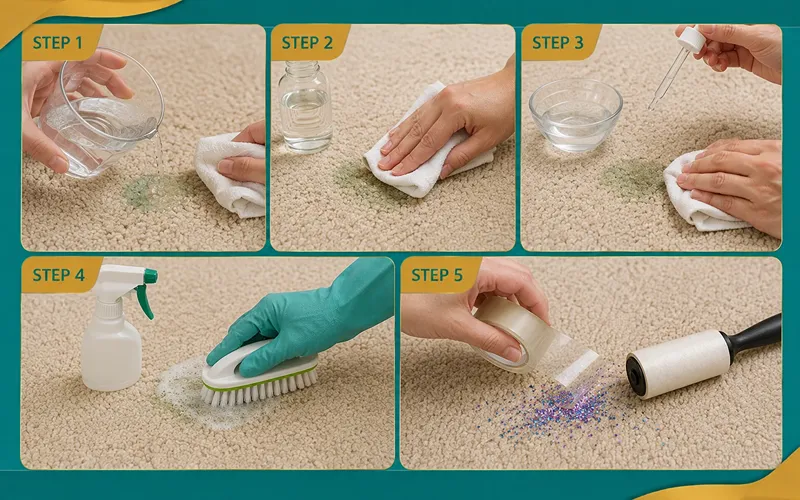
Sometimes the goo comes out perfectly and a colored shadow stays put. That shadow is the food coloring, not the slime, and a carpet slime stain of this kind responds to completely different treatment than the goo did.
Start with the mildest treatment and escalate only if needed:
- Blot with club soda and let it dry
- Move to rubbing alcohol applied by cloth
- Try a 1:1 mix of hydrogen peroxide and water, light-colored carpets only, and test first
- Use an enzyme-based carpet spot cleaner following the label instructions
Between each attempt, let the carpet dry fully. A damp spot always looks darker than it is, and people often keep treating a stain that was already gone.
Glitter is its own battle. Press packing tape or a lint roller onto the dry area to pull out the flakes your vacuum leaves behind.
What Not to Use on Slime
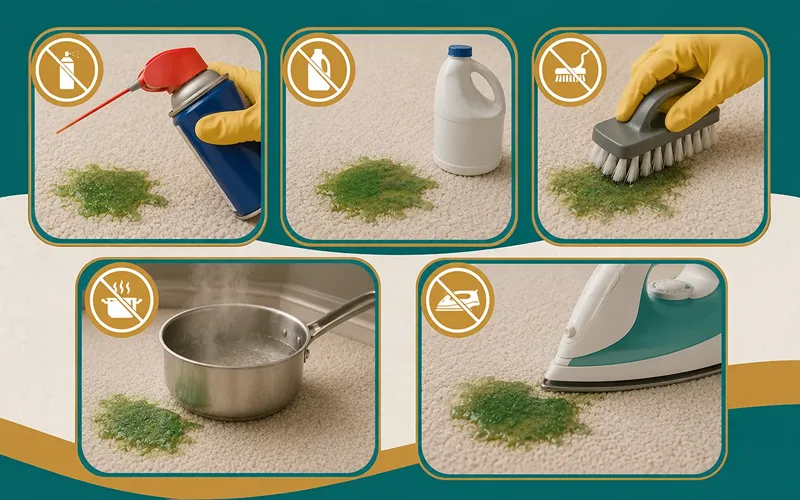
A few popular internet tips do more harm than good.
WD-40: It genuinely loosens slime, but roughly a quarter of the formula is mineral oil. That oil sinks into the fibers and turns your clean spot into a permanent dirt magnet that only professional extraction can fix.
Bleach: It will strip the color out of your carpet along with the stain.
A scrub brush used aggressively: Hard bristles fray carpet fibers and leave a fuzzy, worn patch that’s more visible than the original mess.
Boiling water: Very hot water can shrink or distort synthetic fibers. Warm is enough.
A steam iron: Heat sets the glue and the dye rather than releasing them.
Adjusting for Your Carpet Type
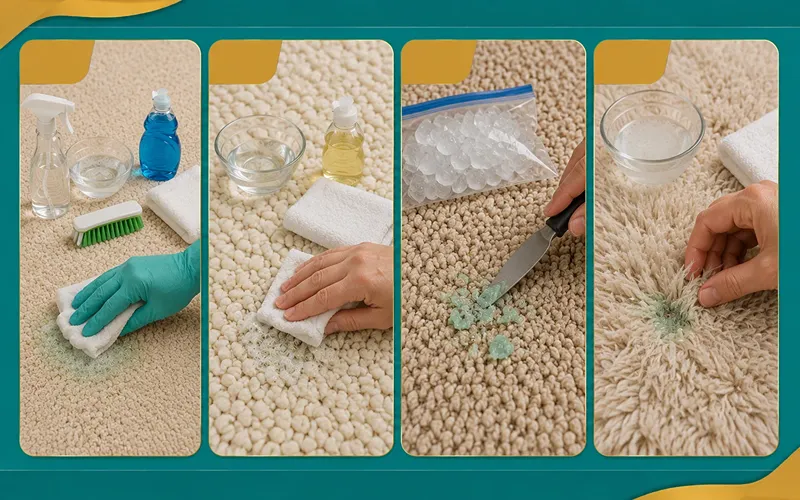
Not all carpet handles cleaning the same way.
Synthetic (nylon, polyester, olefin): The most forgiving. Every method above is fair game.
Wool: Naturally absorbent and sensitive to alkaline cleaners and heat. Stick to cool or lukewarm water with a small amount of dish soap. Skip the vinegar-and-baking-soda fizz and never let it stay wet for long.
Berber and looped pile: The loops trap slime and snag easily. Use the freeze-and-chip approach and pluck upward. Dragging a knife sideways can pull a loop and cause a run across the carpet.
Shag or high pile: Slime travels down to the base of the strands. Separate the fibers with your fingers as you work so you’re treating the whole length, not just the tips.
When It’s Time to Call a Professional
DIY carpet cleaning handles the vast majority of these spills. Consider bringing in a professional service when:
- The stain covers a large area or has been sitting for weeks
- You’ve already tried an oil-based product and the spot now feels greasy
- The carpet is wool, silk, or an expensive area rug
- Dye has visibly bled into the fibers and won’t budge
- You’re a renter and the security deposit is on the line
Professionals use hot water extraction that pulls residue out of the backing rather than pushing it deeper, something a household cloth simply can’t do.
Preventing the Next Slime Disaster
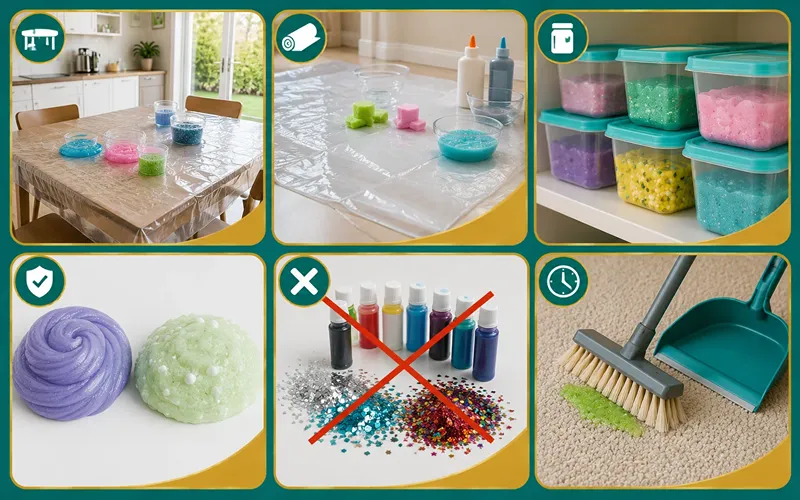
The cheapest cleanup is the one you never have to do.
- Set a slime-only zone: kitchen table, tiled floor, or outdoors
- Put down a plastic tablecloth or old shower curtain before play starts
- Store each batch in a sealed container instead of loose on a shelf
- Choose butter or cloud slime over sticky glue-heavy recipes for younger kids
- Skip glitter and heavy food coloring entirely if carpet is anywhere nearby
- Do a quick sweep before bedtime, fresh slime takes two minutes to remove, dried slime takes twenty
The Bottom Line
Slime on carpet feels like a disaster and almost never is. Scrape, freeze, treat, blot, dry, that sequence handles nearly every spill, and the supplies cost a few dollars. The one thing that genuinely makes a difference is speed. Deal with it today rather than next weekend, resist the urge to scrub, and your carpet will look exactly like it did before slime time got out of hand.
Frequently Asked Questions
Does slime come out of carpet permanently?
In most cases, yes. The glue base dissolves in water, and with prompt treatment there’s usually no visible trace. Heavily dyed slime left to dry for weeks is the one scenario where faint discoloration can persist.
Can I use a steam cleaner on slime?
Yes, once the bulk has been scraped away. The heat and suction loosen embedded residue well. Don’t lead with steam on a fresh blob, though, you’ll spread it around before you lift it.
How long can slime sit before it becomes permanent?
There’s no hard deadline, but the first 24 hours are the easiest. After that, the glue cures and the dye migrates deeper, meaning more rounds of treatment.
Will vinegar leave a smell in my carpet?
Only while it’s damp. Rinse with plain water, blot dry, and the odor disappears as the carpet dries. Sprinkle baking soda overnight and vacuum if you’re sensitive to it.
Can I cut the slime out of the carpet?
As an absolute last resort. Trimming the very tips of the fibers with small scissors can work on a tiny spot, but cut too deep and you’ll leave a bald patch that’s far more noticeable than the stain.
Does the same method work on clothes and upholstery?
Largely, yes. For fabric, saturate with vinegar, work the slime loose with a soft brush, then launder as usual. For upholstery, use less moisture and always spot test, sofa fabric is less forgiving than carpet.