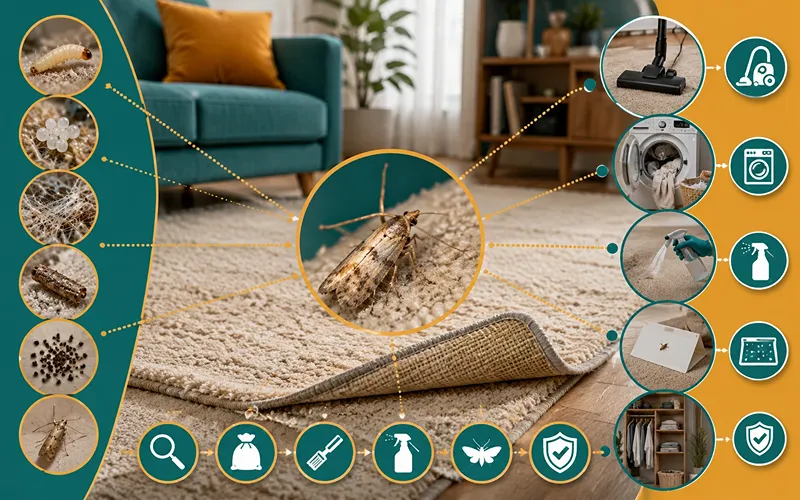
If you’ve noticed bald patches on your carpet, small moths near the skirting boards, or tiny grubs hiding in the pile, you’re probably dealing with carpet moths. They’re easy to miss until real damage is done. But once you know what to look for, they’re manageable with the right cleaning routine and a bit of persistence.
Confirm you’re actually dealing with moths and not carpet beetles. Isolate any affected textiles, then vacuum the carpet and every hidden area thoroughly, especially when maintaining Carpets In Dubai. Wash or dry-clean what you can, and apply a correctly labelled treatment only if needed. Monitor with pheromone traps, and repeat the inspection and cleaning cycle until activity stops.
What Are Carpet Moths?
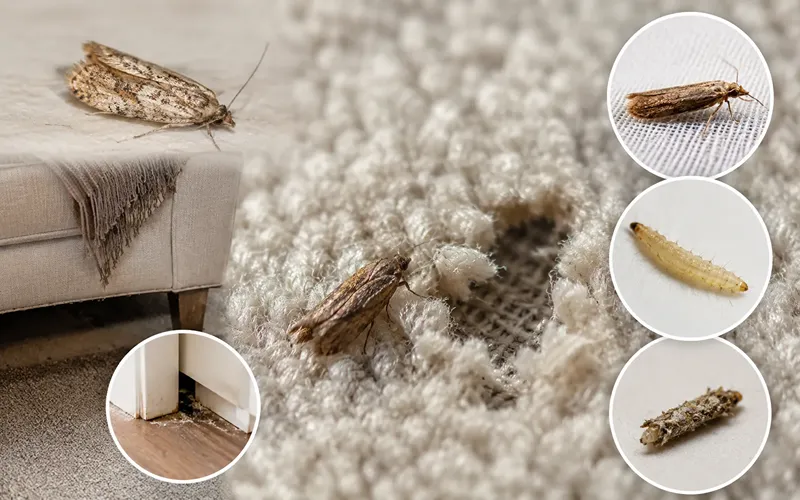
Carpet moths belong to the Tineidae family, the same group as common clothes moths. The species most homeowners run into is the webbing clothes moth (Tineola bisselliella). The case-bearing clothes moth (Tinea pellionella) and the true tapestry moth (Trichophaga tapetzella) can also turn up, usually in heavier rugs and wool carpets.
Adult moths generally don’t feed on wall to wall carpet. It’s the larvae that cause the damage. They feed on keratin, a protein found in natural fibers like wool, silk, feathers, and hair, exactly what many carpets, rugs, and upholstery are made from. Females can lay dozens of eggs during their short adult life. That means a small, unnoticed problem can turn into a full infestation within a few weeks.
Unlike moths that gather around lightbulbs at night, clothes and carpet moths tend to avoid bright light. They’re weak flyers, and you’ll usually see them fluttering close to the infested area rather than moving around a room. That’s why they’re often found in dim, quiet spots: behind sofas, under bookcases, along skirting boards, and beneath furniture that rarely gets moved.
How to Identify a Carpet Moth Infestation
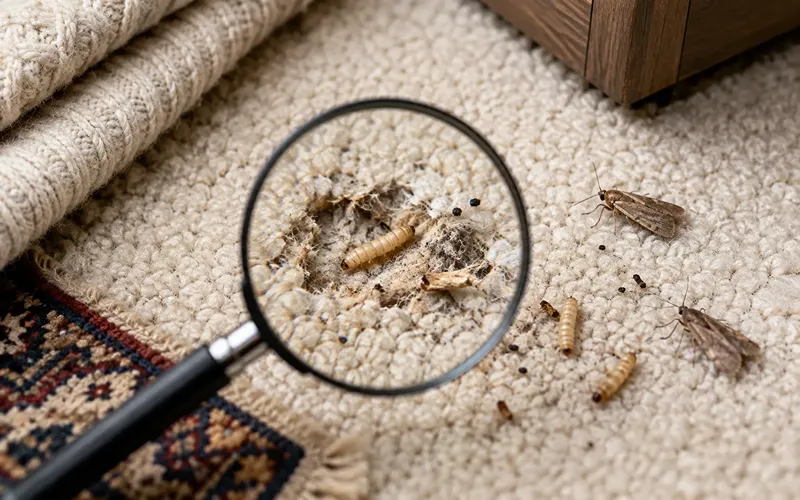
Catching an infestation early makes it far easier to deal with. Before treating anything, it helps to confirm what you’re actually looking at. Sisal Carpet moths and carpet beetles cause similar-looking damage but need slightly different approaches.
Carpet Moth Larvae, Eggs, Webbing, Cases, Frass, and Damage
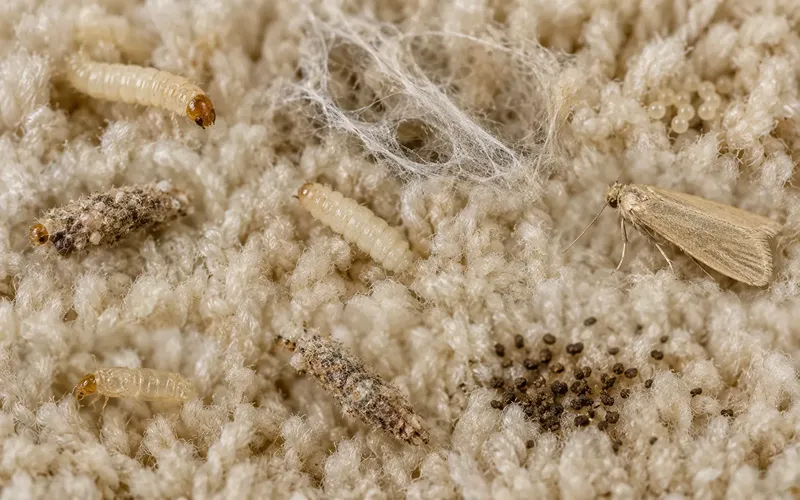
- Threadbare or bald patches on carpets and rugs, especially in low-traffic areas or under furniture
- Larvae roughly 5–10mm long, pale or cream-colored, sometimes with darker heads
- Silken feeding tubes or webbing, produced by webbing clothes moth larvae as they feed
- Portable silk cases, carried by case making clothes moth larvae as they feed and move. These can look like small bits of debris stuck to the carpet
- Frass, a fine, granular residue left behind by feeding larvae
- Adult moths, usually resting or making short, low flights near dark corners, skirting boards, or closets rather than flying openly around a room
- Shed larval skins, left behind as the larvae grow and moult
- Eggs, tiny and pale, usually laid directly into the carpet pile or fabric and rarely visible without close inspection
Carpet Moths vs Carpet Beetles
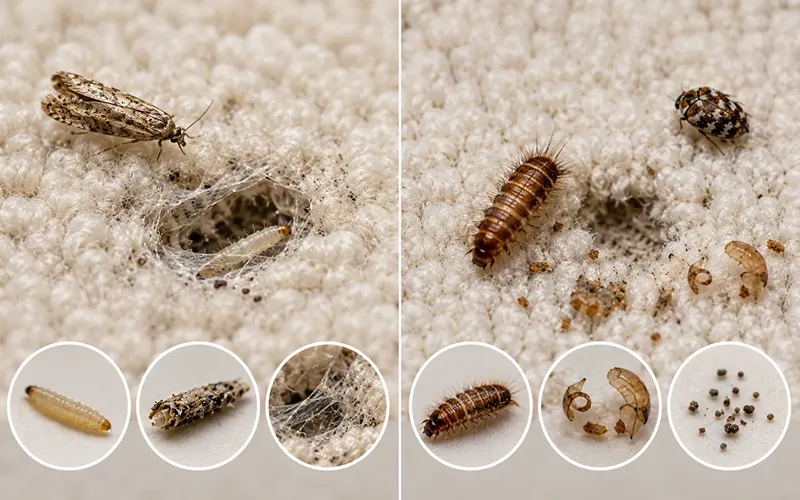
Fabric damage isn’t always caused by moths. Carpet beetle larvae also feed on wool and other natural fibers, and they can leave similar bare patches. It’s worth checking which pest you actually have before choosing a treatment.
- Moth larvae tend to leave silk webbing or a portable case behind, and they shy away from light and disturbance.
- Carpet beetle larvae are typically short, bristly, and slightly hairy in appearance. They leave small shed skins behind rather than silk webbing.
- Both can produce frass and bare patches, so damage alone isn’t a reliable way to tell them apart. Look for the larvae, cases, or shed skins to confirm which pest is present.
Where to Inspect First?
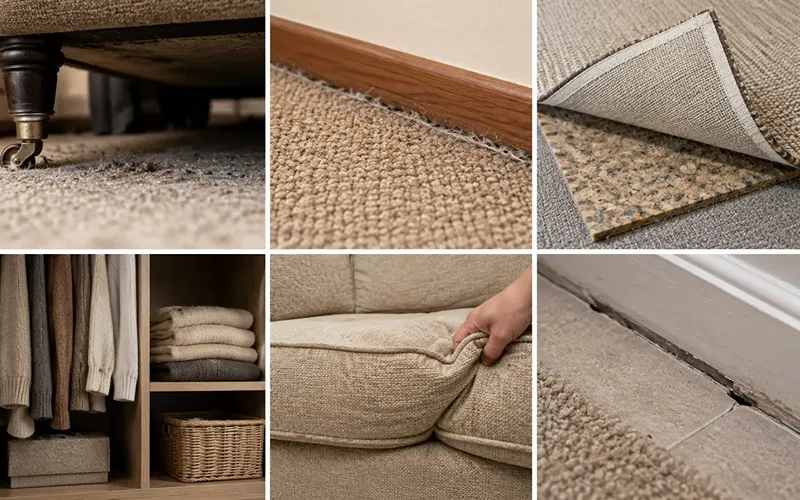
Check these spots specifically, since evidence is most likely to turn up here:
- Under heavy, rarely-moved furniture
- Along carpet edges and where carpet meets skirting boards or baseboards
- Underneath rug pads
- Inside closets and near stored woolens
- Upholstered furniture seams and folds
- Cracks, crevices, and gaps along flooring
Why Carpet Moths Infest Homes?
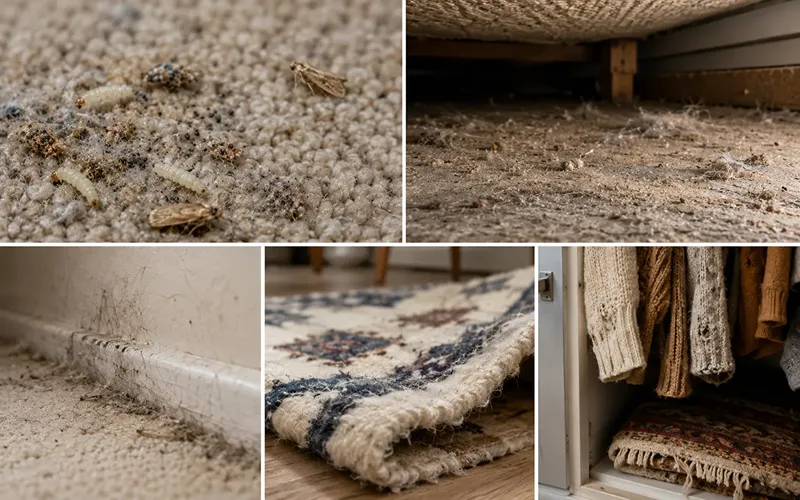
Carpet moths thrive in warm, dark, rarely disturbed environments, which describes most centrally-heated homes fairly well. Built-up dust, pet hair, and skin cells can all provide extra keratin for larvae to feed on, alongside the carpet fibers themselves. Homes with wool carpets or rugs carry a higher risk, simply because wool is a natural, keratin-rich material. Even so, a synthetic carpet isn’t automatically safe: leftover household grime can still support an infestation nearby.
Step-by-Step: How to Get Rid of Carpet Moths
Treating an infestation usually takes more than one pass. Work through the steps below in order. Eggs and hidden larvae are easy to miss the first time, so repeat the steps as needed.
1. Isolate Affected Textiles
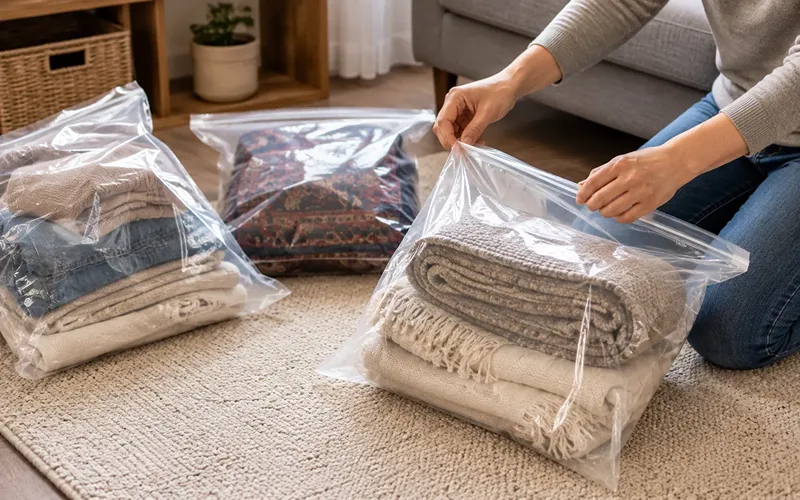
Before cleaning, seal any visibly infested rugs, curtains, cushions, or clothing in plastic bags. This stops larvae from being carried to other rooms while you work. It also gives you a clear list of what needs washing, dry-cleaning, or disposal.
2. Vacuum Carpets, Edges, Furniture, and Crevices
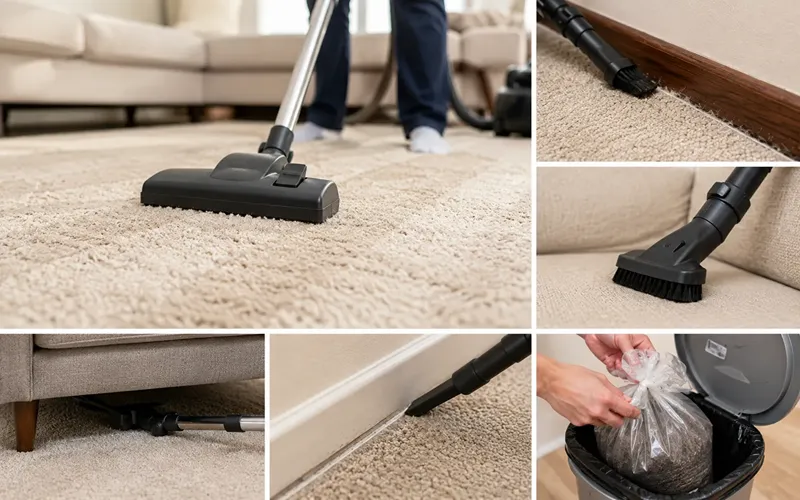
Vacuuming is the single most important control step. It physically removes eggs, larvae, and the household grime they feed on.
- Vacuum carpets and rugs on both sides where possible, working the pile in more than one direction to lift debris trapped deep in the fibers.
- Move furniture so you can reach every inch of carpet, including edges, corners, and skirting boards.
- Pay close attention to the inspection spots listed above, not just the visibly damaged area.
- Empty the vacuum bag or canister into a sealed bag right away, and dispose of it outside. Otherwise, it can reintroduce larvae back into the room.
3. Clean Washable or Dry-Cleanable Textiles

Any nearby fabric items, clothing, curtains, cushion covers, should be laundered or dry-cleaned according to their care label. Heat can be effective against moth eggs and larvae. Even so, follow the garment’s care instructions rather than defaulting to the hottest setting, since some natural fibers can be damaged by high heat.
4. Use Heat or Steam Only When the Material Allows It
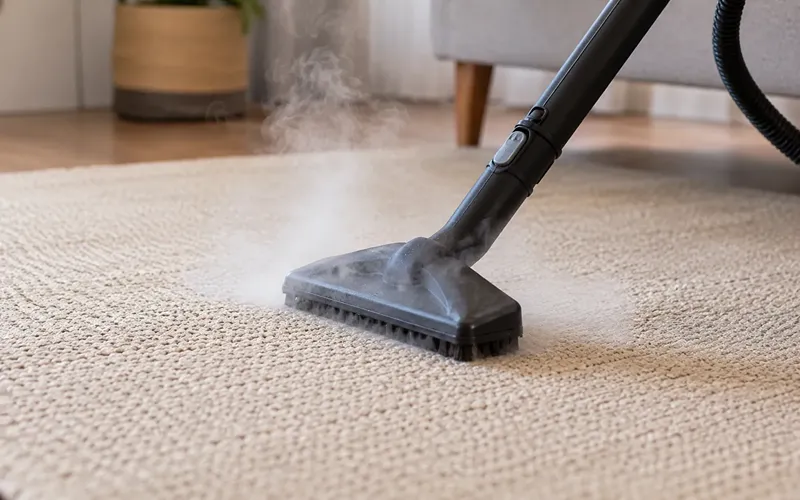
Steam cleaning can help against carpet moths, but it isn’t a guaranteed kill step on its own. Its effectiveness depends on the carpet type, the equipment used, and how evenly the heat is applied. Treat it as one part of the process, not a stand-alone solution. Check the carpet or rug’s care instructions first, wool, antique, and hand-knotted pieces can be sensitive to high heat and moisture.
5. Use a Correctly Labelled Insecticide If Necessary
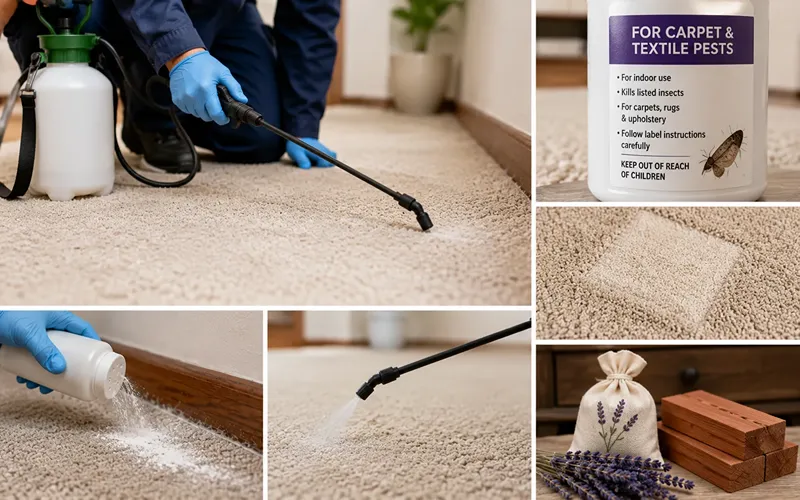
If cleaning alone doesn’t resolve an established infestation, a targeted treatment may help.
- Use only products labelled for the specific pest and surface, carpet, textile, or general household use, as appropriate. Follow the current label instructions exactly, including dilution, application, and re-entry times for children and pets.
- Ventilate the treated area as directed. Test any product on a hidden section of carpet or rug first if there’s a risk of staining.
- Diatomaceous earth can be part of a treatment, but only a product labelled for the intended indoor pest use, applied exactly as directed. Avoid creating airborne dust when applying it, since inhaling it isn’t safe. Vacuum thoroughly once the label’s contact time has passed.
- Cedar and lavender are best treated as optional, limited deterrents rather than an active control method. They’re useful alongside other steps, but not a substitute for them. “Natural” doesn’t automatically mean safe or effective, so use them thoughtfully too.
6. Use Pheromone Traps to Monitor Activity
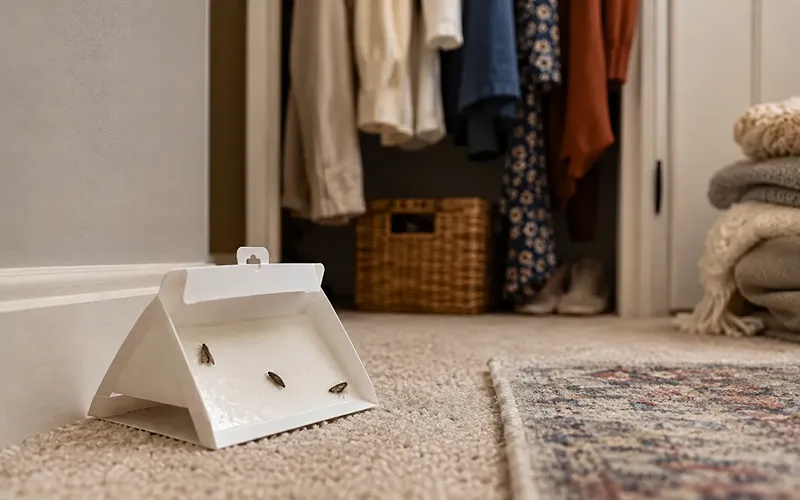
Pheromone traps are a monitoring tool, not a treatment. Don’t rely on traps alone to clear an infestation. They’re useful for locating where activity is concentrated, and for checking whether your cleaning and treatment steps are actually working. Place traps in the affected room and any adjoining spaces. Follow the manufacturer’s instructions for how often to check and replace them, since lure life varies between products.
7. Repeat Inspection and Treatment as Needed
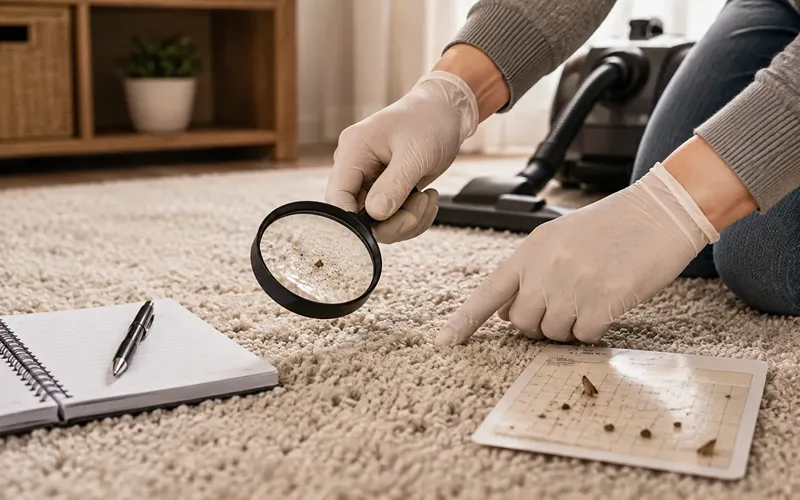
Carpet moths go through an egg, larva, pupa, and adult life cycle. Removing the larvae you can see doesn’t mean every egg or hidden pocket of activity is gone. Re-vacuum and re-inspect the treated areas over the following weeks. Refresh your monitoring traps, and repeat cleaning or treatment if you still see larvae, frass, or adult moths.
8. When to Call Professional Pest Control
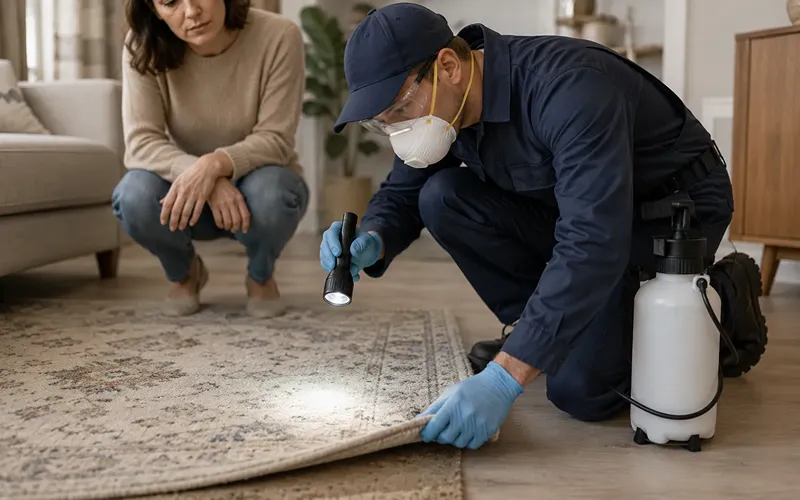
If you’ve vacuumed, cleaned, and treated the area but activity continues, it’s worth bringing in a pest control professional. This matters most for infestations that have spread into subfloors, wall cavities, or multiple rooms, or where valuable rugs are involved. Before the appointment, note where you’ve seen larvae or damage, how long the problem has been going on, and which treatments you’ve already tried. This helps the technician know where to focus the inspection.
How to Treat Wool and Valuable Rugs Safely
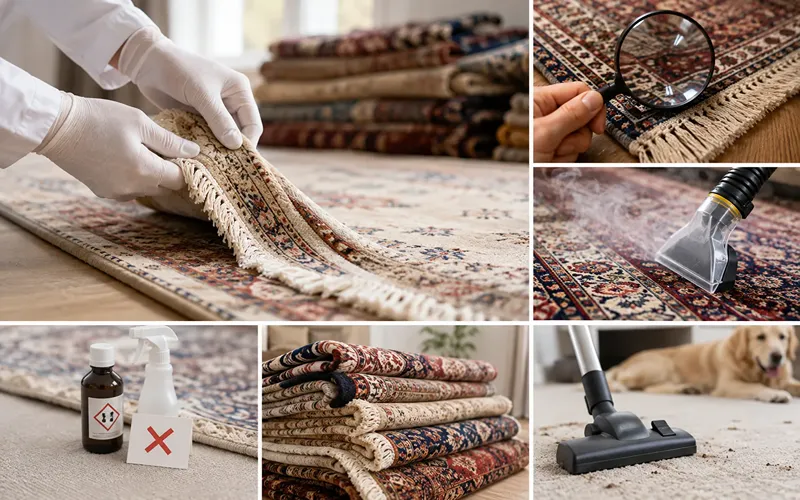
Wool, silk, antique, hand-knotted, and dyed textiles need more careful handling than an everyday synthetic carpet. Aggressive DIY heat or chemical treatment can damage fibers, colors, or the weave itself. For anything valuable or delicate, a specialist rug cleaner or textile conservator is generally the safer choice. If you’re unsure about a rug’s material or age, get a professional opinion before applying steam, insecticide, or diatomaceous earth directly to it.
Synthetic carpets carry a lower risk for direct fiber feeding, since they don’t contain the keratin larvae needed to grow. But trapped dirt and pet hair can still support an infestation nearby, so they’re still worth vacuuming and inspecting regularly.
How to Prevent Carpet Moths From Coming Back?
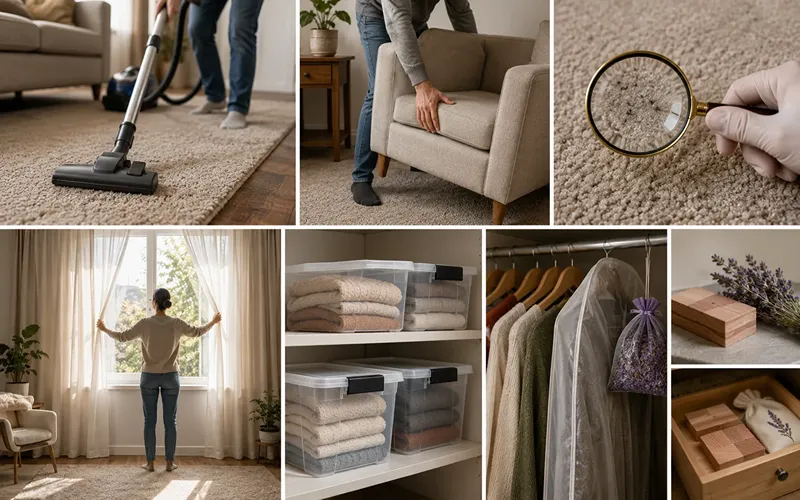
Getting rid of an infestation is only half the job. Keeping it from returning takes a few ongoing habits.
Weekly
- Vacuum living areas thoroughly, including edges, corners, and under accessible furniture.
- Move light furniture periodically so the same patches of carpet aren’t left undisturbed for long.
Monthly
- Inspect rooms you don’t walk through often, along with closets and stored textiles, for early signs of larvae, webbing, or frass.
- Open curtains and let light and air into rarely-used rooms for a while. This makes the space less appealing to moths.
Ongoing
- Store seasonal clothing and textiles in airtight containers or garment bags, rather than leaving them folded in a drawer or wardrobe.
- Keep clutter and grime under control in dim, undisturbed corners. Build-up here can feed larvae even away from the main carpet.
- Use cedar blocks or lavender sachets in wardrobes and storage areas as an added, limited layer of deterrence.
What Not to Do?
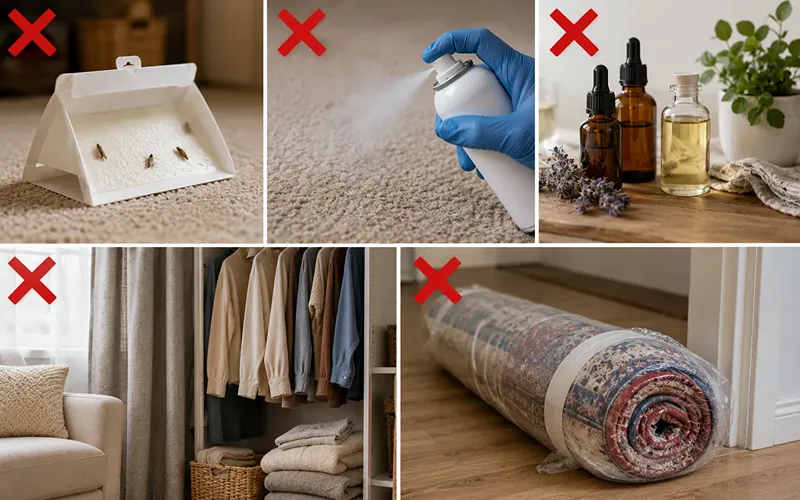
- Don’t rely on pheromone traps as your only form of control. They monitor activity; they don’t eliminate it.
- Don’t apply an unlabeled product, or a product labelled for a different surface, directly onto carpet or rugs.
- Don’t overuse essential oils or “natural” sprays as a substitute for cleaning and correctly labelled treatment.
- Don’t ignore curtains, upholstery, and stored clothing near an infested carpet. Larvae can spread to these fairly easily.
- Don’t drag a heavily infested rug or carpet through the rest of the house when removing it. Seal it first to avoid spreading larvae along the way.
The Bottom Line
Carpet moths can feel overwhelming at first, but they rarely cause lasting damage once you catch them early. Confirm the pest, clean thoroughly, treat carefully, and monitor with traps. Stay consistent with prevention habits afterward, and your carpets and rugs will stay protected long after the infestation clears for good.
Frequently Asked Questions
How long does it take to get rid of carpet moths?
A minor infestation caught early can sometimes be brought under control within a couple of thorough cleaning sessions. More established infestations, especially ones that have spread to multiple rooms or fabrics, can take several weeks of repeated vacuuming, treatment, and monitoring before activity fully stops.
Can carpet moths come back after treatment?
Yes, if the conditions that attracted them in the first place aren’t addressed, things like dust, dim undisturbed corners, and untreated natural-fiber textiles. Ongoing vacuuming, periodic inspection, and continued trap monitoring are what actually keep them from returning.
Do carpet moths only affect wool carpets?
Mostly, yes. Their larvae need keratin to grow, and that’s found in wool, silk, and other animal-derived fibers. Synthetic carpets aren’t a direct food source for them, though moths and their larvae can still be present in the household grime that settles into any type of carpet.
How can I tell if it’s carpet moths or carpet beetles?
Look for the pest itself rather than judging by the damage alone. Moth larvae typically produce silk webbing or a portable case as they feed. Carpet beetle larvae tend to be short and bristly, and they leave shed skins behind instead of silk.
Is it safe to treat carpet moths myself, or should I always call a professional?
Most infestations can be handled with a combination of deep cleaning, appropriate heat treatment, and a correctly labelled insecticide or diatomaceous earth product where needed. Professional pest control is worth calling in for severe, spreading, or repeatedly returning infestations, or where valuable wool, silk, or antique rugs are involved.