A paint spill on your carpet can feel like a small disaster, especially if you’re in the middle of a home renovation project. But before you panic and start looking up carpet replacement costs, know this: most paint stains, even ones that have already dried, can be removed with a bit of patience and the right technique.
The trick is knowing three things: whether the paint is wet or dried, whether it’s water-based or oil-based, and what kind of carpet fiber you’re working with. Get those three right, and you’ll avoid the most common mistake people make, using a strong solvent on a carpet that can’t handle it. In this guide, we’ll walk you through exactly how to tackle wet paint, dried paint, and those stubborn stains that just won’t budge, while keeping your carpet safe in the process.
If the paint is still wet, scoop up the excess and blot with a damp cloth and mild soap, don’t scrub. If it has dried, gently break it up first, then treat it based on the paint type: use soap and water for water-based (latex/acrylic) paint, or a solvent like mineral spirits for oil-based paint. Before using any solvent, check your carpet’s fiber type and test the product on a hidden patch first, especially if you have carpets in Dubai, as wool and delicate carpets can react very differently to chemicals than synthetic ones do.
What You’ll Need Before You Start?
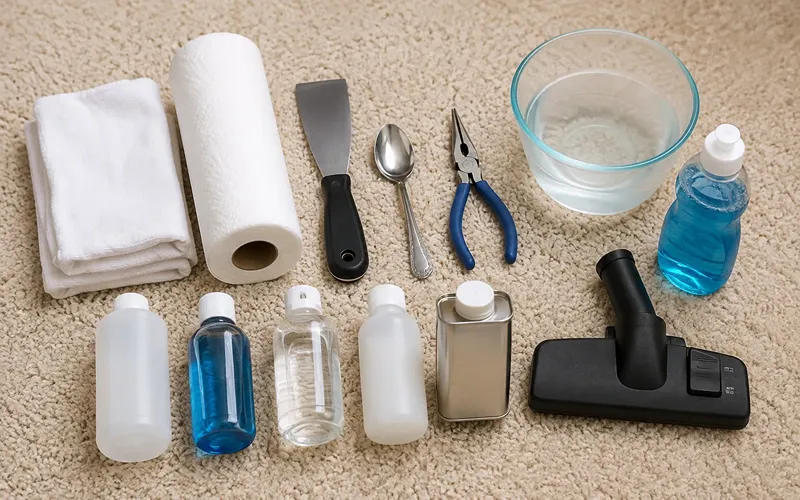
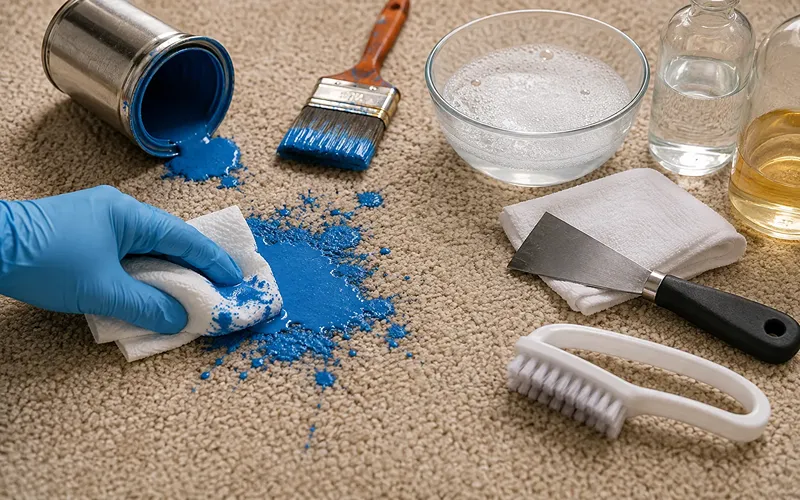
Gather these supplies before you touch the stain. Having everything ready means you can work quickly, and speed makes a real difference when it comes to paint removal.
- Clean white cloths or paper towels
- A dull knife, spoon, or putty knife for scraping
- Needle-nose pliers (for breaking up hardened chunks)
- Warm water and a mild, colorless dish soap
- Rubbing alcohol
- Mineral spirits or paint thinner (for oil-based paint)
- White vinegar
- Acetone or nail polish remover (only where your carpet manufacturer’s care instructions allow it)
- A vacuum cleaner
You won’t need every item on this list for every stain. The type of paint, how long it’s been sitting, and your carpet’s fiber will determine which combination is safe to use.
Identify the Paint Before You Treat the Stain
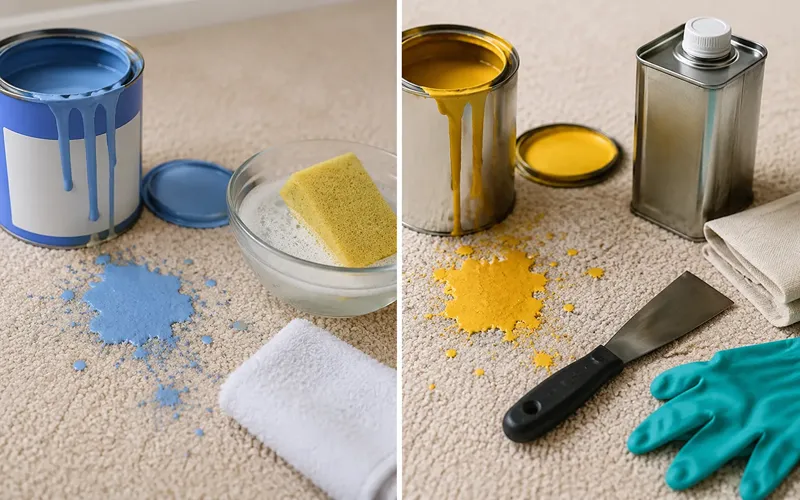
Take a moment to figure out what kind of paint caused the spill before reaching for any cleaner. This one step can save your wall to wall carpet from unnecessary damage.
- Water-based paint, often labeled latex, acrylic, or emulsion, has a mild smell and cleans up with soap and water even after it dries.
- Oil-based paint, labeled enamel, alkyd, or oil-based, has a strong, chemical odor and needs a solvent such as mineral spirits to break it down.
Check the paint can or a leftover label for these terms, if you still have either on hand. If you don’t know which type you’re dealing with, don’t guess and reach straight for a strong solvent. Start with the gentlest option, warm water and mild soap, and only move to a solvent if that doesn’t work, testing it on a hidden area first.
Check Your Carpet Fiber Before Using Any Cleaner
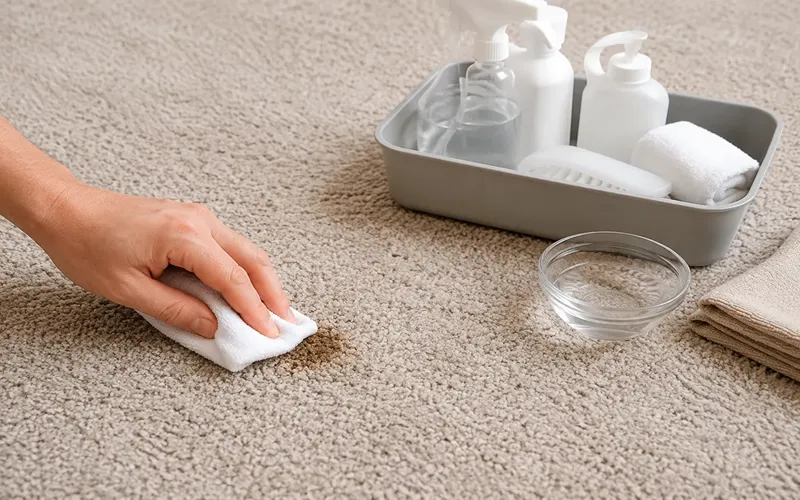
The cleaning method that’s safe for one sisal carpet can damage another, so it’s worth knowing what you’re working with before you apply anything stronger than water.
- Synthetic carpets (nylon, polyester, polypropylene/olefin) generally tolerate dish soap, rubbing alcohol, and mineral spirits reasonably well, though a patch test is still recommended.
- Wool and other natural fibers are far more sensitive to heat, moisture, and solvents. Stick to minimal water, mild soap, and gentle blotting. Avoid acetone and steam on wool, and consider a professional cleaner for anything that doesn’t lift easily.
- Delicate or specialty carpets (antique rugs, hand-woven pieces, unknown fiber blends) should be treated cautiously. When in doubt, contact a professional rather than risk permanent discoloration or fiber damage.
Always test any cleaning product on a small, hidden section of carpet, like a closet corner, and wait a few minutes to check for discoloration or texture changes before treating the visible stain.
How to Remove Wet Paint From Carpet?
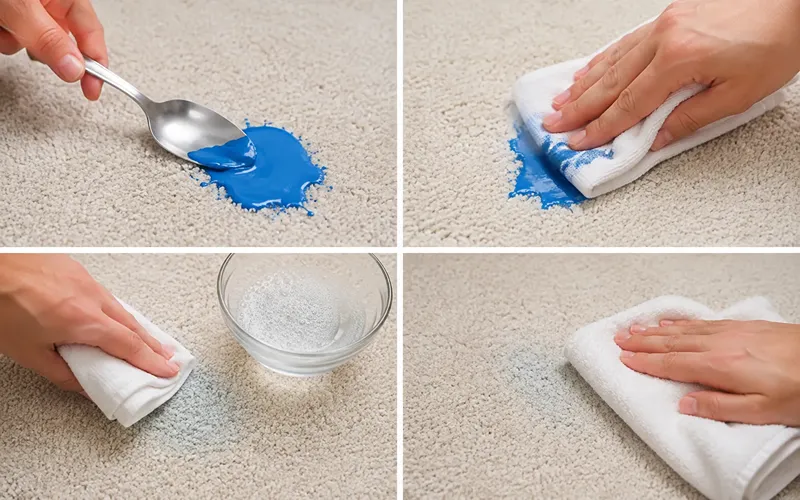
Wet paint is by far the easiest to deal with, so don’t wait around if you’ve just had a spill.
- Scoop up the excess. Use a spoon or dull knife to lift as much paint off the surface as you can. Work from the outer edge of the spill toward the center so you don’t spread it further.
- Blot, don’t rub. Press a clean, dry cloth firmly onto the stain to soak up the remaining paint. Rubbing pushes pigment deeper into the carpet fibers and makes the job harder later on.
- Use a damp cloth, not a soaked one. Dampen a cloth with warm water and a small amount of dish soap rather than pouring water directly onto the spill, too much liquid can carry paint into the padding underneath and make the stain worse.
- Rinse and dry. Wipe the area with a cloth dampened in plain water to remove any soap residue, then blot dry with a clean towel.
If the paint spill happened just minutes ago, this simple method alone will usually take care of it completely.
How to Remove Dried Paint From Carpet?
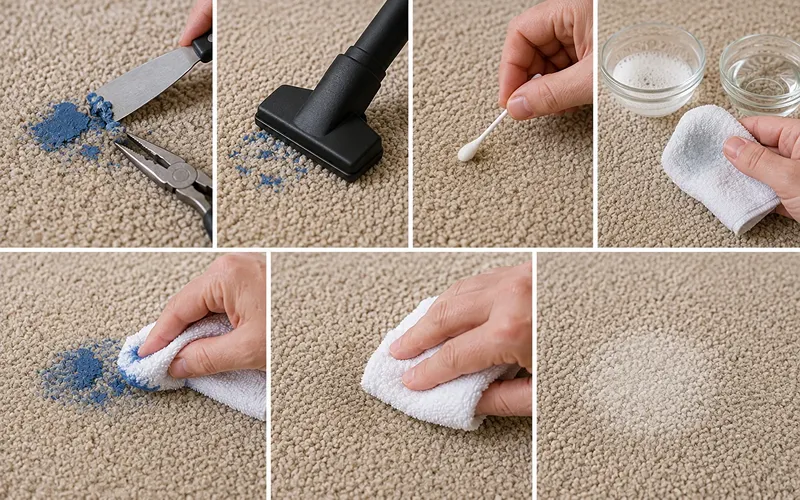
Once paint has dried into the carpet, it takes a more deliberate, step-by-step approach.
- Remove loose paint. Use a butter knife or needle-nose pliers to gently chip away at hardened flakes, taking care not to dig into the carpet backing.
- Vacuum the area. This clears away loose debris and gives you a cleaner surface to assess.
- Test a small area first. Before treating the visible stain, try your chosen cleaner on a hidden patch of the same carpet.
- Soften according to paint type. Use a damp cloth with soap and water for water-based residue, or a solvent-dampened cloth for oil-based residue.
- Blot and repeat. Work the cleaner into the stain gently, switching to a clean section of cloth often, and repeat rather than saturating the area in one go.
- Rinse when appropriate, then dry the spot thoroughly with a clean towel or by allowing it to air dry.
- Reassess. Once the area is dry, check whether any color remains. Sometimes what’s left isn’t paint at all, but a faint discoloration in the fiber from the pigment or the solvent itself, this may fade with a mild carpet cleaner, or it may need professional attention.
How to Remove Water-Based (Latex or Acrylic) Paint?
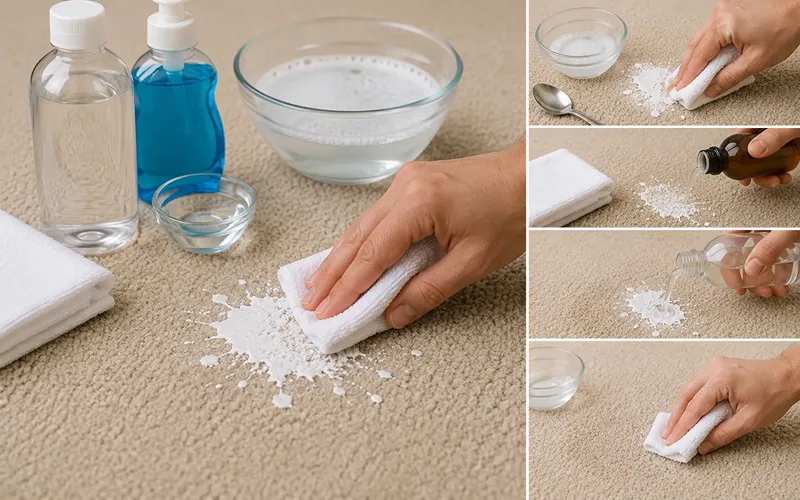
Latex and acrylic paints are the most forgiving to work with, even after they’ve dried.
- Mix warm water with a tablespoon of mild dish soap.
- Dampen a cloth and blot the stain repeatedly, replacing the cloth once it picks up paint.
- For a stain that’s really set in, dab gently with a small amount of rubbing alcohol.
- White vinegar is another effective option, pour a small amount directly onto a dried latex stain, let it sit for five to ten minutes to soften the paint, then blot it away.
- Rinse with clean water and blot dry.
How to Remove Oil-Based Paint?
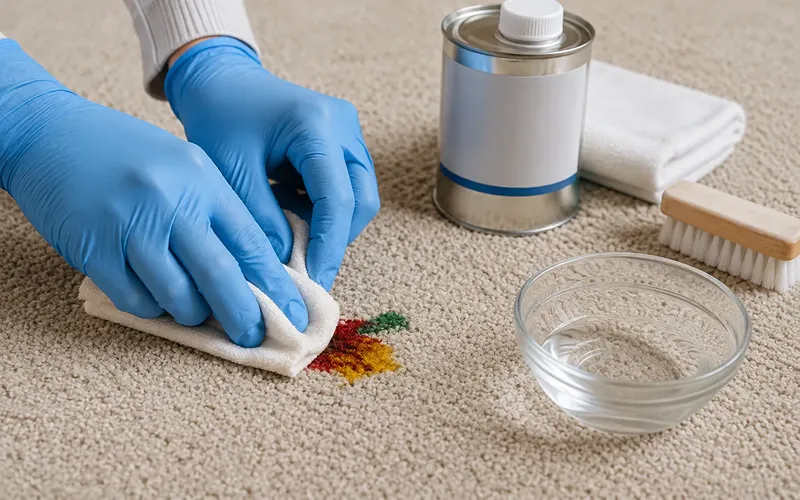
Oil-based paints such as gloss and enamel are more resistant to water, so a solvent is usually necessary.
- Dampen a cloth with mineral spirits or paint thinner, never pour it directly onto the carpet, and blot the stain, working from the outside in.
- Use a controlled amount, keep children and pets away from the area while you work, and never mix solvents together.
- Work in a well-ventilated room, away from open flames or other ignition sources, and follow the safety instructions on the product label.
- Acetone can be considered for particularly stubborn oil-based residue, but treat it as a last resort rather than a routine next step. It can affect certain dyes, carpet backing, and adhesives, so only use it where your carpet’s care instructions allow it, apply it sparingly, and always patch test first.
- Finish by rinsing the area with a cloth dampened in cold water to remove any leftover solvent, then blot dry.
How to Remove Old or Stubborn Paint Stains?
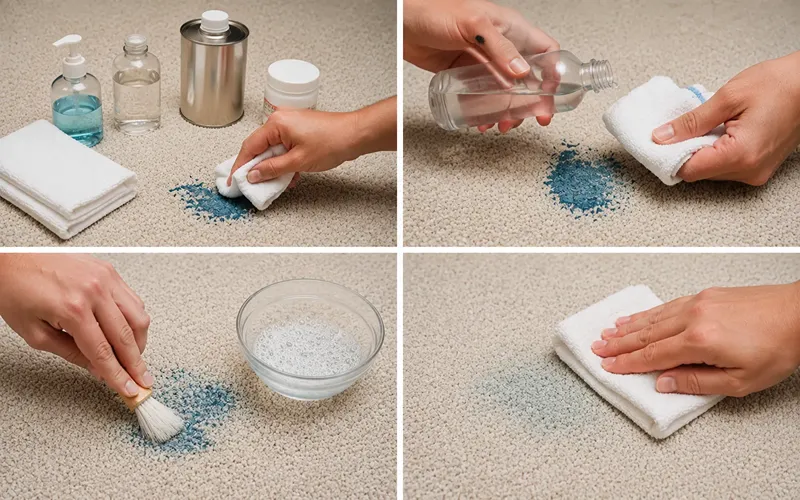
Some stains simply put up more of a fight, especially if the paint has been sitting for weeks or the spill was large. Here’s what to try when the basic methods aren’t cutting it:
- Layer your treatments gradually. Start with the gentlest option, soap and water, then move to rubbing alcohol, and only turn to a solvent like mineral spirits or, as a last resort, acetone, if your carpet type allows it.
- Consider an oxygen-based stain remover for residual discoloration. These products aren’t a universal paint remover, but they can help lift faint color left behind after the paint itself has been removed.
- Repeat, rather than saturate. Several light applications work better than soaking the carpet in one go, which can spread the stain or push it into the padding.
- Know when to stop. If a stain hasn’t responded after a few careful attempts, further scrubbing or stronger chemicals are more likely to damage the carpet than help. That’s the point at which it’s best to call in a professional.
What If Paint Reaches the Carpet Padding?
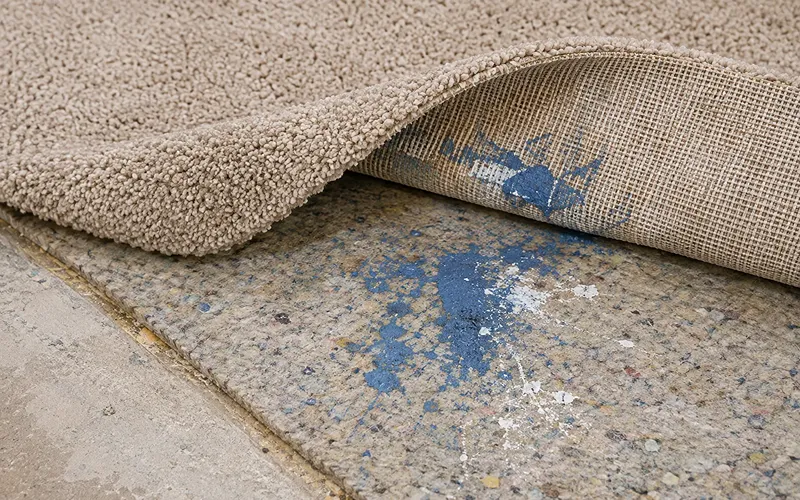
Large spills, or paint that’s been ground in over time, can soak past the carpet fibers and into the backing or padding underneath. This is harder to treat at home because you can’t fully access or rinse that layer without lifting the carpet.
Signs the padding may be affected include a stain that keeps reappearing after cleaning, a stiff or crusty feel underfoot, or a stain that looks larger from underneath than it does on the surface. Home cleaning can address the visible fibers, but deep contamination usually calls for professional extraction equipment. In severe cases, it may mean replacing the affected section of carpet and padding. A professional carpet cleaner can assess whether the backing has been compromised and recommend repair versus replacement.
How to Remove Paint Without Damaging Your Carpet?
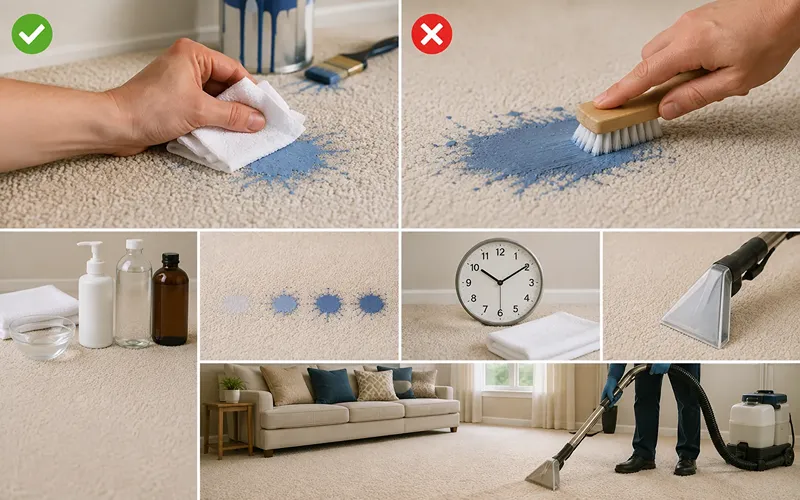
Beyond choosing the right cleaner, a few habits go a long way toward protecting the carpet itself while you work:
- Always blot instead of scrub, regardless of paint type.
- Use the smallest effective amount of any liquid, whether it’s water, soap, or a solvent.
- Move from gentle to strong, never start with the harshest option.
- Match your method to your carpet fiber, not just the paint type.
- Let the carpet dry fully between treatments so you can accurately judge how much stain remains.
- If you’re not confident about a product’s safety on your specific carpet, a professional cleaning service can test and treat it without the guesswork.
Mistakes to Avoid When Removing Paint From Carpet
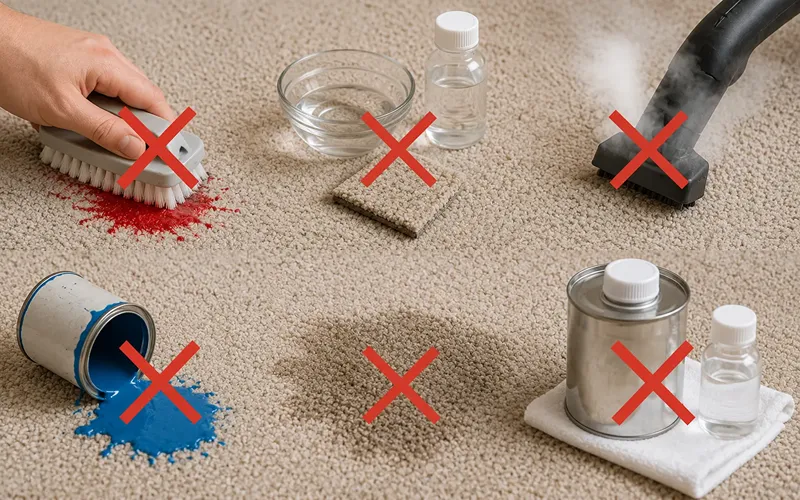
- Don’t scrub. It feels productive, but scrubbing drives paint deeper into the pile and can fray the fibers.
- Don’t skip the patch test. Solvents like acetone and mineral spirits, and even rubbing alcohol, can discolor some carpets, so always test in a hidden corner first.
- Don’t apply heat or steam without checking care instructions. Steam can soften some dried paint, but it isn’t safe for wool, many delicate fibers, or certain carpet backings and adhesives, check what your carpet can handle before using it.
- Don’t let a spill sit. The longer paint dries, the more layers of effort it takes to remove.
- Don’t oversaturate the carpet. Too much liquid, whether it’s water or solvent, can seep into the padding and lead to mold, mildew, or a stain that resurfaces later.
- Don’t treat acetone as a routine step. Reach for it only when gentler methods have failed, your carpet fiber can tolerate it, and you’ve tested it first.
When to Call a Professional
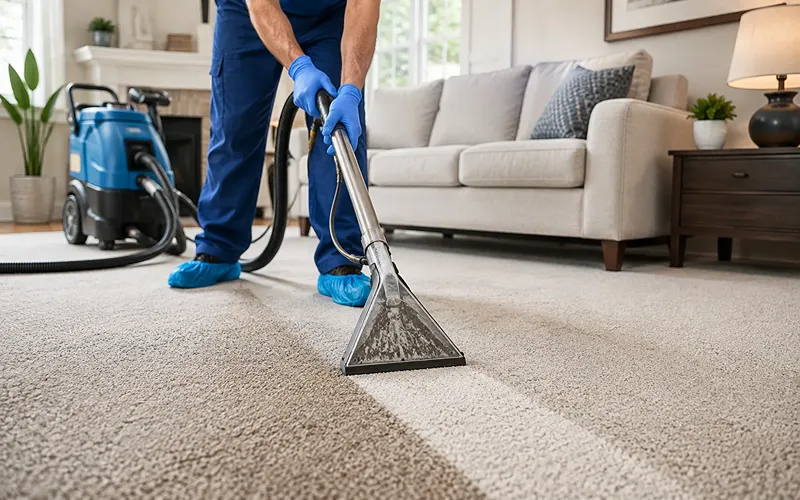
Some situations are better handled by a trained carpet cleaner rather than continued DIY attempts:
- The stain covers a large area or has soaked into the padding.
- Your carpet is wool, a natural fiber, or an antique/specialty piece.
- You’ve tried gentle methods without success and the next step would involve a strong solvent you’re unsure about.
- The stain keeps reappearing after it seems to have been removed.
Professionals have access to hot water extraction equipment and stain removers formulated for carpet fibers that go beyond what’s practical at home, and they can judge fiber compatibility more reliably than a label alone.
Final Thoughts
Paint spills on carpet look worse than they actually are. Whether you’re dealing with a fresh splash or a stain that’s been sitting there for weeks, the right combination of scraping, blotting, and the correct cleaning solution, matched to both your paint type and your carpet fiber, will get your carpet looking normal again. Work patiently, always test new products before applying them broadly, and call in a professional if a stain proves too stubborn or the spill has reached the padding.
Frequently Asked Questions
Does vinegar remove paint from carpet?
Yes, white vinegar works well on dried water-based paint. Pour a small amount onto the stain, let it soak in for a few minutes, then blot with a clean cloth.
Will rubbing alcohol damage my carpet?
Rubbing alcohol is generally tolerated by synthetic carpets, but it’s best to test it on a hidden spot first, particularly with wool or natural-fiber carpets.
Can I use acetone on any type of carpet?
No. Acetone can weaken carpet backing, damage adhesives, or fade certain dyes. Use it only as a last resort, only where your carpet’s care instructions permit it, and always patch test beforehand.
How do I remove paint thinner or mineral spirits safely?
Apply it to a cloth rather than pouring it onto the carpet, use it in a well-ventilated room, keep it away from open flames, and rinse the area afterward with a cloth dampened in cold water.
What if I don’t know whether the paint is water-based or oil-based?
Start with the gentlest method, warm water and mild dish soap, rather than reaching for a solvent. If that doesn’t work, test a stronger product on a hidden area before treating the visible stain.
Is dried acrylic paint harder to remove than latex paint?
Both are water-based and respond to similar methods, though acrylic can be slightly more stubborn once fully dried. Rubbing alcohol or white vinegar often helps lift what soap and water leave behind.
What should I do if the paint spill is very large?
Treat the visible surface with the appropriate method for the paint type, but if the spill is large enough that it may have reached the padding, have a professional assess whether deeper cleaning or a padding repair is needed.
Can old, dried paint stains still be fully removed?
In many cases, yes, though it may take several rounds of treatment. If a faint mark remains after the paint is gone, it may be discoloration rather than paint residue, and could need a separate carpet-safe stain treatment.
Is it safe to use a steamer on dried paint?
Only if your carpet’s fiber and backing can tolerate heat and moisture, this is generally fine for many synthetic carpets but is not recommended for wool or delicate fibers without checking manufacturer guidance first.
When should I call a professional instead of continuing to DIY?
If the stain hasn’t responded to gentle methods, covers a large area, involves a wool or delicate carpet, or seems to have reached the padding, it’s best to bring in a professional rather than risk further damage.