Spilled nail polish on carpet is fixable in almost every case, but only if you use the right method for your carpet type, and don’t waste the first few minutes trying random products one after another. Here’s exactly what to do.
- Do first: Blot (don’t rub) to lift excess polish, then identify your carpet fiber before applying anything.
- Don’t: Rub the stain, use hot water, or reach for acetone without testing it on a hidden spot first.
- Stop if: A treatment starts changing the carpet’s color or texture, that’s your cue to call a professional instead of continuing.
Why Nail Polish Is Tricky to Remove
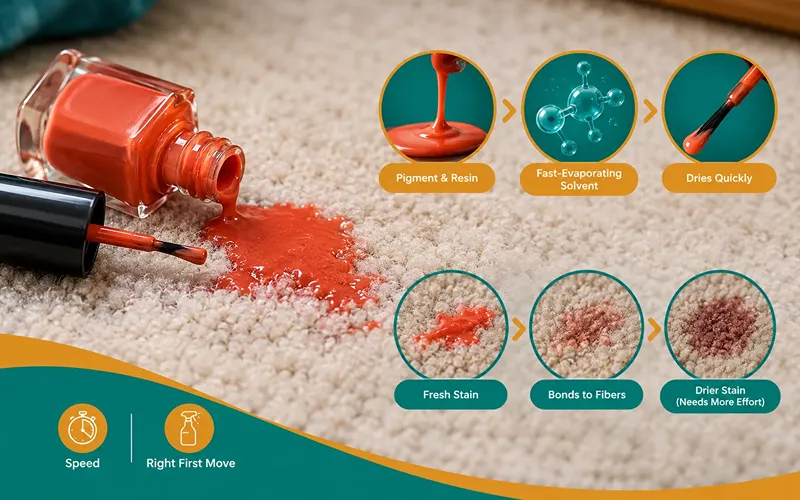
Nail polish is made of pigment and resin suspended in a fast-evaporating solvent, which is exactly why it hardens within minutes of hitting air. Once dry, it doesn’t just sit on top of the carpet; it bonds to the individual fibers, which is why a stain left overnight takes noticeably more effort than one caught in the first minute or two. This is especially important when caring for Carpets in Dubai, where quick action can help prevent nail polish stains from becoming deeply set. That’s the real reason speed and the right first move matter more than which specific product you eventually reach for.
What You’ll Need
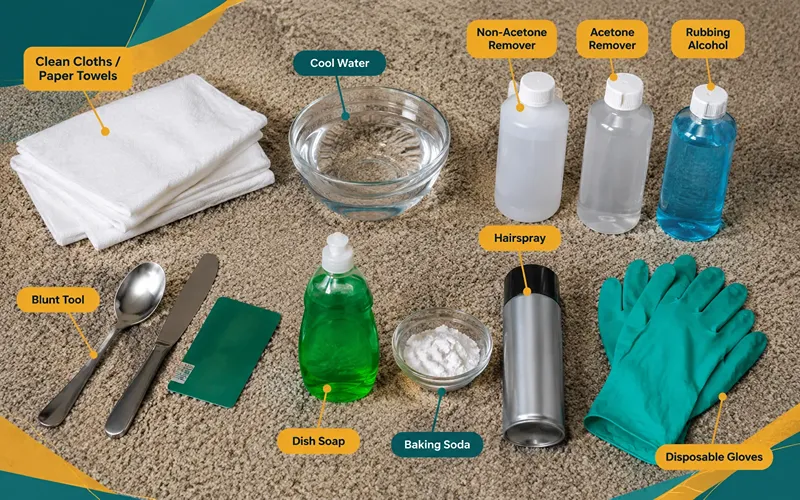
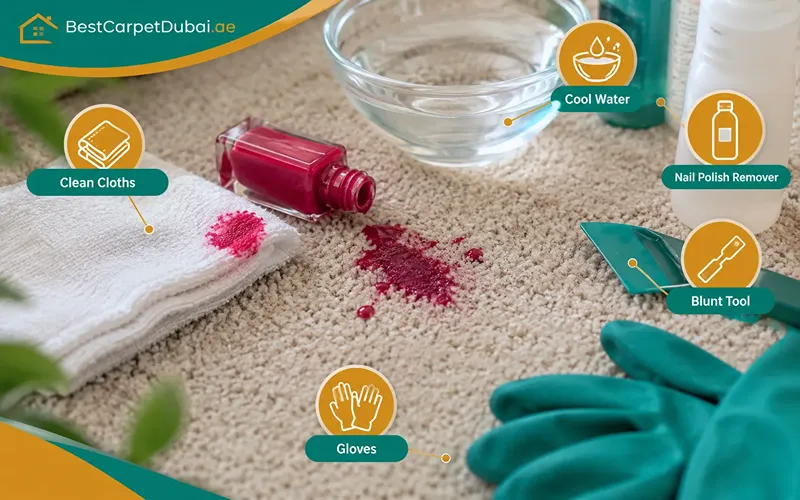
Basic supplies, for any stain:
- Clean white cloths or paper towels, colored fabric can transfer its own dye onto damp wall to wall carpet
- A blunt tool such as a spoon edge, dull knife, or old gift card
- A small bowl of cool water
Add depending on your method:
- Non-acetone remover, acetone remover, or rubbing alcohol (Method A)
- Clear, unscented dish soap (Method B)
- Hairspray or baking soda (optional backups)
- Disposable gloves, if you’d rather not get solvent on your skin
Gather everything before you start blotting. Stopping partway through to hunt for a bowl or a spare cloth just gives the stain more time to set.
Before You Start: Carpet Fiber and Spot Test
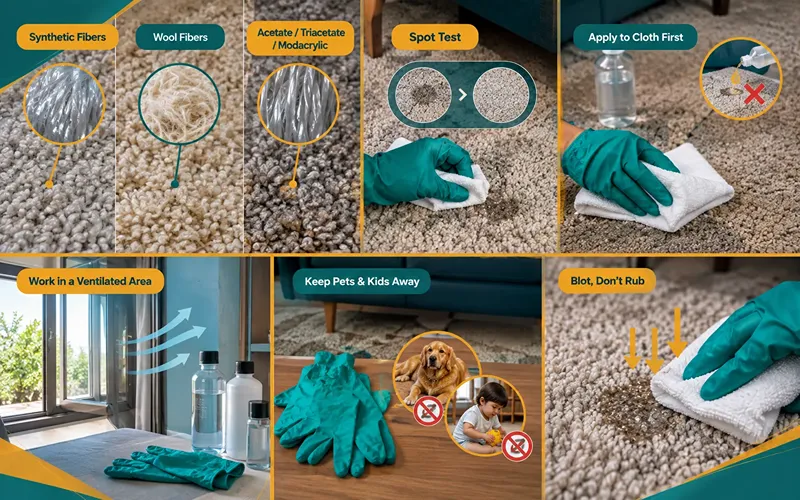
This is the one step that determines which products are safe to use, so don’t skip it.
- Synthetic carpets (nylon, polyester, olefin) generally tolerate acetone-based removers.
- Wool and other natural fibers are delicate, acetone can dry out and damage them, so avoid it and use a gentle dish-soap solution instead.
- Acetate, triacetate, and modacrylic carpets (often used as wool look-alikes) can be dissolved by nail polish remover, so solvent-based treatments should be skipped here too.
Not sure what your carpet is made of? Check the manufacturer’s tag or the receipt from installation if you still have it, or use a simple touch test: synthetic fibers tend to feel a little waxy and spring back quickly when pressed, while wool feels softer, denser, and warmer to the touch. If you genuinely can’t tell, treat the sisal carpet as delicate and start with the gentler method (B) rather than assuming it can handle a solvent.
Once you know (or suspect) your fiber type, spot test whatever cleaner you plan to use: dab a small amount on a hidden section of carpet, inside a closet, under furniture, and wait a few minutes to check for discoloration. Do this once, before you touch the visible stain, and you won’t need to repeat it later.
Universal rule: whatever method you use below, apply the cleaner to a cloth first, never pour it directly onto the carpet, and always blot straight down rather than rubbing. Rubbing spreads the polish and pushes it deeper into the pile.
A quick safety note: work near an open window or door when using acetone, non-acetone remover, or rubbing alcohol, since the fumes build up fast in a closed room. Gloves aren’t essential but are worth wearing if you have sensitive skin, and keep pets and kids off the area until it’s fully dry.
What to Do Immediately for a Fresh, Wet Stain
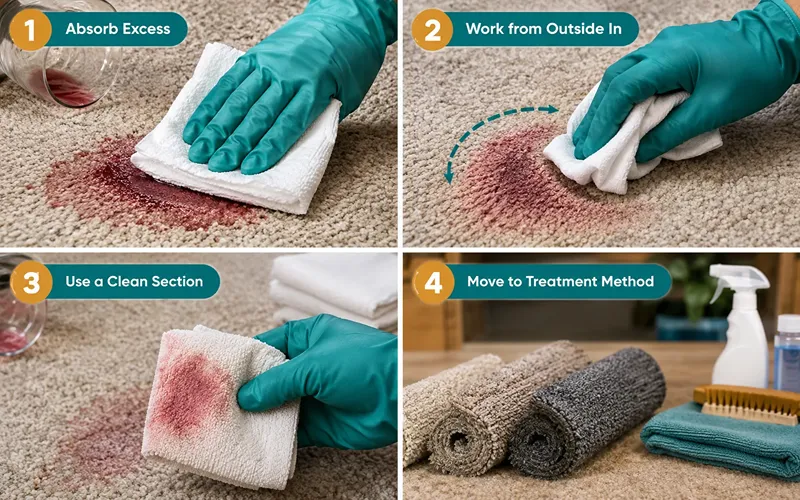
- Press a clean paper towel or cloth straight down onto the spill to soak up as much excess polish as possible.
- Work from the outside edge of the stain toward the center, so you’re not spreading it wider.
- Rotate to a clean section of cloth each time it picks up color, so you’re not smearing polish back onto the carpet.
- Once the excess is lifted, move straight to the treatment method that matches your wool carpet type below.
Choose the Right Treatment for Your Carpet
| Your situation | Recommended path |
| Fresh spill, synthetic carpet | Blot excess → treat with non-acetone remover or rubbing alcohol |
| Fresh spill, wool or delicate/unknown carpet | Blot excess → treat with dish soap and cool water |
| Dried spill | Scrape loose material → spot test → treat in repeated light passes |
| Treatment is causing discoloration or texture change | Stop immediately and consider a professional cleaner |
Method A: Acetone or Non-Acetone Remover (Primary Method)
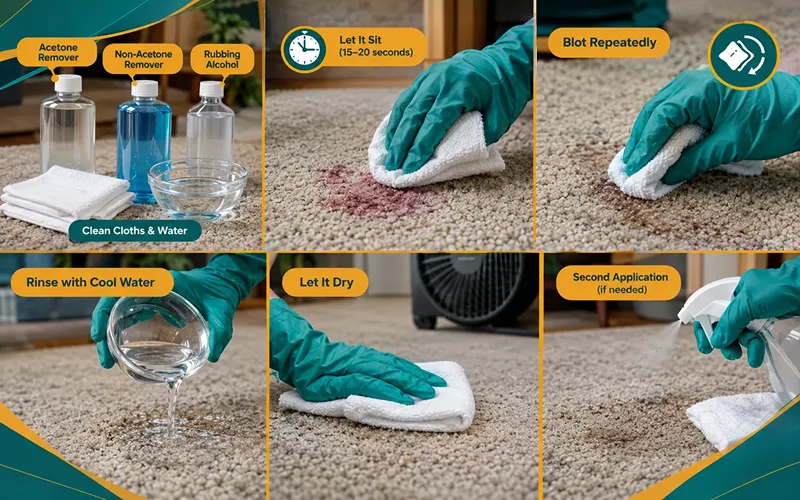
This is your first choice for synthetic, test-safe carpets like nylon, polyester, or olefin. If your carpet passed the spot test, a small amount of acetone-based remover works fastest; if you’re unsure of the fiber, a clear, dye-free, non-acetone remover or rubbing alcohol is the safer default. Let it sit on the stain for about 15–20 seconds before blotting, this gives it a moment to break the polish down instead of just sitting on the surface. Blot repeatedly, switching to a clean section of cloth each time it picks up color, then rinse with cool water and let the area dry. For a stubborn patch, a second light application usually works faster than one heavy soak.
Method B: Dish Soap and Cool Water (Gentle Option)
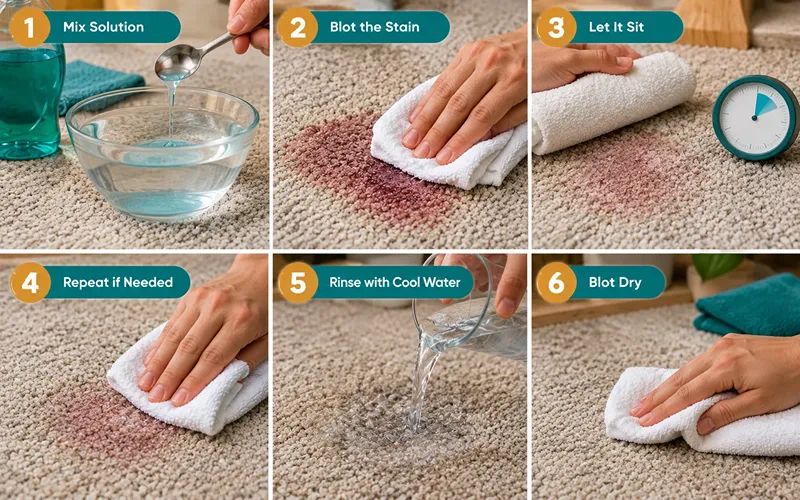
Use this for wool carpets, anything too delicate for solvents, or as the safer starting point when you’re unsure of your carpet’s material. Mix a teaspoon of clear dish soap into a cup of cool water and blot the stain with it, letting the solution sit for about a minute before you start lifting it. It works more slowly than a solvent, so plan on repeating it several times before the stain fully lifts. Resist adding more than a teaspoon of soap per cup, extra soap tends to leave a residue that attracts dirt once the carpet dries. Rinse with plain cool water once the stain is gone.
Optional Secondary Methods
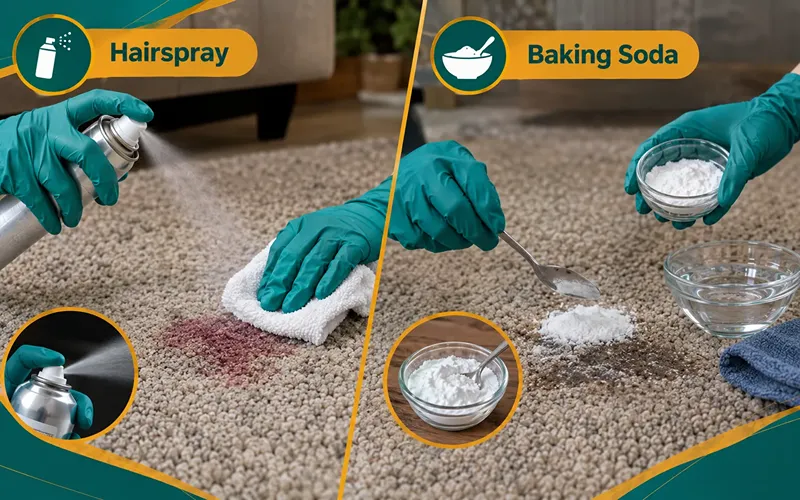
If Method A or B isn’t available, or hasn’t fully worked, these household alternatives can help as backups, not first choices:
- Hairspray (high alcohol content) can be sprayed directly on the stain and blotted after a minute, similarly to rubbing alcohol.
- Baking soda with a little water can lift lighter, fresher stains gently before you move to a stronger method.
How to Remove Dried Nail Polish From Carpet
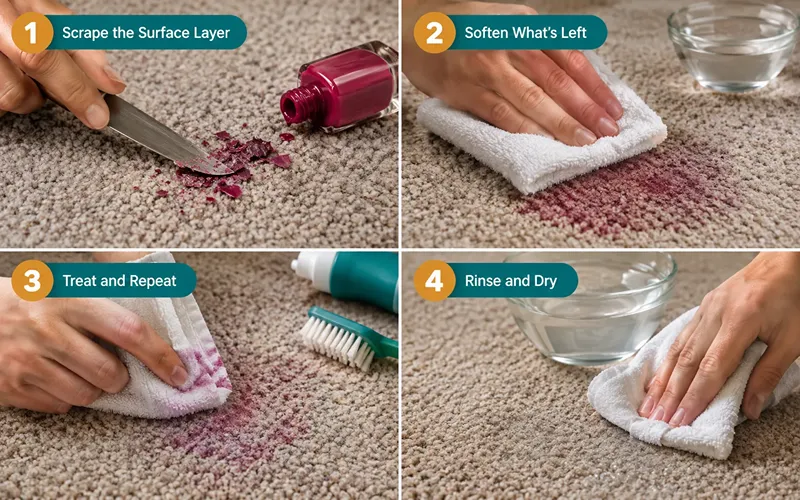
Dried polish needs one extra step before treatment: loosening it from the fibers.
- Scrape the surface layer. Use a dull knife, spoon edge, or plastic card to gently flake off the hardened top layer. Work slowly and stop if fibers start to pull.
- Soften what’s left. Lay a cloth dampened with cool-to-lukewarm water over the remaining stain for a few minutes to loosen its grip on the fibers.
- Treat and repeat. Apply your carpet-appropriate method from above (A or B), working in light, repeated passes, dried stains rarely lift in one go.
- Rinse and dry. Once the stain is gone, wipe the area with a cloth dampened in plain water, blot dry, and let it air dry fully before walking on it.
Treating an Area Rug vs. Wall-to-Wall Carpet
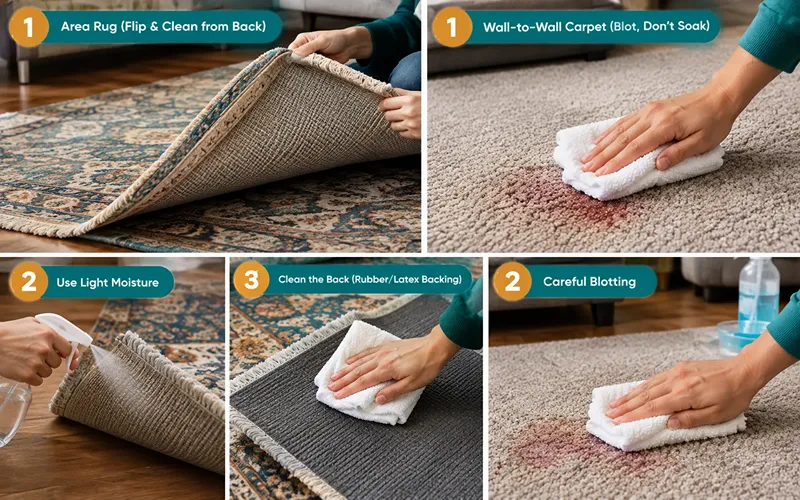
The methods above work for both, but a rug gives you one extra option: if you can lift and flip it, working the cleaner in from the back can push the polish out of the pile instead of further into it. If the rug has a rubber or latex backing, keep the liquid light, moisture trapped against that backing for too long can cause it to break down over time. Wall-to-wall carpet doesn’t have this option, so sticking to careful blotting rather than any kind of soaking matters even more.
Should You Buy a Specialty Stain Remover?
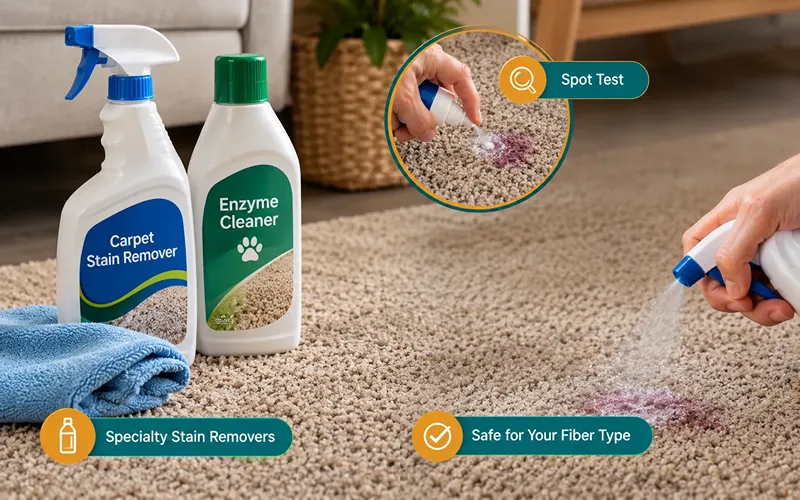
Most nail polish stains come out with products already sitting in a typical home, but if you’d rather not experiment, dedicated carpet stain removers, and even some enzyme-based pet-stain cleaners, despite the name, can also break down nail polish on synthetic carpets. Look for a product labeled safe for your specific fiber type, and run the same spot test before using it on the visible stain. A store-bought formula isn’t automatically gentler than what’s already in your cabinet.
Does Carpet Color Change the Approach?
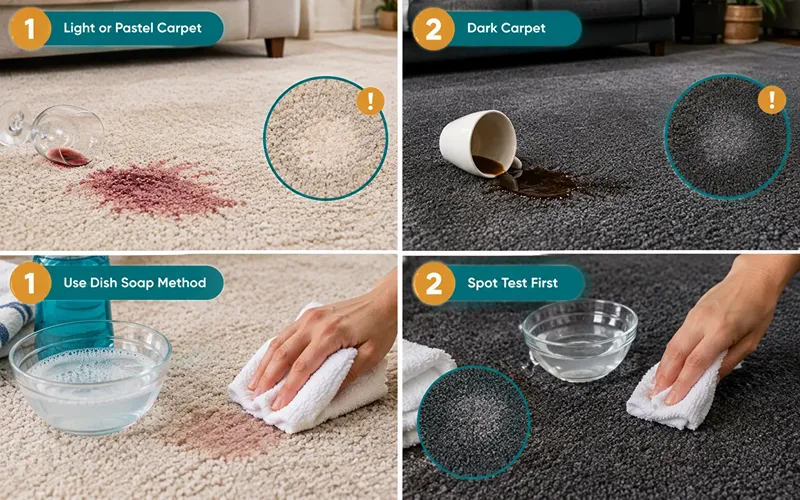
Not the method itself, but it changes how closely you should watch for side effects. On light or pastel carpet, any bleaching from acetone shows up immediately and is hard to hide, so lean toward the dish-soap method first and only move to a solvent if that isn’t working. On dark carpet, discoloration is harder to spot right away, which makes the spot test even more important, a faded patch might not be obvious until the area has fully dried.
Mistakes to Avoid
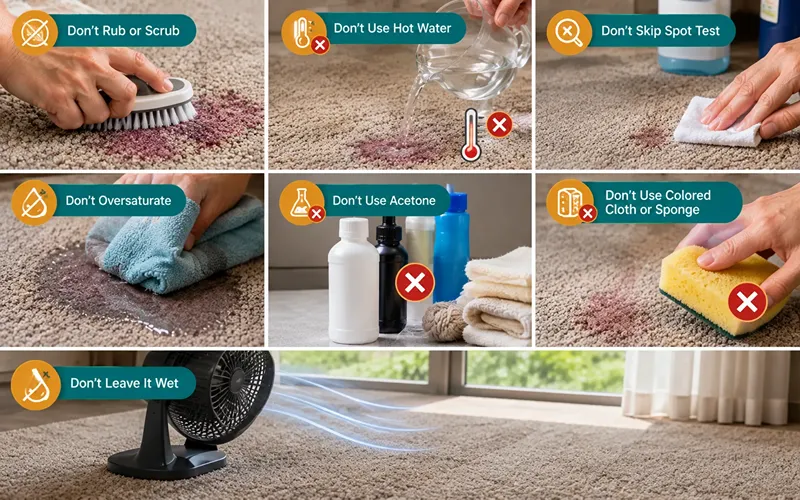
- Don’t rub or scrub the stain.
- Don’t use hot water at any stage, it can set the stain permanently. Cool or lukewarm water only, throughout the whole process.
- Don’t skip the spot test before your first application.
- Don’t oversaturate the carpet, excess liquid can seep into the padding and cause buckling or mildew.
- Don’t use acetone on wool, acetate, triacetate, or modacrylic fibers.
- Don’t use a colored cloth or sponge, the dye can transfer onto damp carpet fibers.
- Don’t leave the area soaking wet when you’re done, a fan or an open window helps it dry fully instead of staying damp and musty.
When to Stop and Call a Professional
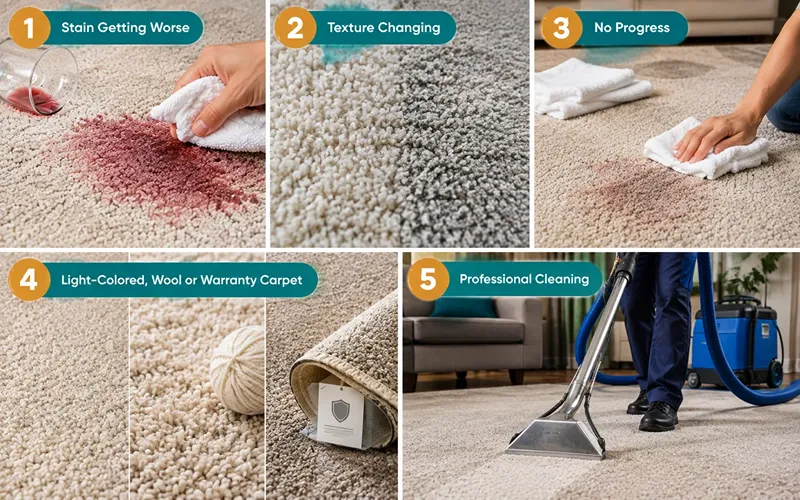
Stop the DIY process if the stain is getting worse, the carpet’s texture is changing, or several repeated passes aren’t making progress on a large or old stain. This is especially true for light-colored, wool, or warranty-protected carpet, where further attempts risk doing more damage than the original stain. A professional visit typically brings a stronger, carpet-safe solvent along with steam extraction equipment most homes don’t have, money well spent on an expensive or sentimental carpet rather than risking a DIY method that’s already made things worse.
Preventing Future Nail Polish Spills
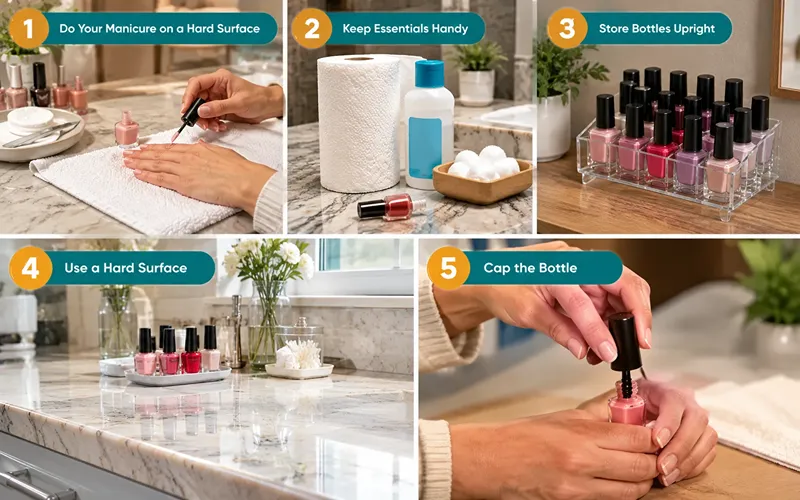
- Do your manicure over a hard floor, tray, or old towel instead of directly on carpet.
- Keep a paper towel and remover within reach in case of a tip-over.
- Store polish bottles upright and away from table edges where they’re easy to knock over.
- If you’re prone to spills, do your manicures on a hard surface entirely, a bathroom counter or kitchen table is much easier to clean than carpet fiber.
- Cap the bottle right after each use instead of setting it down open, even for a few seconds.
Final Thought
Nail polish on carpet feels like a disaster in the moment, but it’s rarely permanent, the key is matching your method to your carpet’s fiber and treating it early rather than reaching for whatever’s closest. Fresh spills respond fastest to a quick blot followed by non-acetone remover or rubbing alcohol on synthetic carpet, while dish soap stays the safer bet for wool or anything delicate. Dried stains just need one extra step: scrape, soften, then treat in light, repeated passes instead of expecting it to lift all at once. Stick to a spot test before your first application, avoid rubbing and hot water throughout, and most stains will fade out well before you’d need to call in a professional.
Frequently Asked Questions
Does acetone remove nail polish from carpet?
Yes, and it’s effective on test-safe synthetic carpets, but it can bleach or weaken wool, acetate, triacetate, and modacrylic fibers. Always spot test first, and use non-acetone remover if you’re unsure of your carpet’s material.
Can dried nail polish still be removed from carpet?
In most cases, yes. Scraping off the loose surface layer and softening the rest with water before treating it usually works, though it takes more patience and repeat passes than a fresh stain.
How many treatment passes does it usually take?
Most stains need two to four rounds of blotting and treating rather than lifting in one go, especially if the polish had already started to dry. Going slowly with light passes gets better results than pushing harder with a stronger product.
What if the stain color is gone but the carpet feels stiff afterward?
That’s usually leftover cleaner rather than remaining polish. Rinse the area with a cloth dampened in cool water, blot thoroughly, and let it air dry, the stiffness should ease once it’s fully dry.
Does a carpet warranty cover nail polish stains?
Usually not, since spills count as accidental damage rather than a manufacturing defect. Some warranties also void coverage if certain home-cleaning chemicals are used, so it’s worth checking the terms before treating a new or under-warranty carpet with a solvent.
Can baking soda alone remove a nail polish stain?
On its own, it works better as a light first pass on fresh, minor stains than as a full solution, it absorbs some of the wet polish before it sets, but a heavier or fully dried stain will still need one of the treatment methods above.